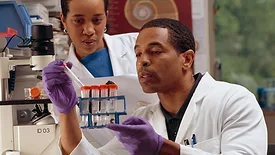
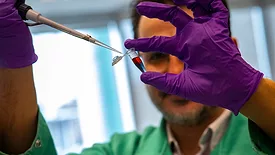
Primerdesign recently launched its new genesig® Easy_oys Detection Kit for Norovirus in oysters, a quantitative polymerase chain reaction (qPCR) assay capable of producing results onsite in as little as four hours.
Spectacular Labs Inc. and the Canadian Center for Meat Innovation and Technology (CMIT) have entered an early access agreement in which Canadian meat and poultry producers will be able to use the Spectacular OneTouch platform to validate assay performance and demonstrate its intuitive workflow.
The U.S. Department of Agriculture’s Food Safety and Inspection Service (USDA-FSIS) has selected bioMérieux’s GENE-UP® CAMPYLOBACTER assay for
use in its Field Service Laboratories.
The U.S. Department of Agriculture’s Food Safety and Inspection Service (USDA’s FSIS) is planning to implement new detection approaches in its laboratories and will update the associated Microbiology Laboratory Guidebook chapters.
Researchers in Japan have developed a novel method to accurately detect Escherichia albertii, which is an emerging zoonotic foodborne pathogen with increasing relevance in the country, and is also often misidentified as E. coli.
The U.S. Department of Agriculture (USDA) has awarded $611,000 to University at Albany researchers to develop a rapid, portable, colorimetric Salmonella detection kit for food products.
As the platinum sponsor of the 2024 Food Safety Summit, NOMADX Holdings LLC has unveiled at the event an early access program for its portable NOMADX platform for onsite foodborne pathogen detection.
Researchers from Osaka Metropolitan University have achieved simultaneous detection of Escherichia coli and Staphylococcus aureus in real-world samples, on-site and within an hour, using a handheld electrochemical device.
With each passing year, new and emerging technologies and techniques that have promise for advancing food safety are developed and validated. This article summarizes the top food safety innovations of 2023, based on audience interest.
In this bonus episode of Food Safety Matters, we speak with two food safety experts from MilliporeSigma—Justyce Jedlicka, Food and Beverage Regulatory Liaison in North America, and Andrew Lienau, Food Regulatory and Validation Expert—to discuss the threat that Cronobacter poses to food safety and public health, and how testing for this complex pathogen is crucial to controlling its impact.


.webp?height=168&t=1657568786&width=275 "biomerieux logo")