A letter sent to FDA urges the agency to immediately withdraw its approval of Carbadox, a carcinogenic swine feed additive. FDA’s proposal to withdraw Carbadox approvals has been pending for two years, during which time there has not been an approved method for detecting Carbadox residue in pork.
California Assembly Bill (AB) 1264 has passed the Senate, and now awaits final approval before being sent to the Governor. AB 1264 would define “ultra-processed foods” (UPFs), and would require “UPFs of concern” to be identified and phased out of schools.
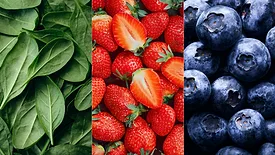
The Environmental Working Group’s (EWG’s) 2025 Dirty Dozen list considers pesticide toxicity for the first time. While critics say the list is alarmist and may discourage the consumption of safe fruit and vegetables, EWG argues that “legal does not mean safe” when it comes to pesticide residues.
California Assemblymember Jesse Gabriel has introduced a bill that aims to define and identify “ultra-processed foods” so that they can be phased out of state public schools.
The Environmental Working Group (EWG) has published its Dirty Dozen list for 2024, describing the 12 fruits and vegetables most contaminated with pesticide residues, alongside its Clean Fifteen list, which contains the 15 commodities with the lowest amounts of pesticide residue.
In a new study, the Environmental Working Group (EWG) has detected the pesticide chlormequat in four out of five people tested. After allowing the chemical on imported foods, the U.S. Environmental Protection Agency (EPA) proposed a rule in 2023 that would allow chlormequat to be applied to barley, oat, triticale, and wheat crops.
The U.S. Food and Drug Administration (FDA) has filed two petitions by the Environmental Defense Fund, Breast Cancer Prevention Partners, the Center for Environmental Health, and Environmental Working Group (EWG) to rescind its approvals for four carcinogenic chemicals used as food additives and color additives—benzene, trichloroethylene (TCE), methylene chloride, and ethylene dichloride.
A new coalition between various food safety stakeholders has been formed with the purpose of advocating for a modernized, effective Human Foods Program at the U.S. Food and Drug Administration (FDA).
The U.S. Environmental Protection Agency (EPA) has proposed to register new uses for the pesticide chlormequat chloride on food crops. If finalized, the decision would mark the first-ever approval for using chlormequat chloride on U.S. food. The Environmental Working Group (EWG) has raised food safety concerns with EPA’s proposal.
A group of non-government organizations have recently expressed concerns and raised questions about the U.S. Food and Drug Administration’s (FDA’s) vision for restructuring its Human Foods Program and Office of Regulatory Affairs (ORA).