Food Safety
search
Ask Food Safety AI
cart
facebook twitter linkedin instagram youtube
  • Sign In
  • Create Account
  • Sign Out
  • My Account
Food Safety
  • NEWS
    • Latest News
    • White Papers
  • PRODUCTS
  • TOPICS
    • Contamination Control
    • Food Types
    • Management
    • Process Control
    • Regulatory
    • Sanitation
    • Supply Chain
    • Testing and Analysis
  • PODCAST
  • EXCLUSIVES
    • Food Safety Five Newsreel
    • eBooks
    • FSM Distinguished Service Award
    • Interactive Product Spotlights
    • Videos
  • BUYER'S GUIDE
  • MORE
    • NEWSLETTERS >
      • Archive Issues
      • Subscribe to eNews
    • Store
    • Sponsor Insights
    • ASK FSM AI
  • WEBINARS
  • FOOD SAFETY SUMMIT
  • EMAG
    • eMagazine
    • Archive Issues
    • Editorial Advisory Board
    • Contact
    • Advertise
  • SIGN UP!
ProductsSupply ChainTemperature Control/Cold Chain

Danfoss EVR, NRV Solutions Enhance Safety of Refrigeration Systems
By Food Safety Magazine Editorial Team
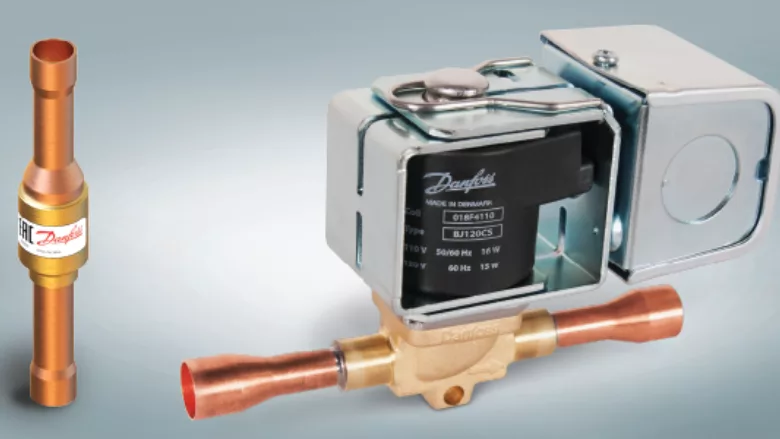
Danfoss ERV and NRV safety valves

Image provided by Danfoss

October 31, 2024

Danfoss released new EVR and NRV safety valves, approved to meet UL 60335-2-40 and UL 60335-2-89 standards.

As the industry faces tighter safety regulations, Danfoss EVR solenoid valves and NRV check valves provide a solution for separating flammable refrigerant charges (A2L, A2, or A3) in case of leaks, thereby reducing the total releasable charge in higher-capacity refrigeration systems.

The new valves are designed to fully comply with the new UL 60335-2-40 and UL 60335-2-89 safety standards, ensuring safe operation of systems using flammable refrigerants. Additionally, the valves effectively isolate flammable refrigerants during leaks, mitigating potential hazards and improving overall system safety.

Featuring automatic shut-off to prevent refrigerant backflow and leakage, the valves also provide an additional layer of protection during power failures. The EVR Solenoid Shut-Off Valve (SSOV) and NRV Check Shut-Off Valve (CSOV) are unidirectional and offer comprehensive shut-off solutions. The SSOV to provides a secure separation of flammable refrigerants during leak detection. It is designed with a normally closed (NC) configuration, ensuring fail-safe closing in the event of an electrical power failure, and is approved to meet the required leak rates in a closed condition. The CSOV prevents refrigerant backflow, ensuring effective isolation when combined with the SSOV.

Danfoss’ EVR and NRV valves are available in multiple sizes, ensuring they are adaptable to a wide range of system configurations and needs. The valves are easy to install, minimizing disruption during installation and offering a reliable solution for maintaining safety standards for refrigeration systems.


Danfoss: www.danfoss.com 

Looking for quick answers on food safety topics?
Try Ask FSM, our new smart AI search tool.
Ask FSM →


KEYWORDS: Danfoss refrigeration equipment valve

Share This Story

Fsm purple logo 200x200

The Food Safety Magazine editorial team comprises Bailee Henderson, Digital Editor ✉ and Adrienne Blume, M.A., Editorial Director.

Recommended Content

JOIN TODAY
to unlock your recommendations.

Already have an account? Sign In

  • people holding baby chicks

    Serovar Differences Matter: Utility of Deep Serotyping in Broiler Production and Processing

    This article discusses the significance of Salmonella in...
    Testing & Analysis
    By: Nikki Shariat Ph.D.
  • woman washing hands

    Building a Culture of Hygiene in the Food Processing Plant

    Everyone entering a food processing facility needs to...
    Facilities
    By: Richard F. Stier, M.S.
  • graphical representation of earth over dirt

    Climate Change and Emerging Risks to Food Safety: Building Climate Resilience

    This article examines the multifaceted threats to food...
    Contamination Control
    By: Maria Cristina Tirado Ph.D., D.V.M. and Shamini Albert Raj M.A.
Manage My Account
  • eMagazine Subscription
  • Subscribe to Newsletters
  • Manage My Preferences
  • Website Registration
  • Subscription Customer Service

More Videos

Sponsored Content

Sponsored Content is a special paid section where industry companies provide high quality, objective, non-commercial content around topics of interest to the Food Safety Magazine audience. All Sponsored Content is supplied by the advertising company and any opinions expressed in this article are those of the author and not necessarily reflect the views of Food Safety Magazine or its parent company, BNP Media. Interested in participating in our Sponsored Content section? Contact your local rep!

close
  • NEVIFIT 3 Compartment BPA-FREE
    Sponsored byCorbion

    The Risks of Ready-to-Eat: Five Ways to Protect Today's Prepared Meals

  • a group of workers in a food production facility
    Sponsored bySkillUp by Registrar Corp

    How to Build a Better Training Program: Data and Insights from the Global Food Safety Training Survey

  • the use of dual-energy X-ray food inspection technology to identify foreign contaminants.
    Sponsored byEagle by METTLER TOLEDO

    Precision Inspection Starts with the Right X-ray Detector

Popular Stories

green powder/moringa in wooden mortar

FDA Opens Third Salmonella–Moringa Outbreak Investigation of the Year

FoodSafetyMattersFinal-900x550-(002).jpg

Ep. 218. Dr. Brady Carter: Water Activity, Shelf-Life Validation, and Food Safety Controls

fermented meat

Study is First to Analyze Trends in Foodborne Illness Outbreaks Linked to Non-Dairy Fermented Products

a practical guide to spoilage investigation webinar

Events

June 3, 2026

How to Build a Better Food Safety Training Program

Live: June 3, 2026 at 2:00 pm EDT: Join this webinar to learn how AI is impacting food safety training, and how you can leverage AI in your programs.

June 4, 2026

Building a Stronger Food Safety Program in a Changing GFSI Landscape

Live: June 4, 2026 at 11:00 am EDT: Attend this webinar to understand how GFSI requirements are evolving and what those changes signal for quality programs at food and beverage facilities.

June 10, 2026

A Practical Guide to Spoilage Investigation and Prevention

Live: June 10, 2026 at 11:00 am EDT: Join this webinar to learn how to identify spoilage root causes, reduce risk, and apply data-driven strategies for prevention.

View All

Products

Global Food Safety Microbial Interventions and Molecular Advancements

Global Food Safety Microbial Interventions and Molecular Advancements

See More Products

Related Articles

  • milk pouring out of bottle

    WUR Launches Project to Enhance Safety of Animal-Free Dairy Protein, Still Accepting Partners

    See More
  • Ammonia Refrigeration Systems and Chlorine Sanitation Systems Deserve Close Scrutiny

    See More
  • High-Pressure Processing during Drying of Fermented Sausages to Enhance Safety and Stability

    See More

Related Products

See More Products
  • 1119258073.jpg

    FSMA and Food Safety Systems: Understanding and Implementing the Rules

  • 1444333348.jpg

    Handbook of Food Safety Engineering

  • 9781498721776.jpg

    Handbook of Food Processing: Food Safety, Quality, and Manufacturing Processes

See More Products

Related Directories

  • Refrigerating Engineers & Technicians Assn.-RETA

    The Refrigerating Engineers & Technicians Association (RETA), founded in 1910, is an international society of individuals and companies involved in the design, operation and service of industrial refrigeration systems. Its purpose is to provide education and training, as well as networking benefits, to both experienced operators and those who have recently entered this rapidly expanding field.
  • Pureline Solutions

    We are the experts in the manufacture, generation, and application of chlorine dioxide. PureLine specializes in designing and implementing chlorine dioxide solutions utilizing our broad line of proved chlorine dioxide generators and pre-cursor chemicals. In locations across the nation and around the world, PureLine’s patented and proven high purity chlorine dioxide generation equipment is enhancing the safety, reliability, efficiency, and cost-effectiveness of the water treatment process.
×

Never miss the latest news and trends driving the food safety industry

Newsletters | Website | eMagazine

JOIN TODAY!
  • RESOURCES
    • Advertise
    • Contact Us
    • Directories
    • Store
    • Want More
  • SIGN UP TODAY
    • Create Account
    • eMagazine
    • Newsletters
    • Customer Service
    • Manage Preferences
  • SERVICES
    • Marketing Services
    • Reprints
    • Market Research
    • List Rental
    • Survey/Respondent Access
  • STAY CONNECTED
    • LinkedIn
    • Facebook
    • Instagram
    • X (Twitter)
  • PRIVACY
    • PRIVACY POLICY
    • TERMS & CONDITIONS
    • DO NOT SELL MY PERSONAL INFORMATION
    • PRIVACY REQUEST
    • ACCESSIBILITY

Copyright ©2026. All Rights Reserved BNP Media, Inc. and BNP Media II, LLC.

Design, CMS, Hosting & Web Development :: ePublishing