Food Safety
search
Ask Food Safety AI
cart
facebook twitter linkedin
  • Sign In
  • Create Account
  • Sign Out
  • My Account
Food Safety
  • NEWS
    • Latest News
    • White Papers
  • PRODUCTS
  • TOPICS
    • Contamination Control
    • Food Types
    • Management
    • Process Control
    • Regulatory
    • Sanitation
    • Supply Chain
    • Testing and Analysis
  • PODCAST
  • EXCLUSIVES
    • Food Safety Five Newsreel
    • eBooks
    • FSM Distinguished Service Award
    • Interactive Product Spotlights
    • Videos
  • BUYER'S GUIDE
  • MORE
    • ENEWSLETTER >
      • Archive Issues
      • Subscribe to eNews
    • Store
    • Sponsor Insights
    • ASK FSM AI
  • WEBINARS
  • FOOD SAFETY SUMMIT
  • EMAG
    • eMagazine
    • Archive Issues
    • Editorial Advisory Board
    • Contact
    • Advertise
  • SIGN UP!
ManagementBest Practices

To Solve Contaminated Food Crises, Information Management Is an Unsung Hero for the Food Supply Chain

January 15, 2019

Each year, the U.S. Centers for Disease Control and Prevention estimates 48 million people in the United States alone get sick from contaminated food,[1] and data from its Foodborne Disease Outbreak Surveillance System displays the alarming trend of outbreaks steadily increasing since 2001.[2] As a result of this impact, the U.S. Department of Agriculture (USDA) estimates associated illnesses tend to cost the economy more than $15.6 billion annually.

Following the introduction of the U.S. Food and Drug Administration Food Safety Modernization Act (FSMA) in 2011, it became increasingly important for food manufacturers and distributors to proactively ensure contaminants in the food supply are prevented. These types of regulations continue to undergo updates to ensure the purity of the food supply, such as FSMA’s new guidance on food defense and adulteration, as well as the President’s proposal to consolidate federal food safety under USDA.

Despite these stringent efforts, new food contaminations seem to happen every few weeks. To date, 19 outbreaks of Salmonella and Escherichia coli in 2018 have impacted fresh and packaged foods, the economy, and ultimately, lives.[3] In addition, allergens remain a leading cause for market withdrawals.

A common point of these contaminations stems from the distribution chain, identified post-outbreak through a comprehensive record review.[4] So, if regulations on the front-end of the food supply can’t identify food contamination before it gets distributed to consumers, what can be done? The answer is surprisingly simple—food suppliers must ensure they have an information management system in place that can comprehensively and easily track all records on the back-end.

Intelligent information management is especially crucial for food manufacturers and distributors to maintain high-quality products—as well as a good reputation and track record of trust with suppliers and customers.

Case in Point
At Farbest Brands, we’ve held this track record with our global network for more than 60 years. Our strategy to ensure food safety and quality is no different than any other organization in this industry—it’s crucial for any supplier and customer to frequently endure mandatory qualification processes. Part of this process involves a thorough review of documentation—including product specifications, nutritional information, risk assessments, sensitized ingredients, product labels, and safety data sheets.

These resources must be readily available, especially depending on the amount and type of documents needed based on a supplier’s risk level. After all, food manufacturers and distributors aren’t only in the business of food ingredients—we’re also in the business of information management to maintain our core principles of quality, truth, and service.

Throughout the industry, it’s not uncommon to track documents and business processes manually in a spreadsheet, with files saved across multiple network folders. Remember, contamination stems from the distribution chain. If documents, resources, and processes aren’t easily accessible and referenceable, the challenges of ensuring food safety increase significantly.

At Farbest, we realized a more automated system was needed to manage the increase in the amount of documentation needed to meet FSMA’s standards, as well as future standards with regard to food safety and quality. To solve this challenge, we identified workflow management as the most important element to ensuring quality products. This meant several crucial questions needed to be answered, including:

• Could any document be found easily, regardless of where it’s stored?

• Could it protect sensitive information while being readily accessible to the right people at the right time?

• Can critical supplier qualification tasks be defined in a workflow, preventing the approval of a supplier until a complete evaluation has been performed?

• Can these review tasks be set to recur at defined intervals, to ensure that the supply chain is periodically (and thoroughly) reviewed?

With an intelligent information management solution implemented throughout our quality, documentation and product management departments, we’ve been able to process requests much faster by gaining visibility to the process. There is now no need for us to maintain a separate spreadsheet on the process; we’re able to get all requested, up-to-date information available into our customers’ hands. For expiring documents, we have visibility into when they expire, and can take a proactive approach to renewing the information.

While workflow was our primary focus, other important information management elements weren’t—and should never be—neglected, including security, automation, and reducing regulatory risk. These details can make or break your customer and suppliers’ trust and should be carefully considered when thinking through organizing one’s resources.

In short, you may be wondering, “Is proper information management the answer to preventing future food contamination?” While most recalls are a result of poor food safety practices that occur in the distribution chain, it’s difficult to say it’ll be fully stymied, especially following the food preparation phase. However, every food processing organization has the option to do its due diligence to protect the population from devastating nationwide foodborne illnesses. By implementing an intelligent information management system on the back-end to proactively and automatically handle time- and information-sensitive documents for suppliers and customers, we’d all be one step closer to saving the food industry, economy, and, most importantly, lives each year.

Shakirul Alom in the Quality Assurance & Compliance manager for Farbest Brands.

References
1. www.cdc.gov/foodsafety/foodborne-germs.html.
2. www.cdc.gov/foodsafety/cdc-and-food-safety.html.
3. www.cdc.gov/foodsafety/outbreaks/multistate-outbreaks/outbreaks-list.html.
4. www.cdc.gov/foodsafety/outbreaks/investigating-outbreaks/index.html.


Author(s): Shakirul Alom

Looking for quick answers on food safety topics?
Try Ask FSM, our new smart AI search tool.
Ask FSM →


Share This Story

Recommended Content

JOIN TODAY
to unlock your recommendations.

Already have an account? Sign In

  • people holding baby chicks

    Serovar Differences Matter: Utility of Deep Serotyping in Broiler Production and Processing

    This article discusses the significance of Salmonella in...
    Testing & Analysis
    By: Nikki Shariat Ph.D.
  • woman washing hands

    Building a Culture of Hygiene in the Food Processing Plant

    Everyone entering a food processing facility needs to...
    Training
    By: Richard F. Stier, M.S.
  • graphical representation of earth over dirt

    Climate Change and Emerging Risks to Food Safety: Building Climate Resilience

    This article examines the multifaceted threats to food...
    Risk Assessment
    By: Maria Cristina Tirado Ph.D., D.V.M. and Shamini Albert Raj M.A.
Manage My Account
  • eMagazine Subscription
  • Subscribe to eNewsletter
  • Manage My Preferences
  • Website Registration
  • Subscription Customer Service

More Videos

Sponsored Content

Sponsored Content is a special paid section where industry companies provide high quality, objective, non-commercial content around topics of interest to the Food Safety Magazine audience. All Sponsored Content is supplied by the advertising company and any opinions expressed in this article are those of the author and not necessarily reflect the views of Food Safety Magazine or its parent company, BNP Media. Interested in participating in our Sponsored Content section? Contact your local rep!

close
  • Salmonella bacteria
    Sponsored byThermoFisher

    Food Microbiology Testing Methods: Salmonella species

  • a diagram explaining indicator organisms
    Sponsored byHygiena

    How Proactive Listeria Testing Helps Prevent Six- and Seven-Figure Recalls

  • woman grocery shopping
    Sponsored byCorbion

    Designing Safety Into Every Bite: Proactive Risk Mitigation for Refrigerated Foods

Popular Stories

NRTE breaded stuffed chicken

USDA Indefinitely Delays Enforcement of Salmonella as Adulterant in Raw Breaded, Stuffed Chicken

non-conforming product

How to Handle Non-Conforming Product

spoonfuls of food ingredients

FDA’s Developing Rule to Tighten GRAS Oversight Moves to White House

Events

December 11, 2025

How to Develop and Implement an Effective Food Defense Strategy

Live: December 11, 2025 at 2:00 pm EDT: From this webinar, attendees will learn common areas where companies encounter challenges in their food defense strategies and how to address them.

May 11, 2026

The Food Safety Summit

Stay informed on the latest food safety trends, innovations, emerging challenges, and expert analysis. Leave the Summit with actionable insights ready to drive measurable improvements in your organization. Do not miss this opportunity to learn from experts about contamination control, food safety culture, regulations, sanitation, supply chain traceability, and so much more.

View All

Products

Global Food Safety Microbial Interventions and Molecular Advancements

Global Food Safety Microbial Interventions and Molecular Advancements

See More Products

Related Articles

  • Shopping for Food Safety and the Public Trust: What Supply Chain Stakeholders Need to Know About Consumer Attitudes

    See More
  • greenhouse terrace

    Enhancing Food Supply Chain Resilience through Digital Innovation: An In-Depth Look at the SecureFood Project

    See More
  • connected world

    An Information Sharing and Analysis Center for the Food and Agriculture Sector

    See More

Related Products

See More Products
  • 1119053595.jpg

    Food Safety for the 21st Century: Managing HACCP and Food Safety throughout the Global Supply Chain, 2E

  • 9781138198463.jpg

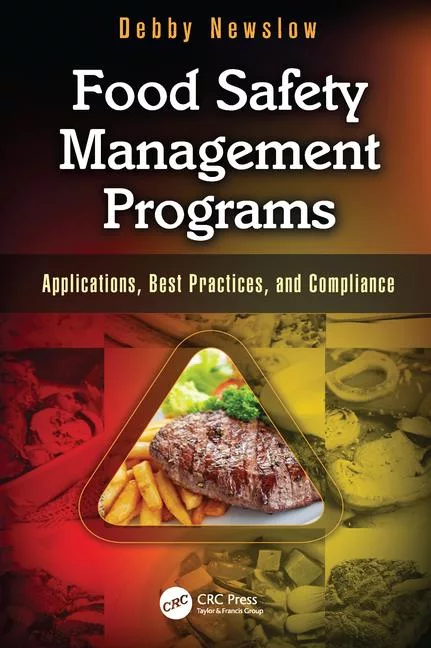
    Food Safety Management Programs: Applications, Best Practices, and Compliance

  • 9781032369990 (1).webp

    Food Safety Quality Control and Management

See More Products

Related Directories

  • FoodChain ID

    Our mission is to make it easier to keep the food supply chain safe, compliant and transparent. We serve 30,000+ customers in over 100 countries. We offer five key service areas: Regulatory Compliance, Product Development Solutions, Food Safety Solutions, Product Certifications, Testing Solutions
  • SafetyChain Software

    SafetyChain is a digital plant management platform trusted by more than 2,500 food and beverage manufacturing facilities to improve plant-wide performance. It unifies production and quality teams with data and insights, tools, and delivers real-time operational visibility and control by eliminating paper and point solutions.
×

Never miss the latest news and trends driving the food safety industry

eNewsletter | Website | eMagazine

JOIN TODAY!
  • RESOURCES
    • Advertise
    • Contact Us
    • Directories
    • Store
    • Want More
  • SIGN UP TODAY
    • Create Account
    • eMagazine
    • eNewsletter
    • Customer Service
    • Manage Preferences
  • SERVICES
    • Marketing Services
    • Reprints
    • Market Research
    • List Rental
    • Survey/Respondent Access
  • STAY CONNECTED
    • LinkedIn
    • Facebook
    • Instagram
    • X (Twitter)
  • PRIVACY
    • PRIVACY POLICY
    • TERMS & CONDITIONS
    • DO NOT SELL MY PERSONAL INFORMATION
    • PRIVACY REQUEST
    • ACCESSIBILITY

Copyright ©2025. All Rights Reserved BNP Media.

Design, CMS, Hosting & Web Development :: ePublishing