Food Safety
search
Ask Food Safety AI
cart
facebook twitter linkedin
  • Sign In
  • Create Account
  • Sign Out
  • My Account
Food Safety
  • NEWS
    • Latest News
    • White Papers
  • PRODUCTS
  • TOPICS
    • Contamination Control
    • Food Types
    • Management
    • Process Control
    • Regulatory
    • Sanitation
    • Supply Chain
    • Testing and Analysis
  • PODCAST
  • EXCLUSIVES
    • Food Safety Five Newsreel
    • eBooks
    • FSM Distinguished Service Award
    • Interactive Product Spotlights
    • Videos
  • BUYER'S GUIDE
  • MORE
    • ENEWSLETTER >
      • Archive Issues
      • Subscribe to eNews
    • Store
    • Sponsor Insights
    • ASK FSM AI
  • WEBINARS
  • FOOD SAFETY SUMMIT
  • EMAG
    • eMagazine
    • Archive Issues
    • Editorial Advisory Board
    • Contact
    • Advertise
  • SIGN UP!
ManagementRegulatoryBest PracticesFood DefenseFDAFSMA

Staying One Step Ahead of Food Fraudsters

September 1, 2015

Do your supply chain partners’ practices put your company’s hard-earned brand and reputation at risk? That is an inquiry prudent food companies continually assess. The strength and transparency of a company’s supply chain typically is a substantial hurdle on the path to success. The failure to adequately take stock of supply partners—and their partners—could result in tarnished reputations, loss of market share or worse.

The recent horse meat scandal in Europe is a stark reminder of that lesson. As food fraud scandals go, it could have been worse. The fraudsters did not cause widespread foodborne illness—although, apparently, many stomachs were turned. Rather, they enraged consumers and caused a firestorm of social media brand bashing. Numerous companies were ensnared in the resulting scandal, causing losses in the millions and tarnished brands. Their misconduct also gave rise to bewildered and angry consumers demanding to know how such a swindle could happen. The answer to the cause of their outrage appears to be straightforward. Companies did not evaluate their supply partners, and their supply partners’ partners, on a sufficiently routinized or adequate basis.

Meaningful supply partner assessment is not easy, nor is it a burden unique to food companies with limited resources or that do not have personnel dedicated to managing supply chains.  Large companies with sophisticated food safety programs can fall prey to the practices of unscrupulous supply partners that cut corners and ignore food safety and other consumer and societal concerns. For example, on August 19, 2015, three California law firms filed a class action lawsuit in the federal court in San Francisco claiming that Costco is engaging in deceptive practices and demanding that Costco and its Thai supply partner cease selling shrimp sourced from Thailand unless Costco indicates on packages of the shrimp that the shrimp are a product of forced labor and slavery. Underlying that claim and demand are allegations of deplorable abuse and working conditions at one or more sub-suppliers. Costco has a published Code of Conduct which prohibits human rights abuses in its supply chain, and demands that its suppliers contractually agree to abide by the Code and to ensure that their suppliers also comply. Costco also utilizes detailed food safety plans that require suppliers to employ their exacting safety standards. Nevertheless, Costco finds itself ensnared in a web of alleged wrongdoing, with the lawsuit and its attendant allegations widely reported in the media. To be clear, the lawsuit is in its nascent stage, and ultimately the charges against and demands of Costco may prove to be false. But even if the allegations prove false, the Costco brand nevertheless may suffer lasting harm.

The lesson? Food companies must know with whom they are dealing and with whom their direct supply partners deal. Good business practices require this. So too will the Food Safety Modernization Act (FSMA). As Michael Taylor, the U.S. Food and Drug Administration (FDA) deputy commissioner in charge of FSMA implementation, noted when FSMA was enacted in 2011, food companies should “Think of [FSMA] as supply chain management written into law.”

FDA is scheduled to roll out over the next few months the final FSMA regulations that are the foundation of FSMA. At their base, those regulations promote and require proactive management of internal food company operations and external supply chains relationships to prevent food products that can sicken people from entering the marketplace. In other words, the regulations mirror good business practices—and require food companies at each step in the supply chain to take a hard look at their internal operations and external relationships, domestic and foreign.

A primary reason for the forthcoming changes in food law is the increasingly global and complex food supply chain. Products and ingredients in the U.S. food supply now come from every party of the world. In light of those complexities, companies that grow, process, transport, store and sell food products and the FDA alike face unprecedented challenges to assure that food products both are safe and comprise only the ingredients advertised.

Faced with those challenges, what’s the answer? In short:

•   Preparation for and compliance with FSMA—including study of which regulations apply to your company’s internal operations and external supply partners;

•   Transparency in the food safety measures your company and its external partners employ to keep the food supply safe; and

•   Vigilant management and oversight of internal operations and external relations

Of course, each undertaking is itself complex and multi-faceted, the exact steps for which will depend on the nature and complexity of the food product and the internal operations and supply relationships needed to produce and market that product. But with proper planning, careful contracting and ongoing oversight, a company can take steps to reduce the likelihood that it will find its name in the caption of the next lawsuit or the headlines of tomorrow’s news.

John T. Shapiro, Esq., is a partner and Meghan E. Tepas, Esq., is an associate at Freeborn & Peters LLP (Chicago) and are members of Freeborn’s Food Industry Team.


Author(s): John T. Shapiro, Esq., and Meghan E. Tepas, Esq

Looking for quick answers on food safety topics?
Try Ask FSM, our new smart AI search tool.
Ask FSM →


Share This Story

Recommended Content

JOIN TODAY
to unlock your recommendations.

Already have an account? Sign In

  • people holding baby chicks

    Serovar Differences Matter: Utility of Deep Serotyping in Broiler Production and Processing

    This article discusses the significance of Salmonella in...
    Food Type
    By: Nikki Shariat Ph.D.
  • woman washing hands

    Building a Culture of Hygiene in the Food Processing Plant

    Everyone entering a food processing facility needs to...
    Training
    By: Richard F. Stier, M.S.
  • graphical representation of earth over dirt

    Climate Change and Emerging Risks to Food Safety: Building Climate Resilience

    This article examines the multifaceted threats to food...
    International
    By: Maria Cristina Tirado Ph.D., D.V.M. and Shamini Albert Raj M.A.
Manage My Account
  • eMagazine Subscription
  • Subscribe to eNewsletter
  • Manage My Preferences
  • Website Registration
  • Subscription Customer Service

More Videos

Sponsored Content

Sponsored Content is a special paid section where industry companies provide high quality, objective, non-commercial content around topics of interest to the Food Safety Magazine audience. All Sponsored Content is supplied by the advertising company and any opinions expressed in this article are those of the author and not necessarily reflect the views of Food Safety Magazine or its parent company, BNP Media. Interested in participating in our Sponsored Content section? Contact your local rep!

close
  • Salmonella bacteria
    Sponsored byThermoFisher

    Food Microbiology Testing Methods: Salmonella species

  • a diagram explaining indicator organisms
    Sponsored byHygiena

    How Proactive Listeria Testing Helps Prevent Six- and Seven-Figure Recalls

  • woman grocery shopping
    Sponsored byCorbion

    Designing Safety Into Every Bite: Proactive Risk Mitigation for Refrigerated Foods

Popular Stories

NRTE breaded stuffed chicken

USDA Indefinitely Delays Enforcement of Salmonella as Adulterant in Raw Breaded, Stuffed Chicken

non-conforming product

How to Handle Non-Conforming Product

spoonfuls of food ingredients

FDA’s Developing Rule to Tighten GRAS Oversight Moves to White House

Events

December 11, 2025

How to Develop and Implement an Effective Food Defense Strategy

Live: December 11, 2025 at 2:00 pm EDT: From this webinar, attendees will learn common areas where companies encounter challenges in their food defense strategies and how to address them.

May 11, 2026

The Food Safety Summit

Stay informed on the latest food safety trends, innovations, emerging challenges, and expert analysis. Leave the Summit with actionable insights ready to drive measurable improvements in your organization. Do not miss this opportunity to learn from experts about contamination control, food safety culture, regulations, sanitation, supply chain traceability, and so much more.

View All

Products

Global Food Safety Microbial Interventions and Molecular Advancements

Global Food Safety Microbial Interventions and Molecular Advancements

See More Products

Related Articles

  • Keeping Customers One Step Ahead with Agile Risk Management Solutions

    See More
  • Food, Beverage, and Supplements Litigation: Staying Out of the Crosshairs

    See More
  • FDA logo white blue

    FDA Submits FSMA Traceability Final Rule Ahead of New Era of Smarter Food Safety Webinar

    See More

Related Products

See More Products
  • 9781498721776.jpg

    Handbook of Food Processing: Food Safety, Quality, and Manufacturing Processes

  • 1444333348.jpg

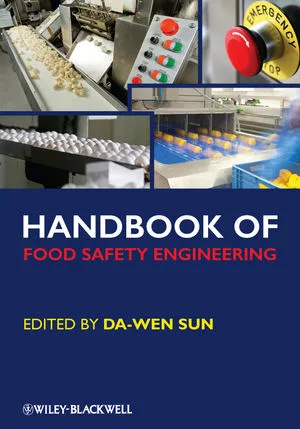
    Handbook of Food Safety Engineering

  • 9781138198463.jpg

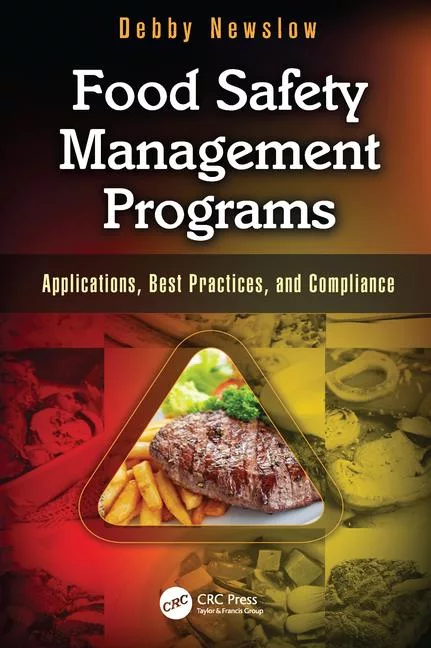
    Food Safety Management Programs: Applications, Best Practices, and Compliance

See More Products

Events

View AllSubmit An Event
  • June 12, 2025

    Additive Bans Ahead: Your Guide to Avoiding Risk and Maintaining Agility

    On Demand: From this webinar, attendees will learn how ingredient bans will impact product development, labeling, and sourcing.
View AllSubmit An Event

Related Directories

  • Institute of Food Technologists

    Since 1939, the Institute of Food Technologists (IFT) has served as the voice of the global food science community. IFT advocates for science, technology, and research to address the world’s greatest food challenges, guiding our community of more than 200,000. IFT convenes professionals from around the world – from producers and product developers to innovators and researchers across food, nutrition, and public health – with a shared mission to help create a global food supply that is sustainable, safe, nutritious, and accessible to all. IFT provides its growing community spanning academia, industry, and government with the resources, connections, and opportunities necessary to stay ahead of a rapidly evolving food system as IFT helps feed the minds that feed the world. For more information, please visit ift.org.
  • On Target Packaging

    On Target Packaging is a production/maintenance servicer for combination and check weighers. We do not sell or process food, but provide service/repairs, and equipment for the food industry
  • OneVision Corp.

    We develop, manufacture, sell and support can seam inspection and weighing systems to food and beverage canners, can makers, and specialty manufacturers (oil filter, aerosol cans, composite cans). Founded in 1994, we've installed and support more than 350 can seam inspection systems around the world.
×

Never miss the latest news and trends driving the food safety industry

eNewsletter | Website | eMagazine

JOIN TODAY!
  • RESOURCES
    • Advertise
    • Contact Us
    • Directories
    • Store
    • Want More
  • SIGN UP TODAY
    • Create Account
    • eMagazine
    • eNewsletter
    • Customer Service
    • Manage Preferences
  • SERVICES
    • Marketing Services
    • Reprints
    • Market Research
    • List Rental
    • Survey/Respondent Access
  • STAY CONNECTED
    • LinkedIn
    • Facebook
    • Instagram
    • X (Twitter)
  • PRIVACY
    • PRIVACY POLICY
    • TERMS & CONDITIONS
    • DO NOT SELL MY PERSONAL INFORMATION
    • PRIVACY REQUEST
    • ACCESSIBILITY

Copyright ©2025. All Rights Reserved BNP Media.

Design, CMS, Hosting & Web Development :: ePublishing