Food Safety
search
Ask Food Safety AI
cart
facebook twitter linkedin
  • Sign In
  • Create Account
  • Sign Out
  • My Account
Food Safety
  • NEWS
    • Latest News
    • White Papers
  • PRODUCTS
  • TOPICS
    • Contamination Control
    • Food Types
    • Management
    • Process Control
    • Regulatory
    • Sanitation
    • Supply Chain
    • Testing and Analysis
  • PODCAST
  • EXCLUSIVES
    • Food Safety Five Newsreel
    • eBooks
    • FSM Distinguished Service Award
    • Interactive Product Spotlights
    • Videos
  • BUYER'S GUIDE
  • MORE
    • ENEWSLETTER >
      • Archive Issues
      • Subscribe to eNews
    • Store
    • Sponsor Insights
    • ASK FSM AI
  • WEBINARS
  • FOOD SAFETY SUMMIT
  • EMAG
    • eMagazine
    • Archive Issues
    • Editorial Advisory Board
    • Contact
    • Advertise
  • SIGN UP!

Unclear which agency should be inspecting catfish

GAO says the FDA and USDA’s FSIS need to get together on testing imported catfish for residual drugs.
catfish chart
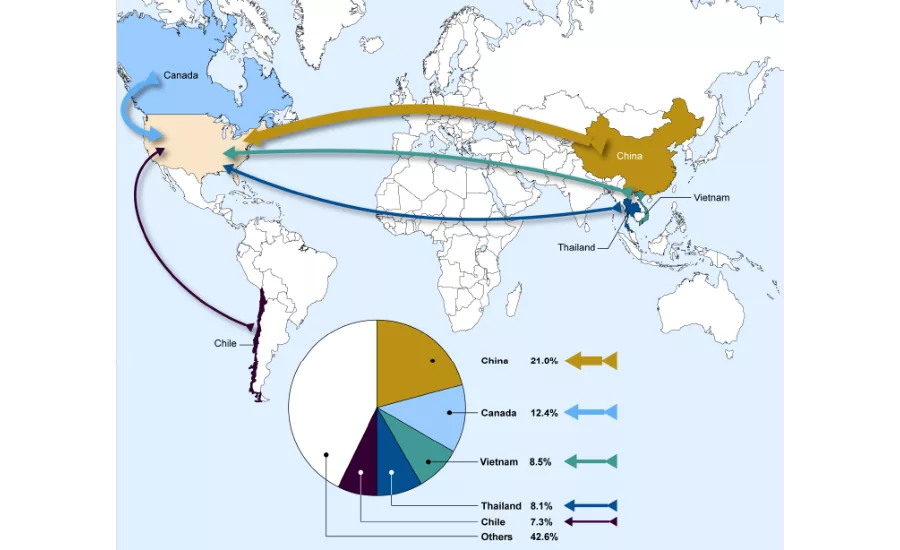
Seafood imports to the United States in 2015 by Country of Origin. Note: The “Others” category represents 137 countries that also exported seafood to the United States in 2015. These countries include Australia, Indonesia, and Mexico with seafood exports such as swordfish, shrimp, and snapper. Source: GAO analysis of Department of Commerce and US Customs and Border Protection; Map Resources (map); From the report GAO-17-443.
catfish chart
catfish
The saga dates back to 2012 when the Government Accountability Office said that the responsibility for inspecting catfish should not be reassigned from FDA to the USDA. However, that’s not what happened.
catfish chart
catfish chart
catfish
December 20, 2017

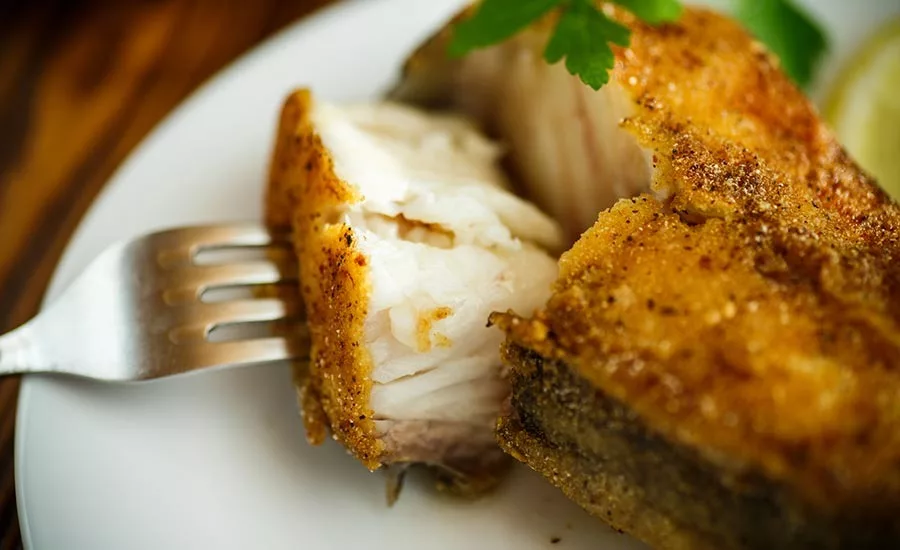
The government can’t seem to decide which agency should be inspecting catfish.

The saga dates back to 2012 when the Government Accountability Office said that the responsibility for inspecting catfish should not be reassigned from FDA to the USDA.

However, that’s not what happened. The Food Conservation and Energy Act of 2008 (aka. Farm Bill) needlessly fragmented the food safety system by directing the USDA’s FSIS to assume inspection of catfish while FDA handled all other fish.

The Farm Bill split the responsibility for seafood safety between FSIS for catfish inspection and the FDA for general seafood. At the time, FSIS was directed to prepare a risk assessment to determine the risks associated with catfish — one of which it identified was Salmonella, which it said was a primary food safety issue. However, other issues remain.

The GAO recently evaluated FDA’s inspection of seafood imports for unsafe drug residues, and took another hard look at FSIS and catfish — and especially imported catfish, some of which have had high levels of residual drugs.

And in a September 2017 GAO report, Imported Seafood Safety: FDA and USDA Could Strengthen Efforts to Prevent Unsafe Drug Residues, GAO made five recommendations for both FDA and USDA to improve food safety with imported seafood. These include:

1. FDA should pursue agreements with other countries to test export seafood for import to the US for drugs of concern.

2. USDA’s FSIS should visit a sample of catfish farms as part of foreign country, on-site audits to determine conditions under which the catfish are being raised, including the drugs being used.

Looking for quick answers on food safety topics?
Try Ask FSM, our new smart AI search tool.
Ask FSM →

3. The administrator of FSIS should require as part of an equivalence determination that countries exporting catfish to the US include in their residue monitoring plans the drugs of concern to FSIS and the corresponding maximum residue levels (MRLs).

4. The commissioner of the FDA should coordinate and communicate with FSIS in developing drug residue testing methods and corresponding MRLs for imported seafood that may also be applicable to imported catfish.

5. The administrator of FSIS should coordinate and communicate with FDA in developing drug residue testing methods and corresponding MRLs for imported catfish that may also be applicable to other imported seafood.

Unfortunately, GAO is not pleased with the results so far. According to the GAO report, FDA agreed with or partially agreed with two of the above recommendations. FSIS partially agreed with two and said it already addresses a third. GAO disagrees and believes the recommendations should all be implemented.

FDA and FSIS took steps to accomplish the transfer of catfish oversight from FDA to FSIS, as called for in the Agricultural Act of 2014 memorandum of understanding (MOU) that both agencies signed.

However, according to the GAO, FDA and FSIS generally have not coordinated in drug residue testing methods, resulting — in some cases — in differences in drug residue levels used to determine if seafood is unsafe, specifically for unapproved drugs, as called for in a 1984 MOU to exchange information on their drug testing methods and ensure the comparability of their results.

Without this FDA and FSIS coordination, the agencies do not have reasonable assurance that they are consistently protecting consumers from unsafe drug residues.

If you are an importer of seafood into the US, seafood HACCP rules apply, and guidance can be found here.

For more information or to read the GAO (GAO-17-443) report, download it here. 

This article was originally posted on www.foodengineeringmag.com.

This article was originally posted on www.foodengineeringmag.com.

KEYWORDS: FDA food inspection USDA

Share This Story

Recommended Content

JOIN TODAY
to unlock your recommendations.

Already have an account? Sign In

  • people holding baby chicks

    Serovar Differences Matter: Utility of Deep Serotyping in Broiler Production and Processing

    This article discusses the significance of Salmonella in...
    Contamination Control
    By: Nikki Shariat Ph.D.
  • woman washing hands

    Building a Culture of Hygiene in the Food Processing Plant

    Everyone entering a food processing facility needs to...
    Personal Hygiene/Handwashing
    By: Richard F. Stier, M.S.
  • graphical representation of earth over dirt

    Climate Change and Emerging Risks to Food Safety: Building Climate Resilience

    This article examines the multifaceted threats to food...
    Best Practices
    By: Maria Cristina Tirado Ph.D., D.V.M. and Shamini Albert Raj M.A.
Manage My Account
  • eMagazine Subscription
  • Subscribe to eNewsletter
  • Manage My Preferences
  • Website Registration
  • Subscription Customer Service

More Videos

Sponsored Content

Sponsored Content is a special paid section where industry companies provide high quality, objective, non-commercial content around topics of interest to the Food Safety Magazine audience. All Sponsored Content is supplied by the advertising company and any opinions expressed in this article are those of the author and not necessarily reflect the views of Food Safety Magazine or its parent company, BNP Media. Interested in participating in our Sponsored Content section? Contact your local rep!

close
  • Salmonella bacteria
    Sponsored byThermoFisher

    Food Microbiology Testing Methods: Salmonella species

  • a diagram explaining indicator organisms
    Sponsored byHygiena

    How Proactive Listeria Testing Helps Prevent Six- and Seven-Figure Recalls

  • woman grocery shopping
    Sponsored byCorbion

    Designing Safety Into Every Bite: Proactive Risk Mitigation for Refrigerated Foods

Popular Stories

NRTE breaded stuffed chicken

USDA Indefinitely Delays Enforcement of Salmonella as Adulterant in Raw Breaded, Stuffed Chicken

digital map of europe

EU Publishes Food Fraud Tool Mapping Thousands of Cases Since 2016

non-conforming product

How to Handle Non-Conforming Product

Events

December 11, 2025

How to Develop and Implement an Effective Food Defense Strategy

Live: December 11, 2025 at 2:00 pm EDT: From this webinar, attendees will learn common areas where companies encounter challenges in their food defense strategies and how to address them.

May 11, 2026

The Food Safety Summit

Stay informed on the latest food safety trends, innovations, emerging challenges, and expert analysis. Leave the Summit with actionable insights ready to drive measurable improvements in your organization. Do not miss this opportunity to learn from experts about contamination control, food safety culture, regulations, sanitation, supply chain traceability, and so much more.

View All

Products

Global Food Safety Microbial Interventions and Molecular Advancements

Global Food Safety Microbial Interventions and Molecular Advancements

See More Products

Related Articles

  • wide variety of produce for sale at a spanish market

    Spanish Food Safety Agency Identifies Which Fruits, Vegetables are Most Risky to Sell in Bulk

    See More
  • Whole-Genome Sequencing May Be Hot, But Which Rapid Micro Method Won’t Leave You Burned?

    See More
  • woman checking off a list

    Regulatory Changes Impacting Your Food Safety Program, Part 1—What Should FDA's Priorities Be?

    See More

Related Products

See More Products
  • 1118474600.jpg

    Practical Food Safety: Contemporary Issues and Future Directions

  • food-safety-making.jpg

    Food Safety: Making Foods Safe and Free From Pathogens

  • 9781138198463.jpg

    Food Safety Management Programs: Applications, Best Practices, and Compliance

See More Products

Related Directories

  • Eagle Product Inspection

    Eagle Product Inspection is a leading manufacturer of hygienically designed x-ray equipment & inline fat analysis systems. Eagle specializes in complex x-ray inspection solutions using dual energy photon-counting technology for bone detection and inline fat analysis for a wide variety of industries, including meat, poultry and seafood.
×

Never miss the latest news and trends driving the food safety industry

eNewsletter | Website | eMagazine

JOIN TODAY!
  • RESOURCES
    • Advertise
    • Contact Us
    • Directories
    • Store
    • Want More
  • SIGN UP TODAY
    • Create Account
    • eMagazine
    • eNewsletter
    • Customer Service
    • Manage Preferences
  • SERVICES
    • Marketing Services
    • Reprints
    • Market Research
    • List Rental
    • Survey/Respondent Access
  • STAY CONNECTED
    • LinkedIn
    • Facebook
    • Instagram
    • X (Twitter)
  • PRIVACY
    • PRIVACY POLICY
    • TERMS & CONDITIONS
    • DO NOT SELL MY PERSONAL INFORMATION
    • PRIVACY REQUEST
    • ACCESSIBILITY

Copyright ©2025. All Rights Reserved BNP Media.

Design, CMS, Hosting & Web Development :: ePublishing