Study Suggests Bleaching of Tree Nuts Produces Potentially Toxic Chemical Byproducts
Need to Know
- USC researchers found that chlorine-based chemicals used to bleach tree nut shells for aesthetic purposes can react with fatty acids in edible kernels, forming potentially harmful byproducts called fatty acid chlorohydrins
- At 1 percent sodium hypochlorite, pistachios exhibited the highest chlorohydrin concentrations, followed by hazelnuts and walnuts; formation also increased with bleaching concentration, contact time, and kernel accessibility
- The researchers detected fatty acid chlorohydrins in three commercially available walnut brands at concentrations of 4.9–5.6 µg/g, indicating potential consumer exposure
- Laboratory testing showed that fatty acid chlorohydrins were substantially more cytotoxic than 3-MCPD, an EU-regulated food processing contaminant
- Further toxicological investigation and formal risk assessment is required to establish a dietary risk to consumers; the researchers called for further investigation into the compounds' long-term health effects, improved monitoring of chemical byproducts formed during food processing, and greater scrutiny of chlorine bleaching practices used solely for aesthetic purposes
A new study has demonstrated that sodium hypochlorite (NaOCl), a chlorine-based chemical used to bleach tree nut shells for aesthetic purposes, can react with fatty acids in the edible kernels to form potentially harmful chemical byproducts. The researchers detected these compounds, known as fatty acid chlorohydrins, in commercially available walnuts and raised concerns about the potential for cell damage based on laboratory tests.
The study, published in the Journal of Hazardous Materials, was conducted by researchers at the University of Southern California (USC), led by Adam Simpson, Ph.D., Assistant Professor in the Sonny Astani Department of Civil and Environmental Engineering at the USC Viterbi School of Engineering.
The findings highlighted a potentially overlooked source of consumer exposure to chemical contaminants formed during food processing, although further research is needed to determine their effects on human health.
Chlorine Bleaching Produces Fatty Acid Chlorohydrins in Tree Nuts
According to the researchers, sodium hypochlorite solutions containing 1–6 percent NaOCl, equivalent to approximately 10,000–60,000 milligrams per liter (mg/L) as chlorine, may be used to bleach the shells of walnuts, pistachios, and hazelnuts to improve their appearance. These concentrations are substantially higher than those typically used for postharvest produce disinfection, which may reach 200 mg/L as chlorine.
During bleaching, hypochlorous acid (HOCl) can penetrate tree nut shells through sutures or other openings and react with unsaturated fatty acids in the edible kernels, producing fatty acid chlorohydrins. These compounds can remain associated with the food's lipid matrix rather than existing as readily detectable surface residues.
To investigate the formation of process contaminants, the researchers conducted laboratory-scale bleaching experiments on in-shell walnuts, pistachios, and hazelnuts using NaOCl concentrations ranging from 1–12 percent. Treatments were generally conducted for three minutes at pH 7 and 21 °C, followed by three rinses. The 1 and 3 percent treatments were intended to approximate commercial conditions, while the 12 percent treatment represented an experimental upper bound.
Contamination Differences Among Nuts, Bleaching Parameters
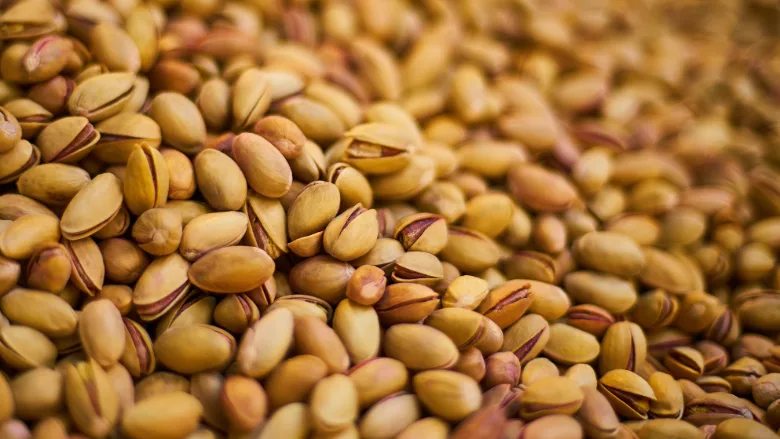
At 1 percent NaOCl, pistachios exhibited the highest total chlorohydrin concentrations, at 34.4 micrograms per gram (µg/g) of edible kernel, followed by hazelnuts at 6.0 µg/g and walnuts at 2.8 µg/g.
Looking for quick answers on food safety topics?
Try Ask FSM, our new smart AI search tool.
Ask FSM →
The researchers attributed these differences partly to shell structure and kernel accessibility. Pistachios, which have naturally split shells, allowed greater contact between the bleaching solution and the edible kernels. Dye-tracer experiments also demonstrated that bleaching solutions could penetrate walnut shells through their sutures.
Additional experiments showed that increasing contact time and exposing greater kernel surface area increased chlorohydrin formation. In-shell walnuts treated with 1 percent NaOCl for 15 minutes contained approximately eight times more chlorohydrins than those treated for three minutes. Bleaching pulverized walnut kernels produced 49.4 µg/g of total chlorohydrins, compared with 18.5 µg/g in intact kernels and 2.8 µg/g in in-shell walnuts treated for three minutes.
Commercial Walnuts Contained Chlorohydrins With Concerning Cytotoxicity
The researchers also analyzed three commercially available brands of in-shell walnuts, detecting total fatty acid chlorohydrin concentrations ranging from 4.9–5.6 µg/g of edible kernel. The compounds' distribution and concentrations were comparable to those observed in laboratory-bleached walnuts, suggesting that commercial bleaching practices may contribute to consumer exposure.
To evaluate potential toxicological significance, the researchers conducted 72-hour in vitro cytotoxicity assays on synthesized fatty acid chlorohydrins and compared the results with 3-monochloro-1,2-propanediol (3-MCPD), a food processing contaminant subject to EU regulatory limits.
The fatty acid chlorohydrins exhibited substantially greater cytotoxicity—that is, the ability to cause cell damage—than 3-MCPD. Specifically, the concentration required to substantially affect cell density was more than 4,000 micromolars (µM) less for chlorohydrins than 3-MCPD.
Using these results, the researchers conducted a preliminary screening-level comparison of the chlorohydrins’ cytotoxic potency with the EU’s tolerable daily intake for 3-MCPD, which is 2 µg/kg of body weight. They estimated that the chlorohydrins present in approximately 3.6–4.0 grams of the commercial walnuts had an equivalent in vitro cytotoxic potency to the 3-MCPD intake benchmark for a 65-kilogram adult, substantially less than a typical 30-gram serving of tree nuts.
Importantly, the researchers emphasized that these comparisons do not constitute a dietary risk assessment and cannot establish whether consuming bleached tree nuts causes adverse health effects. The analysis assumed additive cytotoxicity and did not account for gastrointestinal digestion, bioavailability, metabolism, or differences between laboratory cell responses and human exposure.
Further Research Needed to Determine Consumer Health Risks
The researchers asserted that fatty acid chlorohydrins represent an underrecognized class of food processing byproducts that may not be captured by conventional chemical contaminant monitoring, which often focuses on known contaminants or smaller molecular compounds.
The study also suggested that chlorine-based processing may produce additional, unidentified transformation products through reactions with other food components, including proteins and phenolic compounds.
Dr. Simpson's laboratory has begun collaborating with Ana Claudia Maretti-Garcia, Ph.D., Assistant Professor of Research Medicine at USC's Keck School of Medicine, to investigate the effects of synthesized fatty acid chlorohydrins on hepatocytes, the liver's primary functional cells.
"We want to know how these compounds affect the consumer," Simpson said. "We do basic toxicology in our lab, but now we want to move toward medical research."
The researchers called for additional investigations into the compounds' metabolic fate, chronic low-dose toxicity, and potential formation during other oxidative food processing operations. They also suggested that greater transparency regarding industrial bleaching practices and targeted analytical monitoring could support safer processing methods.
Researchers Question Bleaching Foods for Aesthetic Purposes
Dr. Simpson emphasized the distinction between using chemical treatments to control foodborne pathogens and using them primarily to improve a food's appearance.
"I can understand balancing the risk of pathogens against the chronic risk of these byproducts, because the yields are very low," Dr. Simpson said. "But the industry is also bleaching tree nuts, whey protein, and many other foods with chlorine and similar oxidants for aesthetic purposes that have no nutritional value."
The researchers concluded that fatty acid chlorohydrins warrant further toxicological evaluation, particularly because they can form within edible food matrices and persist in commercially available products.