Food Safety
search
Ask Food Safety AI
cart
facebook twitter linkedin instagram youtube
  • Sign In
  • Create Account
  • Sign Out
  • My Account
Food Safety
  • NEWS
    • Latest News
    • Sponsored Insights
    • Sponsored White Papers
  • PRODUCTS
  • TOPICS
    • Contamination Control
    • Food Types
    • Management
    • Process Control
    • Regulatory
    • Sanitation
    • Supply Chain
    • Testing and Analysis
  • PODCAST
  • EXCLUSIVES
    • Food Safety Five Newsreel
    • eBooks
    • FSM Distinguished Service Award
    • Interactive Product Spotlights
    • Videos
  • BUYER'S GUIDE
  • MORE
    • NEWSLETTERS >
      • Archive Issues
      • Subscribe to eNews
    • Store
    • ASK FSM AI
  • WEBINARS
  • FOOD SAFETY SUMMIT
  • EMAG
    • eMagazine
    • Archive Issues
    • Editorial Advisory Board
    • Contact
    • Advertise
  • SIGN UP!
NewsManagementBest Practices

FAO Makes the Case for Strong Science, Clear Risk Communication for Food Safety Decision-Making

By Food Safety Magazine Editorial Team
cork letters that say "risk"
Image credit: atlascompany via Magnific
September 18, 2026

Robust scientific evidence and clear risk communication are essential to effective food safety decision-making, argued authors representing the Food and Agriculture Organization of the United Nations (FAO) in a new publication. The authors also highlighted challenges to risk communication posed by emerging technologies like artificial intelligence (AI), social media misinformation, and how scientific information is framed in academic journals and media.

Published in the Journal of Food Protection, the review emphasized that reliable science underpins risk assessment, evidence-based policymaking, regulatory limits, food safety controls, hazard monitoring, foodborne illness surveillance, technology development, and best practices. However, they noted that regulatory and political decisions also consider legal requirements, feasibility, economic factors, and societal priorities.

Because scientific information can contain limitations and uncertainties, the authors stressed the importance of scientific rigor, including objectivity, transparency, reproducibility, and appropriate interpretation of data. Not all scientific evidence is suitable for regulatory use, and risk assessors must consider factors such as methodological validity, relevance, exposure context, and reporting quality.

Case Study: Gut Microbiome Data Illustrate Challenges for Regulatory Science

As a case study, the researchers examined the potential use of gut microbiome data in chemical risk assessment. Although certain microbiome-related data are already used in assessing veterinary drug and pesticide residues, significant knowledge and technical gaps currently limit broader regulatory applications.

For example, there is no internationally accepted framework for systematically evaluating gut microbiome exposure to chemicals, and consensus definitions of a "healthy" gut microbiome and dysbiotic or dysfunctional states are lacking. Other challenges include limited methodological guidance, a lack of standardized and validated analytical methods, difficulties demonstrating causal relationships between microbiome changes and adverse health outcomes, and challenges extrapolating findings from experimental models to humans.

To produce data with greater regulatory relevance, the authors recommended that researchers design studies around realistic dietary exposure scenarios, use appropriate chemical grades and dose ranges, consider longitudinal study designs and human-relevant models, and follow available standardized protocols for sampling, analysis, bioinformatics, and reporting.

Responsible Scientific Communication

The researchers also stressed that responsibility for accurately communicating scientific evidence extends across researchers, peer reviewers, publishers, risk assessors, policymakers, journalists, educators, consumer organizations, and other stakeholders.

Looking for quick answers on food safety topics?
Try Ask FSM, our new smart AI search tool.
Ask FSM →

Researchers should clearly distinguish evidence-supported conclusions from speculation, report uncertainties and limitations, avoid practices such as cherry-picking and "spin," and exercise caution when extrapolating experimental findings to humans. The authors specifically emphasized the importance of accurate titles and abstracts because these may be the only portions of scientific papers read by policymakers, journalists, scientists, and members of the public.

Challenges, Opportunities Posed by Emerging Technologies

At the same time, emerging digital technologies present both opportunities and risks for food safety science. AI, big data analytics, and related tools could improve risk prediction, monitoring, traceability, outbreak response, and decision support. However, biased or incomplete datasets, opaque algorithms, and insufficient validation could produce unreliable outputs. AI-generated scientific content can also contain factual errors, nonexistent references, plagiarism, or fabricated information, requiring human oversight and clear frameworks for responsible use.

Social Media Misinformation, Disinformation

Misinformation and disinformation pose additional challenges for food safety risk communication, especially through social media and other digital channels. The authors asserted that transparent communication of scientific uncertainty, stronger collaboration among scientific bodies, and greater public understanding of scientific evidence could help strengthen trust.

Overall, the researchers concluded that maintaining effective food safety systems amid evolving technologies, food production, and global trade will require a collective commitment to scientific integrity, transparency, reproducibility, and accurate communication across regulators, researchers, industry, publishers, and other stakeholders.


KEYWORDS: FAO risk communication

Share This Story

Fsm purple logo 200x200

The Food Safety Magazine editorial team comprises Bailee Henderson, Director of Content Strategy and news editor ✉, and Adrienne Blume, M.A., Director of Editorial and Industry Engagement.

Recommended Content

JOIN TODAY
to unlock your recommendations.

Already have an account? Sign In

  • people holding baby chicks

    Serovar Differences Matter: Utility of Deep Serotyping in Broiler Production and Processing

    This article discusses the significance of Salmonella in...
    Methods
    By: Nikki Shariat Ph.D.
  • woman washing hands

    Building a Culture of Hygiene in the Food Processing Plant

    Everyone entering a food processing facility needs to...
    Management
    By: Richard F. Stier, M.S.
  • graphical representation of earth over dirt

    Climate Change and Emerging Risks to Food Safety: Building Climate Resilience

    This article examines the multifaceted threats to food...
    International
    By: Maria Cristina Tirado Ph.D., D.V.M. and Shamini Albert Raj M.A.
Manage My Account
  • eMagazine Subscription
  • Subscribe to Newsletters
  • Manage My Preferences
  • Website Registration
  • Subscription Customer Service

More Videos

Sponsored Content

Sponsored Content is a special paid section where industry companies provide high quality, objective, non-commercial content around topics of interest to the Food Safety Magazine audience. All Sponsored Content is supplied by the advertising company and any opinions expressed in this article are those of the author and not necessarily reflect the views of Food Safety Magazine or its parent company, BNP Media. Interested in participating in our Sponsored Content section? Contact your local rep!

close
  • Man In Warehouse
    Sponsored byRentokil

    Mitigating Hidden Rodent Risks in Food Facilities

  • an industrial manufacturing or processing facility
    Sponsored bybioMérieux

    Get Ahead of Spoilage in Food Manufacturing with Metagenomics for Preventive Monitoring

  • an automated industrial production line used in a modern food factory
    Sponsored byIFC

    A Formula for Food Processing Pest Management

Popular Stories

iceberg lettuce growing

Cyclospora Outbreak Linked to Taylor Farms Lettuce Ends with Nearly 13,000 Illnesses, Two Deaths

abbott nutrition logo wall plaque

Abbott Nutrition to Pay $385M Settlement for 2022 Infant Formula Shortage, Contamination Incident

employees checking clipboard in food manufacturing facility

Building a HACCP Program: More Than the Seven Principles

allergens ebook

Events

September 22, 2026

From EFSA to Enforcement: Managing the Growing Complexity of EU MRLs

Live: September 22, 2026 at 11:00 am EDT: Attend this webinar to evaluate best practices for monitoring regulatory changes and protecting market access.

September 24, 2026

Benchmarking Foreign Material Contamination in 2026: What the Data Shows

Live: September 24, 2026 at 2:00 pm EDT:  From this webinar, attendees will learn what is driving investment decisions, and the factors FSQA and ops leaders weigh when making the case for new prevention technology.

September 29, 2026

How to Talk to Your Board of Directors About Food Safety

Live: September 29, 2026 at 11:00 am EDT: Attend this webinar to learn how to position food safety as a material enterprise risk with measurable financial, operational, and reputational impacts relevant to Board-level decision-making.

View All

Products

Global Food Safety Microbial Interventions and Molecular Advancements

Global Food Safety Microbial Interventions and Molecular Advancements

See More Products

Related Articles

  • 6718OpEd.png

    The Costs of Foodborne Illness, Product Recalls Make the Case for Food Safety Investments

    See More
  • line worker moving food on conveyor

    The Business Case for Building Food Safety Skills

    See More
  • food system illustration

    EFSA Outlines Working Areas for Food Safety Risk Communication

    See More

Related Products

See More Products
  • 1118396308.jpg

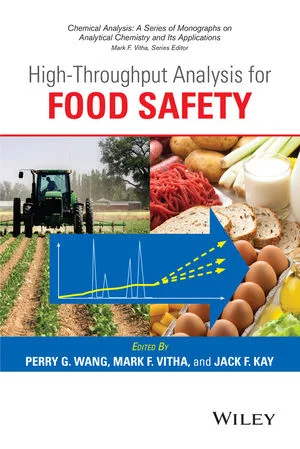
    High Throughput Analysis for Food Safety

  • 1119053595.jpg

    Food Safety for the 21st Century: Managing HACCP and Food Safety throughout the Global Supply Chain, 2E

  • 1119160553.jpg

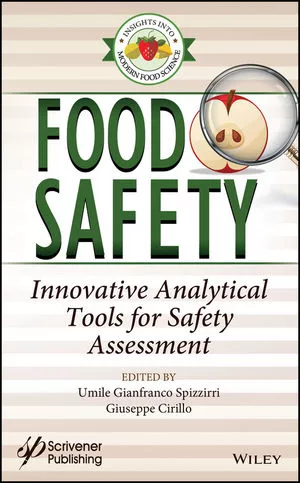
    Food Safety: Innovative Analytical Tools for Safety Assessment

See More Products

Related Directories

  • Institute for Food Safety and Health (IFSH) - Illinois Tech

    IFSH is a one-of-a-kind applied food science research consortium comprised of the Illinois Tech, the U.S. FDA, and the food industry. In collaboration with the FDA, we provide stakeholders with the opportunity to develop and exchange knowledge, experience, and expertise in the areas of food safety, food defense, and nutrition.
  • The Food Safety Professionals Group (The FSPG)

    Educate, Engage, Elevate. Through networking events and virtual education sessions, the FSPG supports students and young & seasoned professionals with mentorship and career opportunities.
  • Women In Food Safety

    Women in Food Safety is a US-based global nonprofit organization dedicated to empowering and advancing women in the food safety and quality industry. Women In Food Safety provides a platform for professionals at all stages of their careers to grow, share knowledge, and support one another. Through community events, educational initiatives, and leadership development, we are building a more inclusive and resilient future for food safety worldwide. Together, we can do BETTER!
×

Never miss the latest news and trends driving the food safety industry

Newsletters | Website | eMagazine

JOIN TODAY!
  • RESOURCES
    • Advertise
    • Contact Us
    • Directories
    • Store
    • Want More
  • SIGN UP TODAY
    • Create Account
    • eMagazine
    • Newsletters
    • Customer Service
    • Manage Preferences
  • SERVICES
    • Marketing Services
    • Reprints
    • Market Research
    • List Rental
    • Survey/Respondent Access
  • STAY CONNECTED
    • LinkedIn
    • Facebook
    • Instagram
    • X (Twitter)
  • PRIVACY
    • PRIVACY POLICY
    • TERMS & CONDITIONS
    • DO NOT SELL MY PERSONAL INFORMATION
    • PRIVACY REQUEST
    • ACCESSIBILITY

Copyright ©2026. All Rights Reserved BNP Media, Inc. and BNP Media II, LLC.

Design, CMS, Hosting & Web Development :: ePublishing