Food Safety
search
Ask Food Safety AI
cart
facebook twitter linkedin instagram youtube
  • Sign In
  • Create Account
  • Sign Out
  • My Account
Food Safety
  • NEWS
    • Latest News
    • Sponsored Insights
    • Sponsored White Papers
  • PRODUCTS
  • TOPICS
    • Contamination Control
    • Food Types
    • Management
    • Process Control
    • Regulatory
    • Sanitation
    • Supply Chain
    • Testing and Analysis
  • PODCAST
  • EXCLUSIVES
    • Food Safety Five Newsreel
    • eBooks
    • FSM Distinguished Service Award
    • Interactive Product Spotlights
    • Videos
  • BUYER'S GUIDE
  • MORE
    • NEWSLETTERS >
      • Archive Issues
      • Subscribe to eNews
    • Store
    • ASK FSM AI
  • WEBINARS
  • FOOD SAFETY SUMMIT
  • EMAG
    • eMagazine
    • Archive Issues
    • Editorial Advisory Board
    • Contact
    • Advertise
  • SIGN UP!
ProductsProcess ControlPackaging

BIZTRACKS

Why Less Packaging Does Not Always Mean Less Waste: Putting Food Protection at the Center of Sustainable Design

For World Packaging Day, experts argue that food packaging should be assessed not only by its material but by how effectively it prevents waste.

By Kelly Mulholland, Nerida Kelton
sustainable packaging decisions
Photo credit: Group4 StudioCreative/E+ via Getty Images
September 7, 2026

The instinct to reduce packaging is understandable. Sustainability discussions often focus on material reduction, recycled content, or recyclability—sometimes in isolation. But using less material is not automatically the lower-waste outcome if it means more food is damaged, spoils sooner, or becomes unsafe to eat.

For food, packaging has a central functional role: it must contain and protect the product, preserve quality and shelf life, and help consumers store and use it safely. A more sustainable outcome is therefore not simply “less packaging.” It is packaging designed to deliver the necessary food-protection performance with the lowest appropriate environmental impact.

The stakes are significant. Around 1.05 billion tons of food are wasted annually, with 19 percent occurring at the retail, foodservice, and household levels. The Food and Agriculture Organization of the United Nations (FAO) estimates that a further 13 percent of food is lost after harvest and before retail. Combined, food loss and waste generate 8–10 percent of global greenhouse-gas emissions, which is almost five times the total emissions from the aviation sector.1 

As the inaugural World Packaging Day is marked globally on September 6, the World Packaging Organization (WPO), the Australasian Institute of Packaging (AIP), and Foundation FSSC are calling for a broader definition of sustainable packaging; that is, one that recognizes its role in food protection, safe use, and food loss and waste prevention.

“Sustainable packaging should not be seen as just about reducing materials—it is also about preventing food loss and waste. We need industry leaders and governments across the globe to guide that balance and elevate the conversation,” said Nerida Kelton, Vice President of Sustainability and Save Food at WPO.

This does not mean that material efficiency, reuse, or recyclability are unimportant. It means that packaging choices must be assessed across the full food value chain. A format designed to use less material may appear preferable at first glance; but if it is more vulnerable to damage, provides insufficient barrier performance, shortens shelf life, or cannot be resealed after opening, it may result in edible food being unnecessarily discarded.

From Design Principles to Management Systems

This is the context for a new collaboration between FSSC, WPO and AIP. FSSC 22000 Version 7 incorporates applicable aspects of AIP’s Save Food Packaging Design Principles into its product design and development requirements for organizations that design primary packaging or packaging materials.

Looking for quick answers on food safety topics?
Try Ask FSM, our new smart AI search tool.
Ask FSM →

The Save Food Packaging principles were established by AIP in partnership with Royal Melbourne Institute of Technology (RMIT University) and End Food Waste Australia, and have been subsequently globalized through WPO. They aim to help food and beverage businesses of all sizes consider how packaging can minimize food loss and waste while continuing to meet safety, quality, and sustainability objectives. Save Food Packaging ensures that the packaging is fit-for-purpose and functional-first, and then ensures that it contains, protects, preserves, and transports a product across the value chain—all the while offering the lowest environmental impact.

“FSSC 22000 Version 7 incorporates a new packaging design requirement under product design and development,” explained Kelly Mulholland, Technical Manager Safety and Quality at FSSC. “Now, potentially more than 40,000 organizations will be required to consider these principles if they design primary packaging/packaging material, further supporting the reduction of food loss and waste.”

The requirements in FSSC 22000 Version 7, Part 2, clause 2.5.13 (g) oblige organizations to consider how the design of their packaging can effectively contain and protect the product, preserve and extend the shelf life, reduce food loss and waste, and provide clear instructions to consumers for handling, storage, and preparation of the food. Any measures taken shall not negatively affect food safety.

The development builds from FSSC 22000 Version 6, which introduced a food loss and waste requirement. At the time, this led to more than 30,000 organizations needing to implement policies and strategies addressing food loss and waste. The Version 7 packaging design principles extend this thinking to the packaging decisions that can influence whether food is protected, preserved, and ultimately, consumed safely.

Five Questions for Packaging Design Teams

Before developing or changing food packaging, design teams can ask five practical questions:

  1. Will it protect the food from damage, contamination, and deterioration?
  2. Will it preserve quality and shelf life?
  3. Can consumers open, use, portion, reseal, and empty it easily?
  4. Does it clearly explain how to store, handle, and use the food safely?
  5. Does it reduce total waste—both food and packaging—rather than simply shifting waste from one place to another?

These questions are not intended to prescribe a single “perfect” package. The appropriate solution will differ by food category, supply chain, consumer needs, regulatory context, and available recovery infrastructure. They can, however, help product developers, packaging technologists, sustainability teams, and food safety professionals assess a proposed change more holistically.

A Call for Better Packaging, Not Simply Less Packaging

Food loss and waste is also an efficiency issue. The resources used to grow, process, transport, refrigerate, and sell food are wasted if that food never reaches a consumer’s plate.

World Packaging Day is an opportunity to move beyond a simple choice between “more” or “less” packaging. The more useful question is whether each packaging decision helps food reach people safely, remain usable for longer, and ultimately be eaten - while reducing total waste across the value chain.

Reference

  1. Forbes, H., Peacock, E., Abbot, N., and Jones, M. Food Waste Index Report 2024. The UN Environment Program (March 2024). https://www.unep.org/resources/publication/food-waste-index-report-2024.

KEYWORDS: food loss prevention food waste FSSC 22000 sustainability

Share This Story

Kelly Mulholland is the FSSC Technical Manager for Safety and Quality. She has an extensive background in food safety and is driven to make a difference in food safety globally by contributing to FSSC’s impact and support within the food sector and the related supply chain. Before joining FSSC, Kelly was a Technical and Compliance Manager for Food (Global) at a global certification body and a lead auditor for the FSSC 22000 Scheme.

Nerida Kelton is the Vice President of Sustainability and Save Food at the World Packaging Organization and Executive Director of the Australasian Institute of Packaging (AIP). As an active lecturer and trainer in the AIP educational portfolio, Nerida is committed to educating and training packaging professionals on the importance of sustainable and circular packaging design. She is passionate about educating the industry on the important role that packaging plays in minimizing food waste and how designing Save Food Packaging can make a difference.

Recommended Content

JOIN TODAY
to unlock your recommendations.

Already have an account? Sign In

  • people holding baby chicks

    Serovar Differences Matter: Utility of Deep Serotyping in Broiler Production and Processing

    This article discusses the significance of Salmonella in...
    Meat/Poultry
    By: Nikki Shariat Ph.D.
  • woman washing hands

    Building a Culture of Hygiene in the Food Processing Plant

    Everyone entering a food processing facility needs to...
    Personal Hygiene/Handwashing
    By: Richard F. Stier, M.S.
  • graphical representation of earth over dirt

    Climate Change and Emerging Risks to Food Safety: Building Climate Resilience

    This article examines the multifaceted threats to food...
    Best Practices
    By: Maria Cristina Tirado Ph.D., D.V.M. and Shamini Albert Raj M.A.
Manage My Account
  • eMagazine Subscription
  • Subscribe to Newsletters
  • Manage My Preferences
  • Website Registration
  • Subscription Customer Service

More Videos

Sponsored Content

Sponsored Content is a special paid section where industry companies provide high quality, objective, non-commercial content around topics of interest to the Food Safety Magazine audience. All Sponsored Content is supplied by the advertising company and any opinions expressed in this article are those of the author and not necessarily reflect the views of Food Safety Magazine or its parent company, BNP Media. Interested in participating in our Sponsored Content section? Contact your local rep!

close
  • Man In Warehouse
    Sponsored byRentokil

    Mitigating Hidden Rodent Risks in Food Facilities

  • an industrial manufacturing or processing facility
    Sponsored bybioMérieux

    Get Ahead of Spoilage in Food Manufacturing with Metagenomics for Preventive Monitoring

  • an automated industrial production line used in a modern food factory
    Sponsored byIFC

    A Formula for Food Processing Pest Management

Popular Stories

a label seal that says "California Certified Not Ultraprocessed" with the California Republic bear on it

California Passes Bill to Create Certification Seal for Non-Ultra-Processed Foods

Beltsville Agricultural Research Center grounds

News That USDA Cyclospora Research Was Defunded in 2026 Emerges as Nation’s Largest-Ever Cyclosporiasis Outbreak Continues

Cattle ranch

Cattlemen’s Associations Oppose Trump’s Push to Allow On-Farm Meat Processing: ‘Food Safety is NOT Red Tape’

allergens ebook

Events

September 10, 2026

Stop Rodents in Their Tracks!

Live: September 10, 2026 at 2:00 pm EDT: Attend this webinar to understand rodent behavior and innovative strategies for rodent management.

September 22, 2026

From EFSA to Enforcement: Managing the Growing Complexity of EU MRLs

Live: September 22, 2026 at 11:00 am EDT: Attend this webinar to evaluate best practices for monitoring regulatory changes and protecting market access.

September 24, 2026

Benchmarking Foreign Material Contamination in 2026: What the Data Shows

Live: September 24, 2026 at 2:00 pm EDT:  From this webinar, attendees will learn what is driving investment decisions, and the factors FSQA and ops leaders weigh when making the case for new prevention technology.

View All

Products

Global Food Safety Microbial Interventions and Molecular Advancements

Global Food Safety Microbial Interventions and Molecular Advancements

See More Products

Related Articles

  • With Pathogen Detection, One Plus One Does Not Always Equal Two

    See More
  • Food Safety at the Center of China’s Rural Policy for 2015

    See More
  • Process Water: Going Green Doesn’t Mean Less Safe

    See More

Related Products

See More Products
  • 9781138070912.jpg

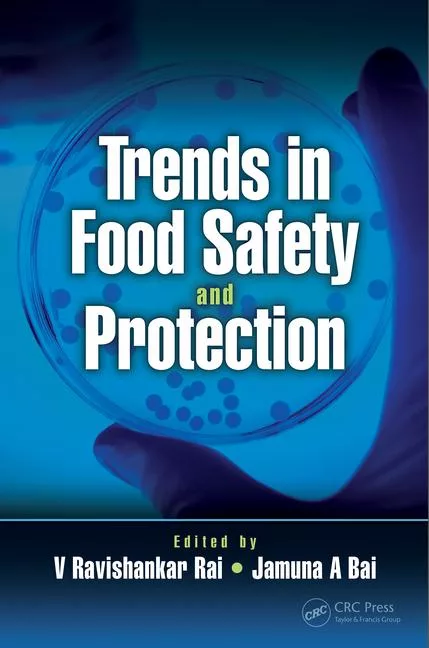
    Trends in Food Safety and Protection

  • 9781498762878.jpg

    Food Safety and Protection

  • 1119053595.jpg

    Food Safety for the 21st Century: Managing HACCP and Food Safety throughout the Global Supply Chain, 2E

See More Products

Related Directories

  • Aptar Food + Beverage - Food Protection

    Aptar Food Protection manufactures premium active packaging systems and processing equipment, applying its unique material science expertise to develop advanced packaging systems that help extend freshness and enhance safety for fresh-cut fruits, vegetables and seafood. The company’s newest groundbreaking technology, InvisiShield™, offers an antimicrobial packaging solution that seamlessly integrates into sealed packages to protect fresh-cut produce and other food products from bacteria, fungi and viruses. Other offerings include trays, pouches, containers, slicing equipment, lidding film, and tray sealing technology.
  • International Association For Food Protection-IAFP

    The International Association for Food Protection (IAFP) represents a broad range of members with a singular focus — protecting the global food supply. Within the association, you will find educators, government officials, microbiologists, food industry executives and quality control professionals who are involved in all aspects of growing, storing, transporting, processing and preparing all types of foods.
  • Association of Food and Drug Officials (AFDO)

    The consensus that AFDO develops is key to advancing uniform laws, regulations, and guidelines that result in more efficient regulation and less confusion among industry in the marketplace. AFDO develops support for its positions by interfacing with high-level regulatory officials, industry representatives, trade associations, and consumer organizations. This continues to have a significant impact on regulations at the federal, state and local level.
×

Never miss the latest news and trends driving the food safety industry

Newsletters | Website | eMagazine

JOIN TODAY!
  • RESOURCES
    • Advertise
    • Contact Us
    • Directories
    • Store
    • Want More
  • SIGN UP TODAY
    • Create Account
    • eMagazine
    • Newsletters
    • Customer Service
    • Manage Preferences
  • SERVICES
    • Marketing Services
    • Reprints
    • Market Research
    • List Rental
    • Survey/Respondent Access
  • STAY CONNECTED
    • LinkedIn
    • Facebook
    • Instagram
    • X (Twitter)
  • PRIVACY
    • PRIVACY POLICY
    • TERMS & CONDITIONS
    • DO NOT SELL MY PERSONAL INFORMATION
    • PRIVACY REQUEST
    • ACCESSIBILITY

Copyright ©2026. All Rights Reserved BNP Media, Inc. and BNP Media II, LLC.

Design, CMS, Hosting & Web Development :: ePublishing