Food Safety
search
Ask Food Safety AI
cart
facebook twitter linkedin instagram youtube
  • Sign In
  • Create Account
  • Sign Out
  • My Account
Food Safety
  • NEWS
    • Latest News
    • Sponsored Insights
    • Sponsored White Papers
  • PRODUCTS
  • TOPICS
    • Contamination Control
    • Food Types
    • Management
    • Process Control
    • Regulatory
    • Sanitation
    • Supply Chain
    • Testing and Analysis
  • PODCAST
  • EXCLUSIVES
    • Food Safety Five Newsreel
    • eBooks
    • FSM Distinguished Service Award
    • Interactive Product Spotlights
    • Videos
  • BUYER'S GUIDE
  • MORE
    • NEWSLETTERS >
      • Archive Issues
      • Subscribe to eNews
    • Store
    • ASK FSM AI
  • WEBINARS
  • FOOD SAFETY SUMMIT
  • EMAG
    • eMagazine
    • Archive Issues
    • Editorial Advisory Board
    • Contact
    • Advertise
  • SIGN UP!
ProductsContamination ControlManagementSupply ChainTrainingMicrobiological ControlGrowers/GAPs

BIZTRACKS

University of Delaware’s Produce Safety Alliance Training Addresses On-Farm Microbial Risks Like Cyclospora
By Food Safety Magazine Editorial Team
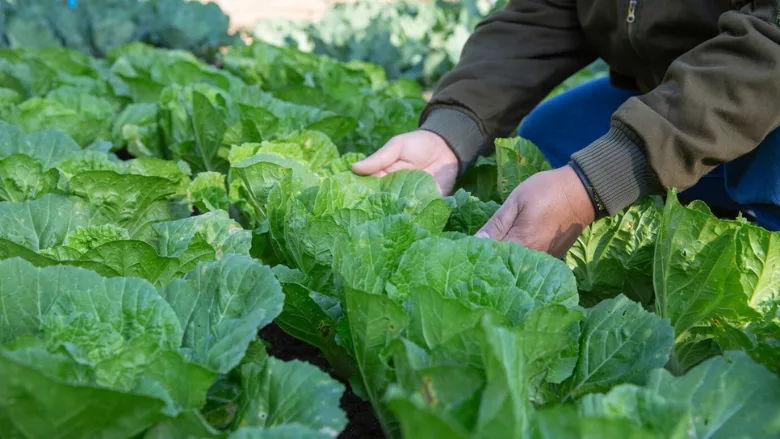
farmer handling leafy greens crop growing from ground
Image credit: jcomp via Freepik
September 3, 2026

In light of the ongoing, largest-ever U.S. cyclosporiasis outbreak linked to lettuce and the resulting decline in consumer confidence in produce safety, the University of Delaware (UD) is reminding industry about its produce safety training offerings.

The UD College of Agriculture and Natural Resources and UD Cooperative Extension offer Produce Safety Alliance Training at least three times a year, with the next course slated for winter 2026–2027, when growers have completed their harvest and have more time to spend in the classroom.

Despite existing knowledge gaps about the on-farm transmission of Cyclospora, UD’s Produce Safety Alliance Training can help growers improve overall microbiological food safety with information on safe water use and microbial risk mitigation.

“While there is great uncertainty about how Cyclospora originally may have contaminated the iceberg lettuce [in the current outbreak], or how it contaminates other produce commodities, growers should continue to develop comprehensive food safety programs that focus on prevention and risk management,” said Kali Kniel, Ph.D., M.S., the Unidel S. Hallock du Pont Chair of Microbial Food Safety at UD. “This is important and must never be replaced by product or water testing. You cannot test your way to food safety.”

Dr. Kniel also emphasized the importance of traceability, saying growers should always be able to trace their produce “one step forward and one step back” in case of a food safety incident so that recalls can be issued. This is especially important as the compliance date for the U.S. Food and Drug Administration’s (FDA’s) Food Traceability Rule nears.

The Produce Safety Alliance Training leads farmers, food safety professionals, farmers market vendors, and fresh produce system stakeholders through seven modules that involve hands-on demonstrations and handouts. Participants learn an introduction to produce safety, worker health hygiene and training, soil amendments, wildlife, domestic animal and land use, agricultural water, post-harvest handling and sanitation, and how to develop a farm food safety plan.

Nearly 600 farmers across Delaware, Maryland, and Virginia have completed the training over the last decade.

Learn more about UD’s Produce Safety Alliance Training here.

Looking for quick answers on food safety topics?
Try Ask FSM, our new smart AI search tool.
Ask FSM →


KEYWORDS: University of Delaware

Share This Story

Fsm purple logo 200x200

The Food Safety Magazine editorial team comprises Bailee Henderson, Director of Content Strategy and news editor ✉, and Adrienne Blume, M.A., Director of Editorial and Industry Engagement.

Recommended Content

JOIN TODAY
to unlock your recommendations.

Already have an account? Sign In

  • people holding baby chicks

    Serovar Differences Matter: Utility of Deep Serotyping in Broiler Production and Processing

    This article discusses the significance of Salmonella in...
    Methods
    By: Nikki Shariat Ph.D.
  • woman washing hands

    Building a Culture of Hygiene in the Food Processing Plant

    Everyone entering a food processing facility needs to...
    Sanitation
    By: Richard F. Stier, M.S.
  • graphical representation of earth over dirt

    Climate Change and Emerging Risks to Food Safety: Building Climate Resilience

    This article examines the multifaceted threats to food...
    Management
    By: Maria Cristina Tirado Ph.D., D.V.M. and Shamini Albert Raj M.A.
Manage My Account
  • eMagazine Subscription
  • Subscribe to Newsletters
  • Manage My Preferences
  • Website Registration
  • Subscription Customer Service

More Videos

Sponsored Content

Sponsored Content is a special paid section where industry companies provide high quality, objective, non-commercial content around topics of interest to the Food Safety Magazine audience. All Sponsored Content is supplied by the advertising company and any opinions expressed in this article are those of the author and not necessarily reflect the views of Food Safety Magazine or its parent company, BNP Media. Interested in participating in our Sponsored Content section? Contact your local rep!

close
  • Man In Warehouse
    Sponsored byRentokil

    Mitigating Hidden Rodent Risks in Food Facilities

  • an industrial manufacturing or processing facility
    Sponsored bybioMérieux

    Get Ahead of Spoilage in Food Manufacturing with Metagenomics for Preventive Monitoring

  • an automated industrial production line used in a modern food factory
    Sponsored byIFC

    A Formula for Food Processing Pest Management

Popular Stories

a label seal that says "California Certified Not Ultraprocessed" with the California Republic bear on it

California Passes Bill to Create Certification Seal for Non-Ultra-Processed Foods

Cattle ranch

Cattlemen’s Associations Oppose Trump’s Push to Allow On-Farm Meat Processing: ‘Food Safety is NOT Red Tape’

Beltsville Agricultural Research Center grounds

News That USDA Cyclospora Research Was Defunded in 2026 Emerges as Nation’s Largest-Ever Cyclosporiasis Outbreak Continues

allergens ebook

Events

September 10, 2026

Stop Rodents in Their Tracks!

Live: September 10, 2026 at 2:00 pm EDT: Attend this webinar to understand rodent behavior and innovative strategies for rodent management.

September 22, 2026

From EFSA to Enforcement: Managing the Growing Complexity of EU MRLs

Live: September 22, 2026 at 11:00 am EDT: Attend this webinar to evaluate best practices for monitoring regulatory changes and protecting market access.

September 24, 2026

Benchmarking Foreign Material Contamination in 2026: What the Data Shows

Live: September 24, 2026 at 2:00 pm EDT:  From this webinar, attendees will learn what is driving investment decisions, and the factors FSQA and ops leaders weigh when making the case for new prevention technology.

View All

Products

Global Food Safety Microbial Interventions and Molecular Advancements

Global Food Safety Microbial Interventions and Molecular Advancements

See More Products

Related Articles

  • boxes of tomatoes

    Researchers Investigating Microbial Risks of Unconventional Surfaces in Produce Packinghouses

    See More
  • water spraying on agricultural field

    Researchers Investigate Microbial Risks to Produce Growers’ Groundwater Quality, Irrigation Systems

    See More
  • dried spices and herbs on wooden spoons

    ILSI Europe Develops Framework to Help Food Industry Rank Microbial Risks of Dried Ingredients

    See More

Related Products

See More Products
  • global food.jpg

    Global Food Safety Microbial Interventions and Molecular Advancements

  • 1444333348.jpg

    Handbook of Food Safety Engineering

  • 9781498721776.jpg

    Handbook of Food Processing: Food Safety, Quality, and Manufacturing Processes

See More Products

Related Directories

  • Michigan State University Online Food Safety Program

    The MSU Online Food Safety program offers a master’s degree and a graduate certificate, both fully online and grounded in a science driven curriculum. Designed for working professionals, the program provides flexible learning while equipping students with practical knowledge to address evolving food safety and public health challenges with confidence.
  • Training Tracker

    Training Tracker® helps Compliance and Safety Managers simplify training records to stay compliant and in control without complex spreadsheets. Everything lives in one place—no scattered files, missed deadlines, or audit panic—so you can focus on keeping your team safe.
×

Never miss the latest news and trends driving the food safety industry

Newsletters | Website | eMagazine

JOIN TODAY!
  • RESOURCES
    • Advertise
    • Contact Us
    • Directories
    • Store
    • Want More
  • SIGN UP TODAY
    • Create Account
    • eMagazine
    • Newsletters
    • Customer Service
    • Manage Preferences
  • SERVICES
    • Marketing Services
    • Reprints
    • Market Research
    • List Rental
    • Survey/Respondent Access
  • STAY CONNECTED
    • LinkedIn
    • Facebook
    • Instagram
    • X (Twitter)
  • PRIVACY
    • PRIVACY POLICY
    • TERMS & CONDITIONS
    • DO NOT SELL MY PERSONAL INFORMATION
    • PRIVACY REQUEST
    • ACCESSIBILITY

Copyright ©2026. All Rights Reserved BNP Media, Inc. and BNP Media II, LLC.

Design, CMS, Hosting & Web Development :: ePublishing