Food Safety
search
Ask Food Safety AI
cart
facebook twitter linkedin instagram youtube
  • Sign In
  • Create Account
  • Sign Out
  • My Account
Food Safety
  • NEWS
    • Latest News
    • Food Safety Five Newsreel
  • PRODUCTS
  • TOPICS
    • Contamination Control
    • Food Types
    • Management
    • Process Control
    • Regulatory
    • Sanitation
    • Supply Chain
    • Testing and Analysis
  • PODCAST
  • EXCLUSIVES
    • eBooks
    • Sponsored Insights
    • Sponsored White Papers
    • FSM Distinguished Service Award
    • Interactive Product Spotlights
    • Videos
  • MORE
    • BUYER'S GUIDE
    • NEWSLETTERS >
      • Archive Issues
      • Subscribe to eNews
    • Store
    • ASK FSM AI
  • WEBINARS
  • FOOD SAFETY SUMMIT
  • FSM FEATURES
    • FSM Features Collection
    • eMag Archives
    • Editorial Advisory Board
    • Contact
    • Advertise
  • SIGN UP!
NewsContamination ControlRegulatoryChemical ControlFDAInspectionUSDA

FDA FY 2027 Budget Request Includes $57 Million for ‘MAHA’

While FDA's Human Foods Program gets increased funds, USDA-FSIS' budget stays stable.

By Bailee Henderson
wooden blocks that spell "budget"
Image credit: Freepik
April 7, 2026

The Presidential Budget Request for Fiscal Year (FY) 2027 and related documents have been released, providing insight into federal food safety allocations and priorities for the coming year.

Presidential Budget: Food Safety Overview

The Presidential Budget proposes $20.8 billion and $110.5 billion in base discretionary funding for the U.S. Department of Agriculture (USDA) and the U.S. Department of Health and Human Services (HHS), respectively, representing decreases of $4.9 billion (19 percent) and $15.4 billion (12.2 percent) from FY 2026. USDA faces sizable program cuts and eliminations, including National Institute of Food and Agriculture (USDA-NIFA) formula grants and the Agricultural Marketing Service (USDA-AMS).

For HHS, which encompasses the U.S. Food and Drug Administration (FDA) and the U.S. Centers for Disease Control and Prevention (CDC), the Presidential Budget names “Make America Healthy Again” (MAHA) as a significant investment across HHS agencies. This includes $55 million for new Infection Prevention and Healthy and Safe Food initiatives within CDC, which would tackle antimicrobial resistance (AMR) and help address nano- and microplastics in food and water.

USDA-FSIS Funding Remains Stable

The U.S. Department of Agriculture’s (USDA’s) FY 2027 Budget Request would secure $1.46 billion in funding for the Food Safety and Inspection Service (FSIS), which is similar to the budget requested in FY 2026 ($1.47 billion). Allocations for federal food safety and inspection activities would see a cut of $10 million but funds for reimbursing state inspection programs would increase by nearly $11 million.

Also consistent with FY 2026, $1.1 billion in discretionary funding is requested for the Animal and Plant Health Inspection Service (APHIS).

EPA's Budget Halved

The Presidential Budget would also slash U.S. Environmental Protection Agency (EPA) funding by 52 percent to $4.2 billion, including a 25 percent cut to chemicals programs, leaving $293.6 million and approximately 1,400 staff for chemical and pesticide reviews, according to EPA's budget brief. The proposal allocated $74.1 million for the Toxic Substances Control Act program and $118.8 million for pesticide programs, including $3.5 million to "improve permitting efficiencies" of pesticide registration reviews by "automating manual workflow processes and streamlining the tracking interface for better coordination."

FDA Allocates $57 Million to MAHA

FDA’s FY 2027 Budget Request includes $57 million in funding to MAHA initiatives across the agency, including efforts to remove “unsafe” chemicals in the food supply, support artificial intelligence (AI) and machine learning initiatives, and invest in research and development for alternatives to animal testing for regulatory science purposes.

Looking for quick answers on food safety topics?
Try Ask FSM, our new smart AI search tool.
Ask FSM →

Human Foods Program Gets Budget Boost

FDA’s Human Foods Program (HFP) is penciled to receive $1.28 billion in budget authority in FY 2027, representing a $108.5 million increase over the FY 2026 enacted level. A significant portion of this increase ($65.5 million) came from “reduction to the federal bureaucracy” during FY 2026, per the budget document.

FDA also requests 4,049 HFP full-time equivalents (FTEs), which is an increase of 50 from the enacted fiscal 2026 headcount (30 of these new FTEs are requested to execute "MAHA" chemical safety work). 

Money for MAHA Efforts to Address Chemical Contaminants and Additives

Specific allocations mentioned in the FY 2027 budget request include $25 million for MAHA efforts to remove “unsafe” chemicals from food, including expanding the Closer to Zero initiative to eliminate toxic elements from foods consumed by children and to develop a compliance system to test naturally derived food colors for elemental contaminants including lead, mercury, arsenic, and cadmium.

Also under the MAHA umbrella, FDA intends to invest in the development of models to predict levels of per- and polyfluoroalkyl substances (PFAS) in food-producing animals, as well as the exploration of legislative changes to close “loopholes” in the “generally recognized as safe” (GRAS) pathway.

Funds to Transition Routine Food Safety Inspections to States

Investments related to inspections include $9 million to support transitioning routine domestic food safety inspections to states, and another $9 million and 20 FTEs to increase the Office of Inspection and Investigations’ (OII’s) inspectional capacity by supporting “enhanced post-marketing surveillance, real-world data, large-scale lifetime interventions with trials, and alternative testing models.”

Legislative Proposals

FDA's Budget Request document also includes several legislative proposals related to human foods. Specifically, FDA is asking Congress for authorities related to:

  • Infant formula oversight: Requiring industry to report all product positive test results for relevant pathogens and explicitly requiring infant formula manufacturers to conduct environmental monitoring with specific parameters
  • Post-market chemical safety reviews: Requiring industry to provide certain post-market data to FDA and to conduct post-market safety evaluations and reassessments of chemicals added to food, and to submit the results to FDA
  • Foreign facility registration fees: Establishing a biennial registration fee for all foreign human and animal food facilities
  • Information-sharing with SLTT partners: Allowing FDA to share certain food-related information with state, local, tribal, and territorial (SLTT) authorities, to improve speed and efficiency and to promote collaboration in protecting public health.

Other HFP Priorities for FY 2027

Performance targets FDA set for HFP in FY 2027 include activities related to the review of food and color additive petitions; the enrollment of SLTT jurisdictions in the draft Voluntary National Retail Food Regulatory Program Standards; following up on human and animal food inspection violations; increasing the accuracy rate for confirmation of presumptive Shiga toxin-producing Escherichia coli positives from leafy green samples; and increasing laboratory surge capacity in the event of a terrorist attack on the food supply.

Regarding the leafy greens sampling performance metric, FDA microbiologists are enhancing the microbiological workflow used to test for STEC, which will improve confirmation accuracy and increase the ability to isolate harmful strains when they are present. A key investment is a new STEC-specific agar used during the confirmation step. This agar is expected to raise FDA’s confirmation rate from about 30 percent to more than 70 percent over the next several years. Progress depends onaccess to the STEC-specific agar supplied by an industry partner under a research collaboration agreement. If successful, these improvements could enable FDA to identify and address potential contamination issues in leafy greens and other short-shelf-life produce before products reach consumers.


KEYWORDS: budgets MAHA President Trump and food safety industry

Share This Story

1786925983615

Bailee Henderson is the Director of Content Strategy for Food Safety Magazine. In the day-to-day, she covers industry-relevant current events, regulatory affairs, and scientific developments. She also produces the Food Safety Five Newsreel, edits the twice-weekly Food Safety Digest newsletter, and manages the brand's social media channels. Notably, Bailee's coverage for Food Safety Magazine has been featured in national televised news segments including CBS Sunday Morning and MSNBC's Rachel Maddow Show. She can be reached at hendersonb@bnpmedia.com.

Recommended Content

JOIN TODAY
to unlock your recommendations.

Already have an account? Sign In

  • people holding baby chicks

    Serovar Differences Matter: Utility of Deep Serotyping in Broiler Production and Processing

    This article discusses the significance of Salmonella in...
    Microbiological Control
    By: Nikki Shariat Ph.D.
  • woman washing hands

    Building a Culture of Hygiene in the Food Processing Plant

    Everyone entering a food processing facility needs to...
    Personal Hygiene/Handwashing
    By: Richard F. Stier, M.S.
  • graphical representation of earth over dirt

    Climate Change and Emerging Risks to Food Safety: Building Climate Resilience

    This article examines the multifaceted threats to food...
    International
    By: Maria Cristina Tirado Ph.D., D.V.M. and Shamini Albert Raj M.A.
Manage My Account
  • eMagazine Subscription
  • Subscribe to Newsletters
  • Manage My Preferences
  • Website Registration
  • Subscription Customer Service

More Videos

Sponsored Content

Sponsored Content is a special paid section where industry companies provide high quality, objective, non-commercial content around topics of interest to the Food Safety Magazine audience. All Sponsored Content is supplied by the advertising company and any opinions expressed in this article are those of the author and not necessarily reflect the views of Food Safety Magazine or its parent company, BNP Media. Interested in participating in our Sponsored Content section? Contact your local rep!

close
  • Top view portrait of two factory workers standing by conveyor belt during quality inspection at food production, copy space
    Sponsored byFlexXray

    Foreign Material By the Numbers: What the 2026 Benchmark Report Reveals

  • a conveyorized industrial metal detector system that appears to resemble a Loma Systems IQ4 Metal Detector setup with an integrated conveyor belt and control panel for food or package inspection.
    Sponsored byMettler Toledo

    Beyond Detection: How to Avoid Physical Contamination in Food Through a Smarter Inspection Strategy

  • The image displays a bottling plant production line, commonly used in the beverage industry for filling and packaging soft drinks.
    Sponsored byBIOIONIX

    Sustainability with ROI: A Beverage Producer Case Study in Water Savings

Popular Stories

Farmer pouring raw milk into a container

Raw Milk Under the Microscope: Separating Safety Risks From Nutritional Claims

farmer walking through field of lettuce

With Cyclospora Lettuce Outbreak Over, Taylor Farms Speaks Up as FDA is Questioned

Managers discuss operations in canned fish production facility

Building Leadership Buy-In for Food Safety

allergens ebook

Events

October 15, 2026

How to Prevent Physical Contamination in Food Production and Strengthen Compliance

Live: October 15, 2026 at 2:00 pm EDT: Attend this webinar to gain insight into how product inspection helps protect your brand, reduce recall risk, and support compliance.

October 29, 2026

FDA Proposes Major GRAS Reform: What It Could Mean for Your Business

Live: October 29, 2026 at 2:00 pm EDT: Attend this webinar to examine potential implications for self-GRAS, Flavor and Extract Manufacturers Association (FEMA) GRAS, and food-contact substances.

November 5, 2026

How Middle Managers Shape Food Safety Culture and Risk Performance

Live: November 5, 2026 at 11:00 am EST: From this webinar, attendees will learn how investing in middle managers improves both FSQ strategy implementation and accountability across all levels of the company.

View All

Products

Global Food Safety Microbial Interventions and Molecular Advancements

Global Food Safety Microbial Interventions and Molecular Advancements

See More Products

Related Articles

  • The U.S. Capitol building.jpg

    White House FY2026 Budget Request Includes Sparse Details on 'MAHA' Food Safety

    See More
  • FDA Logo from Facebook.png

    FDA’s $5.1 Billion Budget Request Includes Food Safety Spending

    See More
  • one dollar bill inside a cage

    Stakeholders Ask Congress to Approve $214 Million More Than FDA’s FY 2025 Budget Request

    See More

Related Products

See More Products
  • 1118396308.jpg

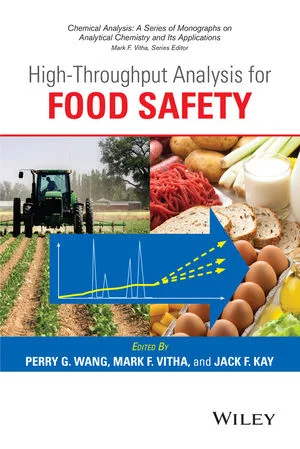
    High Throughput Analysis for Food Safety

  • 1119053595.jpg

    Food Safety for the 21st Century: Managing HACCP and Food Safety throughout the Global Supply Chain, 2E

  • 1119160553.jpg

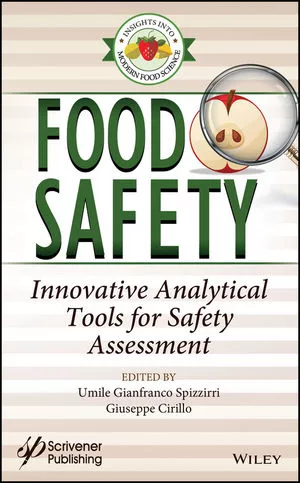
    Food Safety: Innovative Analytical Tools for Safety Assessment

See More Products

Events

View AllSubmit An Event
  • March 3, 2026

    FDA/USDA Regulatory Updates: Food Safety Work Plans for 2026

    On Demand: In this high-level, exclusive webinar, FDA Deputy Commissioner for Human Foods Kyle Diamantas and USDA Under Secretary for Food Safety Mindy Brashears, Ph.D. will share their agencies' regulatory priorities and work plans for 2026 and beyond.
  • October 29, 2026

    FDA Proposes Major GRAS Reform: What It Could Mean for Your Business

    Live: October 29, 2026 at 2:00 pm EDT: Attend this webinar to examine potential implications for self-GRAS, Flavor and Extract Manufacturers Association (FEMA) GRAS, and food-contact substances.
View AllSubmit An Event

Related Directories

  • Institute for Food Safety and Health (IFSH) - Illinois Tech

    IFSH is a one-of-a-kind applied food science research consortium comprised of the Illinois Tech, the U.S. FDA, and the food industry. In collaboration with the FDA, we provide stakeholders with the opportunity to develop and exchange knowledge, experience, and expertise in the areas of food safety, food defense, and nutrition.
  • International Association For Food Protection-IAFP

    The International Association for Food Protection (IAFP) represents a broad range of members with a singular focus — protecting the global food supply. Within the association, you will find educators, government officials, microbiologists, food industry executives and quality control professionals who are involved in all aspects of growing, storing, transporting, processing and preparing all types of foods.
×

Never miss the latest news and trends driving the food safety industry

Newsletters | Website | FSM Features Collection

JOIN TODAY!
  • RESOURCES
    • Advertise
    • Contact Us
    • Directories
    • Store
    • Want More
  • SIGN UP TODAY
    • Create Account
    • eMagazine
    • Newsletters
    • Customer Service
    • Manage Preferences
  • SERVICES
    • Marketing Services
    • Reprints
    • Market Research
    • List Rental
    • Survey/Respondent Access
  • STAY CONNECTED
    • LinkedIn
    • Facebook
    • Instagram
    • X (Twitter)
  • PRIVACY
    • PRIVACY POLICY
    • TERMS & CONDITIONS
    • DO NOT SELL MY PERSONAL INFORMATION
    • PRIVACY REQUEST
    • ACCESSIBILITY

Copyright ©2026. All Rights Reserved BNP Media, Inc. and BNP Media II, LLC.

Design, CMS, Hosting & Web Development :: ePublishing