Food Safety
search
Ask Food Safety AI
cart
facebook twitter linkedin instagram youtube
  • Sign In
  • Create Account
  • Sign Out
  • My Account
Food Safety
  • NEWS
    • Latest News
    • Food Safety Five Newsreel
  • PRODUCTS
  • TOPICS
    • Contamination Control
    • Food Types
    • Management
    • Process Control
    • Regulatory
    • Sanitation
    • Supply Chain
    • Testing and Analysis
  • PODCAST
  • EXCLUSIVES
    • eBooks
    • Sponsored Insights
    • Sponsored White Papers
    • FSM Distinguished Service Award
    • Interactive Product Spotlights
    • Videos
  • MORE
    • BUYER'S GUIDE
    • NEWSLETTERS >
      • Archive Issues
      • Subscribe to eNews
    • Store
    • ASK FSM AI
  • WEBINARS
  • FOOD SAFETY SUMMIT
  • FSM FEATURES
    • FSM Features Collection
    • eMag Archives
    • Editorial Advisory Board
    • Contact
    • Advertise
  • SIGN UP!
NewsContamination ControlFood TypeRegulatoryChemical ControlIngredients

California Bill Would Require State Food Additive Safety Reviews, Closing Federal ‘Loophole’
By Bailee Henderson
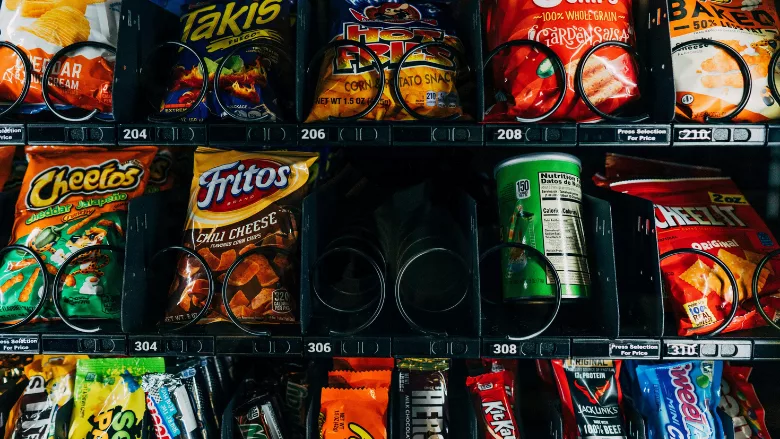
vending machine filled with chips and candy
Image credit: Veronica via Pexels
February 24, 2026

A newly introduced California bill aims to address gaps in federal oversight of food additives and ingredients by giving state health officials the authority to conduct independent safety assessments.

Introduced by Assemblymember Dawn Addis (Democrat–Morro Bay), California Assembly Bill 2034 (AB 2034) is intended to close the Generally Recognized as Safe (GRAS) “loophole,” which allows manufacturers to introduce new ingredients to the food supply without a formal safety review by the U.S. Food and Drug Administration (FDA).

If passed, AB 2034 would:

  • Require firms to submit a notice to the California Department of Public Health (CDPH) when intending to use a new food additive or ingredient in their products, which must include the same evidence and information that is required for federal GRAS notifications
  • Require CDPH to review the notice submitted by the firm, and if the information is complete, publish the notice in a public database
  • Require CDPH to issue or decline a license for new food additives and ingredients, and when assessing the safety of an ingredient, consider factors including, but not limited to, whether the substance is banned or restricted in other jurisdictions due to concerns about adverse health consequences
  • Require CDPH to systematically reassess the safety of at least ten substances every three years
  • Authorize CDPH to create and update user fees for notices, assessments, and reassessments
  • Require the manufacturer of any packaged food product to provide the department with a list of its food products that are sold in the state and identify each ingredient not individually named in the ingredient list (e.g., ingredients must be speficially listed by name instead of using terms like "artificial flavors," "natural flavors," "spices," or "artificial colors”).

The requirements would start going into effect on July 1, 2027, if AB 2034 is passed as-is.

AB 2034 now awaits referral to committee. The legislation is supported by the Center for Science in the Public Interest (CSPI).

What is the GRAS “Loophole?”

Established in 1958 through an amendment to the Federal Food, Drug, and Cosmetic Act, the GRAS process enables food substances to be used without premarket approval by FDA as long as scientific experts determine the substance to be “safe” under the conditions of its intended use. GRAS determinations effectively exempt a food substance from being subjected to the premarket safety review process required for food additives by FDA.

GRAS determinations can be made by experts outside of the government, using literature compiled by food companies. Food companies can choose to voluntarily notify FDA when they have made a GRAS determination about a new substance—or they can begin using the intended ingredient without notifying FDA once they have compiled the scientific evidence required to make their determination.

The GRAS process was originally intended to allow widely used food ingredients, commonly understood to be safe for consumption (e.g., vinegar), to remain on the market without extensive review. However, it is now used by firms to put new ingredients in their products, earning GRAS its reputation as a “loophole” and drawing criticisms for potentially allowing unsafe additives into the food supply.

In recent years, GRAS has increasingly come under public scrutiny, and federal changes to the GRAS process may be forthcoming. An FDA proposed rule that is reportedly intended to tighten GRAS oversight is currently pending White House review.

Looking for quick answers on food safety topics?
Try Ask FSM, our new smart AI search tool.
Ask FSM →


KEYWORDS: additives California generally recognized as safe legislation

Share This Story

1786925983615

Bailee Henderson is the Director of Content Strategy for Food Safety Magazine. In the day-to-day, she covers industry-relevant current events, regulatory affairs, and scientific developments. She also produces the Food Safety Five Newsreel, edits the twice-weekly Food Safety Digest newsletter, and manages the brand's social media channels. Notably, Bailee's coverage for Food Safety Magazine has been featured in national televised news segments including CBS Sunday Morning and MSNBC's Rachel Maddow Show. She can be reached at hendersonb@bnpmedia.com.

Recommended Content

JOIN TODAY
to unlock your recommendations.

Already have an account? Sign In

  • people holding baby chicks

    Serovar Differences Matter: Utility of Deep Serotyping in Broiler Production and Processing

    This article discusses the significance of Salmonella in...
    Food Type
    By: Nikki Shariat Ph.D.
  • woman washing hands

    Building a Culture of Hygiene in the Food Processing Plant

    Everyone entering a food processing facility needs to...
    Personal Hygiene/Handwashing
    By: Richard F. Stier, M.S.
  • graphical representation of earth over dirt

    Climate Change and Emerging Risks to Food Safety: Building Climate Resilience

    This article examines the multifaceted threats to food...
    Risk Assessment
    By: Maria Cristina Tirado Ph.D., D.V.M. and Shamini Albert Raj M.A.
Manage My Account
  • eMagazine Subscription
  • Subscribe to Newsletters
  • Manage My Preferences
  • Website Registration
  • Subscription Customer Service

More Videos

Sponsored Content

Sponsored Content is a special paid section where industry companies provide high quality, objective, non-commercial content around topics of interest to the Food Safety Magazine audience. All Sponsored Content is supplied by the advertising company and any opinions expressed in this article are those of the author and not necessarily reflect the views of Food Safety Magazine or its parent company, BNP Media. Interested in participating in our Sponsored Content section? Contact your local rep!

close
  • pre-packaged salads, noodles, and prepared meals stocked on multi-tier grocery store refrigerator shelves
    Sponsored byCorbion

    How Many Days of Shelf Life Are You Leaving on the Table?

  • Top view portrait of two factory workers standing by conveyor belt during quality inspection at food production, copy space
    Sponsored byFlexXray

    Foreign Material By the Numbers: What the 2026 Benchmark Report Reveals

  • a conveyorized industrial metal detector system that appears to resemble a Loma Systems IQ4 Metal Detector setup with an integrated conveyor belt and control panel for food or package inspection.
    Sponsored byMettler Toledo

    Beyond Detection: How to Avoid Physical Contamination in Food Through a Smarter Inspection Strategy

Popular Stories

choosing food in the freezer aisle

Refrigerator Malfunctions on U.S. Military Bases May Be Result of Targeted Cyberattacks, Similar to French Incident

This image depicts a meat processing facility

Study Finds Differences Between Beef, Pork Microbial Contamination During Processing

doctor talking to patient

U.S. is Making Little Progress Toward 2030 Foodborne Illness Reduction Goals, Data Shows

allergens ebook

Events

November 5, 2026

How Middle Managers Shape Food Safety Culture and Risk Performance

Live: November 5, 2026 at 11:00 am EST: From this webinar, attendees will learn how investing in middle managers improves both FSQ strategy implementation and accountability across all levels of the company.

November 12, 2026

From Data Overload to Actionable Food Safety Risk Intelligence

Live: November 12, 2026 at 11:00 am EST: This webinar explores how data integration, advanced analytics, and digital technologies can help transform disparate information into meaningful risk intelligence.

November 17, 2026

Are You Getting the Most from Your Food Safety Testing?

Live: November 17, 2026 at 11:00 am EST: Attend this webinar to explore practical ways food processors can modernize sanitation verification and microbiological testing while keeping workflows simple and effective.

View All

Products

Global Food Safety Microbial Interventions and Molecular Advancements

Global Food Safety Microbial Interventions and Molecular Advancements

See More Products

Related Articles

  • scoop of chocolate protein powder

    Senate Bill Would Require Heavy Metals Testing, Disclosures for Protein Powders

    See More
  • glass of tap water getting filled in the kitchen sink

    California Bill Would Set State Drinking Water Limits for PFAS in Case EPA Standards are Weakened

    See More
  • Students returning their lunch trays in a cafeteria

    California Bill Would Remove Ultra-Processed Foods from School Lunches

    See More

Related Products

See More Products
  • 1119053595.jpg

    Food Safety for the 21st Century: Managing HACCP and Food Safety throughout the Global Supply Chain, 2E

  • 9781498721776.jpg

    Handbook of Food Processing: Food Safety, Quality, and Manufacturing Processes

  • global food.jpg

    Global Food Safety Microbial Interventions and Molecular Advancements

See More Products

Related Directories

  • Michigan State University Online Food Safety Program

    The MSU Online Food Safety program offers a master’s degree and a graduate certificate, both fully online and grounded in a science driven curriculum. Designed for working professionals, the program provides flexible learning while equipping students with practical knowledge to address evolving food safety and public health challenges with confidence.
  • StateFoodSafety

    StateFoodSafety develops and publishes technology-enhanced food safety training and certification programs that provide superior value to regulatory, restaurant, and hospitality communities. We invite you to measure our effectiveness and enjoy A Better Learning Experience®.
  • Elite Food Safety Training Inc.

    At Elite Food Safety Training® (EFST), we don’t just support food safety - we are the gold standard. Since 2008, EFST has partnered with organizations across the country to elevate food safety from a requirement to a competitive advantage. We are a trusted leader in training, auditing, and operational guidance, known for delivering clarity, consistency, and results in an industry where there is no margin for error.
×

Never miss the latest news and trends driving the food safety industry

Newsletters | Website | FSM Features Collection

JOIN TODAY!
  • RESOURCES
    • Advertise
    • Contact Us
    • Directories
    • Store
    • Want More
  • SIGN UP TODAY
    • Create Account
    • eMagazine
    • Newsletters
    • Customer Service
    • Manage Preferences
  • SERVICES
    • Marketing Services
    • Reprints
    • Market Research
    • List Rental
    • Survey/Respondent Access
  • STAY CONNECTED
    • LinkedIn
    • Facebook
    • Instagram
    • X (Twitter)
  • PRIVACY
    • PRIVACY POLICY
    • TERMS & CONDITIONS
    • DO NOT SELL MY PERSONAL INFORMATION
    • PRIVACY REQUEST
    • ACCESSIBILITY

Copyright ©2026. All Rights Reserved BNP Media, Inc. and BNP Media II, LLC.

Design, CMS, Hosting & Web Development :: ePublishing