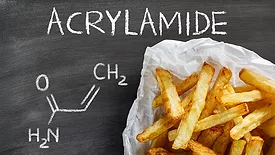
Acrylamide is a harmful contaminant that forms during thermal processing. An analysis of 17 years of EU RASFF data showed that UPFs accounted for 85 percent of related notifications. Cereals, baked goods, and potato chips were most frequently implicated.
Of the 21 popular packaged children’s snacks, 14 contained at least one contaminant at levels Consumer Reports considered concerning. Conversely, testing also showed generally low levels of heavy metals, and seven products had no contaminants above CR’s levels of concern.
A law to protect the public health is a good idea, but it should be based on a risk assessment—i.e., whether exposure to the chemical really elicits an adverse reaction. Perhaps it is time to update or rethink California's Prop 65.
Acrylerase, developed by Kerry Group, is an amidase food enzyme that hydrolyzes acrylamide, and is the first commercially available food enzyme designed to directly decompose the process contaminant after it has formed.
Rothamsted Research scientists have developed gene-edited wheat with substantially reduced levels of free asparagine, a precursor to acrylamide. Biscuits produced from gene-edited wheat showed a 93 percent reduction in acrylamide compared to controls.
The first set of results focuses on acrylamide and certain toxic heavy metals. Although the levels of some contaminants in food are decreasing overall, the population's exposure still remains concerningly high.
The findings emphasize the need for cereal manufacturers to optimize processing steps for each process contaminant, while also considering the effects on product quality.
Some EU and UK food law changes in development could arrive sooner than expected, and others will take more time to go into effect. This article discusses food law changes to watch for in 2026.
The UK Food Standards Agency (FSA) and Food Standards Scotland (FSS) have put out a call for data on the presence of acrylamide in food to better understand the health risks of dietary exposure and support policymaking decisions.
Despite a lack of scientific support to justify a carcinogenic risk determination, hundreds of companies have been sued under California's Prop 65 for failing to provide a "clear and reasonable" warning on food products containing acrylamide.