ESHA updates Genesis R&D Food Development & Labeling Software for 2016 FDA Nutrition Facts regulations
December 14, 2017
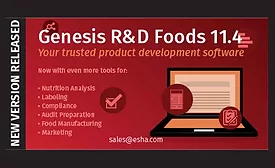
ESHA Research, the industry leader in nutrition analysis and regulatory compliance solutions, has completed a major update to its Genesis R&D Food Development and Labeling Software. The software incorporates even more features for complying with the new 2016 FDA Nutrition Facts Labeling regulations.
Just as prevention is considered a cornerstone of the food safety plan, inspections are a cornerstone of achieving the goal of preventive pest management.
To the credit of FDA, a wealth of resources has been assembled to help processors develop and implement a plan to come into compliance with the Preventive Controls rules. For example, the agency created a Food Safety Plan Builder to assist owners/operators of food facilities with the development of food safety plans that are specific to their facilities and has published several guidance documents related to implementing Food Safety Modernization Act.
The FDA and U.S. Department of Agriculture can cause concern in the minds of food and drug manufacturers and co-packers. Although these government agencies might be considered demanding at times, they play an important role that ensures there are procedures to protect the safety of the American public. There is an overwhelming amount of project planning and sourcing that goes on in the background of developing a product. Packaging is a large part of that process, which is also highly regulated by the FDA and USDA.
As brand manufacturers continue to source from an ever-growing list of ingredients and suppliers, food is now the fourth most valuable counterfeit market, according to the 2016 Brand Protection and Product Traceability Market Research Report.
Knowledge of how attacks occur, new tools coming on the scene, and long-term investments in cybersecurity can all help processors stand a better chance of keeping their plants safely up and running.
According to the U.S. Environmental Protection Agency's Energy Star program, the domestic baking industry consumes an estimated $800 million worth of purchased fuels and electricity per year, as noted in its guide, "Energy Efficiency Improvement and Cost Saving Opportunities for the Baking Industry" (Nov. 2016 update, available on www.energystar.gov).
 RSS
RSS