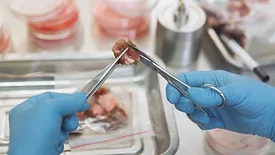
As a result of the ongoing Cell-Cultivated Products sandbox program, the UK Food Standards Agency (FSA) has published the first of several guidances on the food safety and hygiene of cell-cultured food production; specifically, on HACCP and other applicable requirements under UK regulations for lab-grown meat.
Recognized for its competence in responding to food safety emergencies, the Korean Ministry of Food and Drug Safety was recently designated the world’s first Collaboration Center for FAO/WHO’s International Food Safety Authorities Network (INFOSAN).
Belize and UAE are the latest countries to complete national food safety system reviews using the FAO/WHO Food Control System Assessment Tool, resulting in the development of strategic action plans to advance competencies and align with internationally recognized food safety standards.
The nationwide infant botulism outbreak associated with ByHeart infant formula has grown to 39 cases in 18 states. All 39 infants were hospitalized; no deaths have been reported.
The artificial intelligence (AI) rollout is intended to improve operational efficiency by enabling the creation of more complex AI workflows to assist with multi-step tasks, including pre-market reviews, review validation, post-market surveillance, and inspections and compliance.
The sampling and testing project will support the National Antimicrobial Resistance Monitoring System (NARMS) by identifying trends and emerging risks from drug-resistant foodborne bacteria. Findings will be used to create a model that can help predict and address antimicrobial resistance (AMR) mitigation strategies.
The French agency ANSES published the results of a two-year, national sampling and testing assignment for “forever chemicals” in drinking water, which was conducted to inform future monitoring strategies. Although most analyzed samples fell below regulatory limits for PFAS, TFA was found in 92 percent of samples.
As of December 2, laboratory-confirmed cases in the ongoing Salmonella outbreak linked to pistachios has reached 155, and CFIA now requires importers and manufacturers of Iranian pistachios to hold and test their products for Salmonella before they can be sold.
Posted to the Unified Agenda in September, FDA’s developing proposed rule to tighten Generally Recognized as Safe (GRAS) oversight has been sent to the White House for review—the final step before publication.
Although the estimated cost per disease incident ranged from $341 USD in Africa to $2,194 in Europe, the total economic burden of invasive non-typhoidal Salmonella was highest in Africa—especially sub-Saharan Africa—due to its prevalence and overall impact to public health in the region.
 RSS
RSS