EFSA has created new online portals where guidances are described and sorted for accessibility and ease of use by scientists, industry applicants, and other stakeholders. Additionally, future guidance documents will be developed following a new, standardized process.
Although UV-C was effective against Salmonella, E. coli, and Listeria monocytogenes under most conditions, pathogen regrowth during refrigerated storage was significant. The findings suggest UV-C may be a useful post-harvest intervention when used in combination with other measures.
Campden BRI’s Ninth Global Food Safety Training Survey, conducted in collaboration with global certification bodies, revealed gaps in training practices, technology adoption, and program effectiveness across the food and beverage industry.
Working toward an Integrated Food Safety System, by 2030, FDA expects the Better Regulatory Inspections for Dynamic Government Efficiency (BRIDGE) Project to accomplish a more coordinated, data-driven model for domestic food safety oversight across federal and state systems.
Using metagenomic sequencing and qPCR, the study analyzed bacteria from produce, chicken meat, and RTE deli meats sold at retail stores in Tennessee. A high abundance and diversity of antibiotic resistance genes were identified, potentially contributing to the persistence and spread of antimicrobial resistance (AMR) in the food supply.
FDA’s Human Foods Program specifically would receive a significant increase in funding compared to the previous fiscal year (FY), including $25 million to help address chemical contaminants and additives like PFAS, toxic heavy metals, and GRAS ingredients.
Rothamsted Research scientists have developed gene-edited wheat with substantially reduced levels of free asparagine, a precursor to acrylamide. Biscuits produced from gene-edited wheat showed a 93 percent reduction in acrylamide compared to controls.
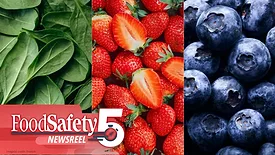
This episode of Food Safety Five discusses the Environmental Working Group’s 2026 “Dirty Dozen” list of the most “pesticide-contaminated produce,” including ongoing debate over the list’s methodology and its relevance to food safety and public health.
 RSS
RSS