In a recent Senate hearing, top U.S. Food and Drug Administration (FDA) officials shared how resource constraints hinder its food chemical safety review work, and provided insight into a pending decision about red dye 3’s authorization for food use.
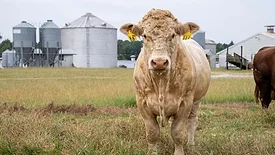
The U.S. Department of Agriculture (USDA) has launched its five-part National Milk Testing Strategy to monitor and address Highly Pathogenic Avian Influenza H5N1 (HPAI H5N1) in milk and dairy herds. A new Federal Order and accompanying guidance has been issued.
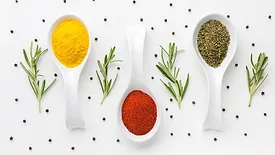
The EU Joint Research Center (JRC) has developed new methods for detecting adulteration in six popular herbs and spices, as well as new reference materials to help identify fraudulent fish products.
The Swedish Food Agency has published the results of its latest food basket survey, which show a decreasing trend in the levels of dioxin and per- and polyfluoroalkyl substances (PFAS) exposure. Dioxins and salt remain the largest health risks.
The UK Food Standards Agency (FSA) has reported the arrest of five men in London after trucks full of allegedly illegal smoked meat carcasses were discovered.
Recently concluded research funded by the Center for Produce Safety provides practical, immediately actionable insights that industry can integrate into their operations, ranging from sanitation best practices, to Salmonella and E. coli mitigation, to wild bird management, and more.
The European Food Fraud Community of Practice (EFF-CoP) is a newly formed research and innovation coalition funded by the EU and coordinated by University College Dublin, the goal of which is to combat food fraud by gathering thousands of diverse stakeholders to share knowledge and collaborate on different activities.
In an effort to reduce food waste caused by consumer confusion, and following new legislation passed in California standardizing the use of “Best By” dates on food, USDA and FDA have issued a joint request for information about industry practices, consumer perceptions, and impacts related to food date labeling.
CDC has announced that the Escherichia coli outbreak linked to yellow onions distributed by Taylor Farms and served at McDonald’s restaurants to be over, and FDA has closed its investigation. However, the outbreak strain was not confirmed in any product or environmental samples.
The European Food Safety Authority (EFSA) is seeking stakeholder input on a new draft guidance regarding the characterization and risk assessment of microorganisms used in foods.
 RSS
RSS