Food Safety
search
Ask Food Safety AI
cart
facebook twitter linkedin instagram youtube
  • Sign In
  • Join Today
  • Sign Out
  • My Account
Food Safety
  • NEWS
    • Latest News
    • Food Safety Five Newsreel
  • PRODUCTS
  • TOPICS
    • Contamination Control
    • Food Types
    • Management
    • Process Control
    • Regulatory
    • Sanitation
    • Supply Chain
    • Testing and Analysis
  • PODCAST
  • EXCLUSIVES
    • eBooks
    • Sponsored Insights
    • Sponsored White Papers
    • FSM Distinguished Service Award
    • Interactive Product Spotlights
    • Videos
  • MORE
    • BUYER'S GUIDE
    • Store
    • ASK FSM AI
  • WEBINARS
  • FOOD SAFETY SUMMIT
  • FSM FEATURES
    • FSM Features Collection
    • eMag Archives
    • Op-Eds
    • Editorial Advisory Board
    • Contact
    • Advertise
  • JOIN
Home » Topics » Food Safety Top Stories

Food Safety Top Stories
Food Safety Top Stories RSS Feed RSS

world graphic

Global Food Safety Culture: North America

North America's food safety culture is characterized by diversity of thought; a proactive, risk-based approach; and high adaptability
Lone Jespersen
Lone Jespersen Ph.D.
John David Sophie Tongyu Wu Ph.D.
August 15, 2022

Panelists Christian Blyth (Pathogen Specialist, 3M Canada), Marie Tanner (Senior Vice President of Quality, Dairy Farmers of America), and Lone Jespersen, Ph.D. (Cultivate SA) discuss three features that are prominent in North America's food safety culture: diversity of thought, proactive risk-based approach, and high adaptability. 


Read More
sustainable packaging decisions

When It Comes to Safe, Sustainable Packaging, What is Job No. 1?

The concept of food safety as the primary element in sustainable packaging decisions must logically flow through an organization from the top down
Robert (Bob) M. Lilienfeld
August 15, 2022

Recyclable. Recycled content. Compostable. Made from bio-materials. Which of these makes for the safest, most sustainable package? These can be misleading questions, especially when it comes to food packaging. Many sustainable packaging goals and trends can affect food safety work. Also, the concept of food safety as the primary element in sustainable packaging decisions must logically flow through an organization from the top down, through the key relevant vertical groups.


Read More
Food Safety Culture

Food Safety Culture: Start with Your Team’s Well-Being

Tia Glave and Jill Stuber
Tia Glave & Jill Stuber
August 15, 2022

To lead from the local level for food safety, top executives must empower and authorize leaders to solve issues like food safety culture. The technical food safety team is best situated for this task. To build a sustainable food safety culture, it is essential to start with shifting and building the mindset of the technical leadership and honoring the well-being of this team. 


Read More
workers at food processing plant

Focusing Ahead—Processors' Priorities for the Near Term

Food processors are now focusing on projects and priorities put on hold during the pandemic, including maintaining or adding to food safety certifications
Bob Ferguson
Bob Ferguson
August 15, 2022

With the COVID-19 pandemic (hopefully) solidly in the rearview mirror, we wanted to find out what projects and initiatives food companies are focusing on for the rest of this year and into 2023. We heard from more than 200 food processors in every major category. They reported a wide-ranging wish list of projects and priorities, with improving their food safety culture, more training, improving their supply chain management (especially with their foreign suppliers), and improving their sanitation and environmental monitoring programs at the top of the list.


Read More
Analyzing Food safety systems

Utilizing Risk to Develop Food Safety Systems

Food safety systems can be examined in a systematic, risk-based way to aid food safety practitioners in their work
John Surak, Ph.D.
August 15, 2022

A risk-based approach is rapidly being incorporated into food safety systems. This can be attributed to the efforts of regulatory agencies and non-governmental organizations to develop requirements for food businesses. This article examines these food safety systems from a systematic, risk-based approach to allow the food safety practitioner to develop and improve food safety.


Read More
Determining Microbiological Performance Standards

Determining Microbiological Performance Standards for Food Safety

A 5-log pathogen reduction is generally adopted as a good starting point, but it may not be applicable to all products and processes
Stephanie Nguyen Adam Woodworth
August 15, 2022

There are no set microbiological performance standards for food products, yet demonstrating that hazards are sufficiently controlled is a key component of FDA's Food Safety Modernization Act. For some products, such as canned goods, these standards have been set over many decades of scientific testing. For others, these performance standards have yet to be established, particularly for new, unique ingredients with minimal processing steps. This article explores the history of performance standards and provides guidance on how to establish such standards where currently lacking.


Read More
Sanitation

Sanitation Success Rests on a Three-Legged Stool

Sanitation success is a prerequisite to food safety and quality and rests on three "legs": people, programs, and hygienic design and maintenance
Duane Grassmann
August 15, 2022

Sanitation success relies on people, programs, and hygienic design/maintenance. These three groups are characterized by interrelationships that are not always fully considered; however, examining them helps improve investigations of sanitation failures.


Read More
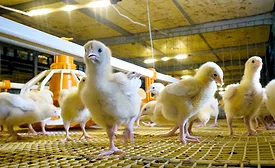
baby chicks

A Critical Look at Reducing the Risk of Salmonella from Poultry—Part 1

There is a need to address Salmonella at pre-harvest, in addition to the current practice of minimizing the risk during processing
Harshavardhan Thippareddi Ph.D. Manpreet Singh Ph.D.
August 15, 2022

Salmonella prevalence has decreased significantly in the past three decades due to processing changes, but human illness cases from Salmonella have not decreased proportionally. To understand and eventually reduce the risk of salmonellosis from poultry meat, it is necessary to understand the poultry production system, the introduction of the microorganism into the poultry ecosystem (as well as its gastrointestinal tract), the sources of Salmonella during production, and, subsequently, strategies to control or reduce the risk from this microorganism at both the pre-and post-harvest stages.


Read More
caterers

Challenges of a Food Safety Professional in the Catering Sector

Nimisha Suraj
Nimisha Suraj M.Sc.
August 1, 2022

This article explores the food safety challenges of the labor-heavy catering sector, including the pervasive lack of food safety culture and management commitment; the need for creative solutions in process monitoring for large facilities; how to build an effective training program for a catering facility; and how to handle customer complaints, including the importance of root cause analysis.


Read More
fork and scale

Where Old Law Meets the New Era of Smarter Food Safety

How to make sense of the legal definition of "adulteration" in the age of smarter food safety and whole genome sequencing
Melanie J. Neumann J.D., M.S. Martin Wiedmann Ph.D., D.V.M.
July 29, 2022

Assuring food safety in this "New Era of Smarter Food Safety" and with the increasing use of whole genome sequencing provides many new challenges for food safety professionals. While these challenges are many and multi-faceted, it is helpful to look back to the "old" era of food safety, to some of the foundational concepts in the 1938 Food, Drug, and Cosmetic Act that are still in force today. In this article, the authors focus first on one of many important legal terms that is extremely important and often misunderstood: adulteration.


Read More
Previous 1 2 … 47 48 49 50 51 52 53 54 55 … 61 62 Next
Manage My Account
  • Join Food Safety Magazine
  • Manage My Preferences
  • Customer Service

More Videos

Sponsored Content

Sponsored Content is a special paid section where industry companies provide high quality, objective, non-commercial content around topics of interest to the Food Safety Magazine audience. All Sponsored Content is supplied by the advertising company and any opinions expressed in this article are those of the author and not necessarily reflect the views of Food Safety Magazine or its parent company, BNP Media. Interested in participating in our Sponsored Content section? Contact your local rep!

close
  • pre-packaged salads, noodles, and prepared meals stocked on multi-tier grocery store refrigerator shelves
    Sponsored byCorbion

    How Many Days of Shelf Life Are You Leaving on the Table?

  • Top view portrait of two factory workers standing by conveyor belt during quality inspection at food production, copy space
    Sponsored byFlexXray

    Foreign Material By the Numbers: What the 2026 Benchmark Report Reveals

  • a conveyorized industrial metal detector system that appears to resemble a Loma Systems IQ4 Metal Detector setup with an integrated conveyor belt and control panel for food or package inspection.
    Sponsored byMettler Toledo

    Beyond Detection: How to Avoid Physical Contamination in Food Through a Smarter Inspection Strategy

Popular Stories

Heidi Overton

White House Pulls Dr. Heidi Overton as Nominee for FDA Commissioner

scoop of infant formula and bottle

Codex Committee on Food Hygiene Green-Lights New Work on Infant Formula Standards at 56th Session

AI on a smartphone

How FDA’s Human Foods Program Is Using AI to Support Food Safety Oversight

AI and Advanced Analytics ebook

Events

December 2, 2026

Beyond Surface Clean: Tackling Biofilms and Persistent Pathogens

Live: December 2, 2026 at 11:00 am EST: Attend this webinar to understand why chlorine dioxide is not chlorine, and what “ultra-pure” means for residues, byproducts, and effectiveness.

December 3, 2026

How to Use AI to Improve Workforce Training

Live: December 3, 2026 at 11:00 am EST: This webinar will cover best practices for reviewing, refining, and governing AI-generated training content for accuracy and consistency.

December 8, 2026

Best Practices for Responding to a Foodborne Outbreak Investigation

Live: December 8, 2026 at 2:00 pm EST: Attendees will gain practical insight into the roles and expectations of industry and government during foodborne illness investigations, and how effective collaboration can support timely investigations and the best possible public health outcome.

View All

Products

Global Food Safety Microbial Interventions and Molecular Advancements

Global Food Safety Microbial Interventions and Molecular Advancements

See More Products

Never miss the latest news and trends shaping the food safety industry

Newsletters | Website | FSM Features Collection

JOIN TODAY!
  • RESOURCES
    • Advertise
    • Contact Us
    • Directories
    • Store
  • JOIN TODAY
    • Create Account
    • FSM Features Collection
    • Newsletters
    • Customer Service
    • Manage Preferences
  • SERVICES
    • Marketing Services
    • Reprints
    • Market Research
    • List Rental
    • Survey/Respondent Access
  • STAY CONNECTED
    • LinkedIn
    • Facebook
    • Instagram
    • X (Twitter)
    • YouTube
  • PRIVACY
    • PRIVACY POLICY
    • TERMS & CONDITIONS
    • DO NOT SELL MY PERSONAL INFORMATION
    • PRIVACY REQUEST
    • ACCESSIBILITY

Copyright ©2026. All Rights Reserved BNP Media, Inc. and BNP Media II, LLC.

Design, CMS, Hosting & Web Development :: ePublishing