FDA has released its Food Code Adoption Report, which states that, as of December 31, 2023, only three U.S. states and two territories have adopted the most recent version (2022).
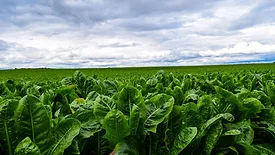
Forward processing of leafy greens crops does not significantly increase the food safety risk posed by Escherichia coli, suggests a recent study led by a USDA Agricultural Research Service (USDA-ARS) scientist and funded by the Center for Produce Safety.
In the second of this two-part episode of Food Safety Matters, we interviewed professionals from the industry, regulatory, and nonprofit sectors, live from the show floor of the Food Safety Summit, which took place on May 6–9 in Rosemont, Illinois. We discussed women in food safety, allergen control, the future of auditing, and more.
The U.S. Environmental Protection Agency (EPA) has proposed to cancel all agricultural uses of the pesticide acephate due to dietary risks from drinking water for currently registered uses of the chemical.
In the first of this two-part episode of Food Safety Matters, we interviewed professionals from the industry, regulatory, and nonprofit sectors, live from the show floor of the Food Safety Summit, which took place on May 6–9 in Rosemont, Illinois. We discussed food safety culture, food safety regulation for cannabis-infused edibles, traceability, legacy facilities and equipment, and more.
A recent study comparing the presence of chemical contaminants in conventionally and hydroponically grown produce found pesticide residues and toxic heavy metals in a larger number of conventional samples than in hydroponic samples. Phthalate levels were consistent between conventional and hydroponic samples.
Researchers at NC State University compared poultry broiler farms of various sizes and found higher rates of Salmonella at large commercial operations than at small backyard farms; however, multidrug-resistant Salmonella were found in samples from both types of farm.
The EU Court of Justice has made three rulings that set a precedent requiring Member States to consider more modern, comprehensive scientific literature in their pesticide safety assessments.
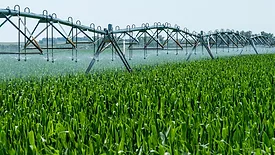
The U.S. Food and Drug Administration (FDA) has published the long-anticipated Pre-Harvest Agricultural Water Final Rule, fulfilling Subpart E of the Food Safety Modernization Act (FSMA) Produce Safety Rule.
The Food and Agriculture Organization of the United Nations (FAO) has announced the launch of the Reduce the Need for Antimicrobials on Farms for Sustainable Agrifood Systems Transformation (RENOFARM) initiative, a global 10-year effort to mitigate the growing public health threat that is antimicrobial resistance (AMR).
 RSS
RSS