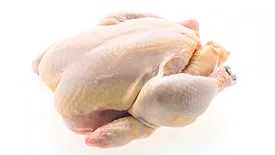
USDA’s Food Safety and Inspection Service (USDA-FSIS) has withdrawn the long-awaited proposed regulatory framework for Salmonella in raw poultry, which was designed to reduce the cases of human salmonellosis attributable to poultry consumption, saying that additional consideration is needed based on public comments.
The D.C. Section of Institute of Food Technologists (DC-IFT) is hosting “Food Policy Impact 2025,” a two-day event that will explore the future of food policies and their impact on food, nutrition, and health.
Less than two months after the filing of a first-of-its-kind lawsuit against ultra-processed food manufacturers, President Trump released an Executive Order establishing the Make America Healthy Again Commission.
In May 2024, USDA-FSIS published a final determination setting levels at which Salmonella would be consideredan adulterant in not-ready-to-eat (NRTE), breaded and stuffed chicken products, which also established a verification sampling program and a requirement for establishments to reassess their HACCP plans. FSIS has delayed the date for its sampling program and the HACCP reviews from May to November, 2025.
A coalition of 24 prominent food industry and consumer protection organizations, as well as seven expert individuals, sent a letter to USDA Secretary Brooke Rollins urging her to reinstate two key federal food safety scientific advisory committees, NACMCF and NACMPI.
Consumer Reports recently released a report revealing the “most contaminated” poultry plants in the U.S., based on an analysis of USDA-FSIS Salmonella testing data.
A new study by USDA researchers has shown that long-read whole genome sequencing (WGS) could detect Salmonella attachment to food-contact surfaces earlier than traditional culture-based methods, allowing for sanitation interventions to be applied before the maturation of robust and difficult-to-remove biofilms.
Senator Richard Blumenthal (D-CT) has written a letter to U.S. Secretary of Agriculture Brooke Rollins, urging her to rescind the decision to terminate two key food safety scientific advisory committees, NACMCF and NACMPI.
Two key advisory committees, responsible for providing impartial scientific advice to federal public health agencies (USDA, FDA, CDC) relative to food safety, have been terminated: the National Advisory Committee on Microbiological Criteria for Foods (NACMCF) and National Advisory Committee on Meat and Poultry Inspection (NACMPI).
Following mass layoffs that swept regulatory agencies, including those responsible for food safety and foodborne illness response, the U.S. Office of Personnel Management (OPM) has walked back its orders to dismiss probationary employees. The change was prompted by a court decision that deemed OPM’s orders to dismiss staffers as unlawful.
 RSS
RSS