The U.S. Food and Drug Administration has highlighted the importance of its engagement with international organizations on critical food safety topics, in particular, the Asia Pacific Economic Cooperation (APEC).
The full committee of the National Advisory Committee on Microbiological Criteria for Foods (NACMCF) will hold a hybrid in-person and virtual public meeting on May 16, 2023, to provide an update on the Cyclospora cayetanensis in produce and Cronobacter in powdered infant formula subcommittee work.
The U.S. Food and Drug Administration (FDA) has released a report on its investigation of a Salmonella Typhimurium outbreak linked to cantaloupes that occurred during July–September 2022, and has highlighted food safety recommendations for melon growers and distributors.
The U.S. Food and Drug Administration (FDA) will host two webinars to provide stakeholders with information on regulatory requirements and considerations for infant formula ingredients and packaging in May and June, respectively.
In his first media interview since departing from the U.S. Food and Drug Administration (FDA) in February, Frank Yiannas joins Food Safety Matters to discuss his experiences and lessons learned during his tenure at the agency, his career before and after FDA, his perspective on the proposed reorganization of FDA's Human Foods Program, his own “unfinished business,” and other topics.
The U.S. Food and Drug Administration (FDA) has issued a Request for Information regarding food labeling information provided through online grocery shopping platforms.
The U.S. Food and Drug Administration (FDA) recently released its Food Code Adoption Status Report for 2022. FDA released the most recent version of the Food Code in December 2022.
With the COVID-19 pandemic’s classification as a Public Health Emergency comes to an end, temporary flexibilities granted by the U.S. Food and Drug Administration (FDA) to aid the food industry through the pandemic are set to expire. FDA has also issued a guidance for industry intended to help qualified exempt farms subject to the Produce Safety Rule with transitioning away from the temporary allowances.
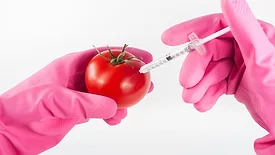
The U.S. Food and Drug Administration (FDA) has issued a letter reminding developers and manufacturers of new plant varieties intending to transfer genes for proteins that are food allergens into new plant varieties used for food of the relevant legal requirements for such products.
Part of Food Safety Magazine’s series with the U.S. Food and Drug Administration (FDA), titled, “Evolution of a New Era: Advancing Strategies for Smarter Food Safety,” this episode of Food Safety Matters discusses the research and application of behavior sciences with retail foodservice employees and regulatory agencies that help reduce foodborne illness risk factors.
 RSS
RSS