
To better understand the characteristics and contributing factors of Salmonella outbreaks linked to fish and fishery products, researchers from FDA and CDC reviewed multistate foodborne illness outbreak investigation records from 2012–2021.
Food Standards Australia New Zealand (FSANZ) has received official approval for four changes to the Food Standards Code. It has also provided new targeted guidance on microbiological safety and hygiene for seafood and cell-cultured products.
Members raised four new specific trade concerns (STCs) regarding: coffee bean imports into China; Thailand's regulation to mitigate aflatoxins in peanut kernels; a ban on imports of aquaculture shrimp in Thailand; and Viet Nam's procedure for the listing of exporting establishments.
New platform and rebrand represent the next chapter in seafood traceability, combining the value of traceability data, global reach, and anticipated ROI.
As part of its ongoing public awareness initiatives, the Saudi Food and Drug Authority has released information detailing common types of food poisoning linked to fish consumption and crucial preventive measures to protect public health.
To combat food fraud and reduce instances of scombroid poisoning due to histamine contamination, a new European Commission draft regulation would tighten regulations for freezing tuna onboard vessels.
USDA’s Food Safety and Inspection Service (USDA-FSIS) sampled and tested meat, chicken, and Siluriformes fish (catfish) for 16 per- and polyfluoroalkyl substances (PFAS), detecting “forever chemicals” in less than 0.2–0.3 percent of all sample types except wild-caught catfish, of which nearly half contained at least one PFAS.
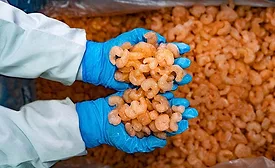
Introduced by Senator Cindy Hyde-Smith (R-MS), the Senate Bill 667, named the Safer Shrimp Imports Act, would require FDA to ensure that food safety inspections for shrimp in importing countries meet standards equivalent to those upheld in the U.S.
Only 0.11 percent of food-producing animals and animal-derived foods sampled in 2023 were non-compliant with EU veterinary drug residue limits, according to the latest data from the European Food Safety Authority (EFSA).