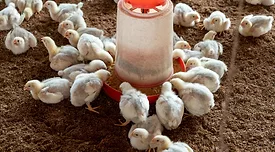
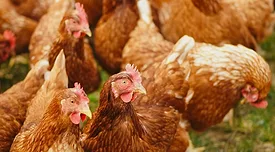
The FAO/WHO Joint Expert Meetings on Microbiological Risk Assessment (JEMRA) convened to review the most recent scientific literature regarding the control of Campylobacter on chicken meat. The experts emphasized the importance of a multi-hurdle approach in production and processing.
A bill has been introduced by California Assemblymember Jesse Gabriel (D-46), who was also behind the recently passed California Food Safety Act, to the California Assembly. Assembly Bill (AB) 2316 would prohibit food containing red dye 40 and titanium dioxide, among other color additives, from being offered by California public schools.
After hundreds of children across the U.S. contracted lead poisoning after eating fruit puree pouches containing contaminated cinnamon, the U.S. Food and Drug Administration (FDA) has identified six additional ground cinnamon products that were found to contain elevated levels of lead. The agency has issued a recall.
A recent study has identified factors that determine the susceptibility of different leafy greens to foodborne Escherichia coli, including storage temperatures, leaf roughness, and natural wax coating. The researchers also found that the juices of kale and collard leaves have a natural antimicrobial effect.
To encourage the use of Salmonella vaccines for poultry flocks, the U.S. Department of Agriculture’s Food Safety and Inspection Service (USDA’s FSIS) intends to exclude current commercial vaccine subtypes of Salmonella confirmed in FSIS raw poultry samples from the calculation used to categorize establishments under the raw poultry Salmonella performance standards.
A study aims to determine how irrigation water that is treated to control microbial activity may affect pathogens on crop surfaces or soil, with the end goal of developing a quantitative microbial risk assessment (QMRA) for industry to gauge the reduction in microbial risk from treated water applied preharvest.
Funded by the Center for Produce Safety, a University of Georgia researcher is leveraging cutting-edge technology to improve the standard method for detection of viruses on foods, and then will use the method to study infectious norovirus persistence on berries.
Food Standards Australia New Zealand (FSANZ) is calling for comment on an application to permit a new genetically modified organism (GMO) for use as the source for the production of a human identical milk oligosaccharide to be used in infant formula products.
Following a series of court judgements on the legal definition of “mechanically separated meat” (MSM), the UK Food Standards Agency (FSA) has published a guidance to provide clarity on MSM, and opened a public consultation.
 RSS
RSS