Through the One Health lens, a scientific review summarized current knowledge on Salmonella biofilms, the importance of non-antibiotic interventions given the rise of antimicrobial resistance (AMR), emerging alternative strategies with potential for real-world use, and challenges and needs moving forward.
A two-year study of Southeastern U.S. watersheds confirmed that surface water harbors complex, clinically relevant Salmonella populations that differ from food animal datasets—revealing critical gaps in understanding environmental Salmonella transmission and the need for robust One Health surveillance systems.
The European Food Safety Authority (EFSA) has published guidelines for reporting whole genome sequencing (WGS) data in compliance with Regulation (EU) 2025/179, which requires Member States to conduct WGS on the isolates of five important pathogens during the investigations of foodborne illness outbreaks and sets data-sharing parameters.
A recent literature analysis of One Health-labeled studies described food safety’s representation as a research topic and its intersection with other facets of the One Health framework.
A 2024 European foodborne illness outbreak caused by a rare Salmonella serotype, linked to leafy greens grown near a buffalo farm, exposed gaps in biosecurity, surveillance, and data transparency across the agri-food system.
Commissioned by FDA, the Reagan-Udall Foundation released a report outlining actionable strategies to enhance cross-sectoral coordination in response to public health incidents, including food safety threats.
The UK Food Standards Agency (FSA) has reported on the outcomes of the recently concluded, £24 million Pathogen Surveillance in Agriculture, Food, and the Environment (PATH-SAFE) program, and announced that it will continue to build on the work of PATH-SAFE with a national Food Surveillance Program.
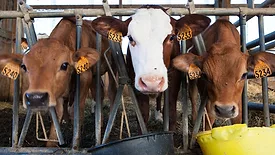
Penn State researchers have demonstrated the potential for Salmonella Dublin to spread among cattle, the environment, and people—necessitating a “One Health” response. Based on their analysis, rising antibiotic resistance is also a concern.
During a technical meeting convened by IAEA, FAO, and WHO, experts emphasized the need for a joint response to the interconnected issues of food safety and nutrition. The use of nuclear techniques to enhance food safety and nutrition was also explored.
A recent study showed the high prevalence of Campylobacter in Nigeria with poultry as the primary reservoir, carrying significant food safety implications, and highlighting the importance of controlling the pathogen from a One Health perspective.