Food Safety
search
Ask Food Safety AI
cart
facebook twitter linkedin instagram youtube
  • Sign In
  • Create Account
  • Sign Out
  • My Account
Food Safety
  • NEWS
    • Latest News
    • White Papers
  • PRODUCTS
  • TOPICS
    • Contamination Control
    • Food Types
    • Management
    • Process Control
    • Regulatory
    • Sanitation
    • Supply Chain
    • Testing and Analysis
  • PODCAST
  • EXCLUSIVES
    • Food Safety Five Newsreel
    • eBooks
    • FSM Distinguished Service Award
    • Interactive Product Spotlights
    • Videos
  • BUYER'S GUIDE
  • MORE
    • NEWSLETTERS >
      • Archive Issues
      • Subscribe to eNews
    • Store
    • Sponsor Insights
    • ASK FSM AI
  • WEBINARS
  • FOOD SAFETY SUMMIT
  • EMAG
    • eMagazine
    • Archive Issues
    • Editorial Advisory Board
    • Contact
    • Advertise
  • SIGN UP!
ProductsProcess ControlProcessing Technologies

New GEA RAY Plus Freeze Dryers
By Food Safety Magazine Editorial Team
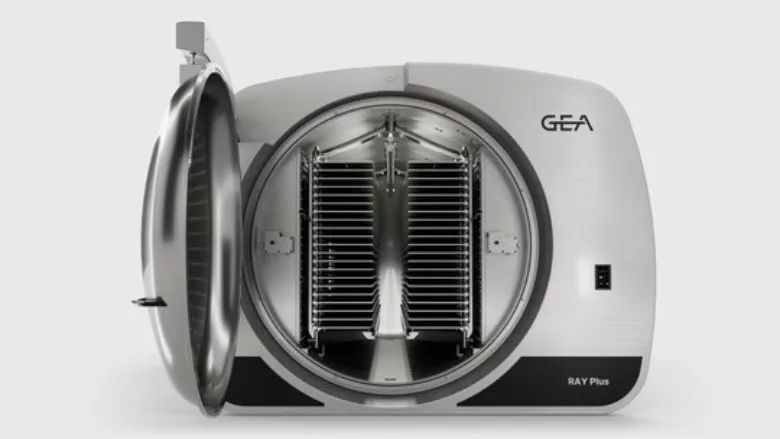
GEA RAY Plus freeze drier

Image provided by GEA

October 30, 2024

GEA recently launched the RAY Plus series, a next-generation iteration of freeze dryers that delivers advanced energy efficiency and hygiene, providing a more flexible and efficient solution for the food industry.

The RAY Plus series offers a cabinet size range of 45 square meters (m²) to 180m². It has heating plates in layers of 10, 15, or 20, and includes condensers on both sides. The cabinets can be combined in groups of up to six, sharing a common control and support system to improve operational efficiency and ensure even load distribution across the production floor.

In designing the RAY Plus freeze dryer, GEA developed a proprietary Computational Fluid Dynamic (CFD) model. The model precisely calculates the flow dynamics and pressure losses under deep vacuum within the freeze dryer cabinet, ensuring optimal performance and efficiency.

The result is a nearly 50 percent reduction in pressure drop within the cabinet compared to previous models, achieved by installing vapor traps on both sides of the cabinet and allowing vapor to enter from both the top and bottom.

The new series can be integrated with existing RAY freeze dryers and connected to various cooling and heating solutions, including the latest heat pump technologies. Operating at lower temperatures with higher batch loads, RAY Plus achieves the same daily capacity with reduced energy consumption. The system’s flexibility allows for high sublimation rates (greater than 3 kilograms/m²h) or higher capacity at low vacuum (less than 0.15mBar) with standard refrigeration solutions.

From the RAY125 Plus model onward, the freeze dryers are equipped with four condensers (three in operation, one in de-icing), providing a larger condensing surface and enabling operations at a condenser temperature approximately 6 °C warmer. This configuration also allows for operation at lower vacuum levels with higher sublimation rates.

The RAY Plus cabinets are designed for efficient washdown, with all water running to drain points at the bottom of the circular cabinet. Residual water can be removed by applying a brief vacuum to the cabinet. The design also includes an internal camera to monitor the status inside the cabinet during operation.

Looking for quick answers on food safety topics?
Try Ask FSM, our new smart AI search tool.
Ask FSM →

The new series features an intuitive user interface on the front of the unit, making it easy to operate and offering remote access. The comprehensive PC-based control system remains available for detailed operation and troubleshooting.

The RAY Plus uses trolleys running on GEA’s proven rail system with 80 millimeter (mm) stainless steel pipes. Trolleys are available in 20, 30, or 40 tray configurations, with the 30-tray solution compatible with RAY® cabinets. Optional solutions for automatic loading and unloading, as well as tray filling and cleaning, are also available.


GEA: www.gea.com

KEYWORDS: GEA

Share This Story

Fsm purple logo 200x200

The Food Safety Magazine editorial team comprises Bailee Henderson, Digital Editor ✉ and Adrienne Blume, M.A., Editorial Director.

Recommended Content

JOIN TODAY
to unlock your recommendations.

Already have an account? Sign In

  • people holding baby chicks

    Serovar Differences Matter: Utility of Deep Serotyping in Broiler Production and Processing

    This article discusses the significance of Salmonella in...
    Contamination Control
    By: Nikki Shariat Ph.D.
  • woman washing hands

    Building a Culture of Hygiene in the Food Processing Plant

    Everyone entering a food processing facility needs to...
    Training
    By: Richard F. Stier, M.S.
  • graphical representation of earth over dirt

    Climate Change and Emerging Risks to Food Safety: Building Climate Resilience

    This article examines the multifaceted threats to food...
    Risk Assessment
    By: Maria Cristina Tirado Ph.D., D.V.M. and Shamini Albert Raj M.A.
Manage My Account
  • eMagazine Subscription
  • Subscribe to Newsletters
  • Manage My Preferences
  • Website Registration
  • Subscription Customer Service

More Videos

Sponsored Content

Sponsored Content is a special paid section where industry companies provide high quality, objective, non-commercial content around topics of interest to the Food Safety Magazine audience. All Sponsored Content is supplied by the advertising company and any opinions expressed in this article are those of the author and not necessarily reflect the views of Food Safety Magazine or its parent company, BNP Media. Interested in participating in our Sponsored Content section? Contact your local rep!

close
  • The image shows a variety of fresh produce packaged in plastic trays and wrap.
    Sponsored byWaters Corporation

    PFAS-Free Food Packaging by August 2026

  • This image displays a multi-stage water filtration system designed to remove contaminants from drinking water.
    Sponsored byWaterdrop Filter

    The 4.0 ppt Era: Future-Proofing Your Food Supply Chain Against 'Forever Chemicals'

  • The image displays a bottling plant production line, commonly used in the beverage industry for filling and packaging soft drinks.
    Sponsored byBIOIONIX

    Sustainability with ROI: A Beverage Producer Case Study in Water Savings

Popular Stories

half shredded block of cheddar cheese and pile of cheese shreds on wooden cutting board

Patient Count in Raw Farm E. coli Outbreak Grows, Majority are Young Children

RAW FARM-brand raw cheddar cheese shreds

Amid E. coli Outbreak, Congress Urges FDA to Mandate Raw Cheese Recall

smiling employee in bottling factory looking at camera with arms crossed in front of production line

GFSI Unveils Updated Food Safety Culture Framework

foreign material webinar


Events

March 31, 2026

Regulatory Risk, Ingredient Safety, and GRAS: What Companies Need to Act on Now

Live: March 31, 2026, at 11:00 am EDT: From this webinar, attendees will recognize patterns in food policy affecting dietary guidelines, UPFs, state legislative actions, and expected GRAS reform.

April 8, 2026

Foreign Material Contamination: Why In-Line Reinspection Isn't Enough

Live: April 8, 2026, at 11:00 am EDT: From this webinar, attendees will learn why reinspecting with in-line equipment is not sufficient when it comes to potential foreign material contamination.

April 16, 2026

Recordkeeping and Document Management for Food Safety Compliance

Live: April 16, 2026, at 2:00 pm EDT: From this webinar, attendees will learn why recordkeeping and document control are essential to food safety and business management.

View All

Products

Global Food Safety Microbial Interventions and Molecular Advancements

Global Food Safety Microbial Interventions and Molecular Advancements

See More Products

Related Articles

  • Radio Frequency Co. Announces New Bantam-Series Macrowave™ Post-Baking Dryers

    See More
  • GEA CONTA

    Hygienically Designed GEA CONTA Spray Dryer Valve Technology Reduces Microbial Risk

    See More
  • Cooper-Atkins Introduces New TravAlert Plus Data Logger

    See More

Related Products

See More Products
  • Food-Forensics-3D.jpg

    Food Forensics Handbook Practice, Instrumentation, Case Studies

  • 9781498721776.jpg

    Handbook of Food Processing: Food Safety, Quality, and Manufacturing Processes

  • 0813808774.jpg

    Improving Import Food Safety

See More Products
×

Never miss the latest news and trends driving the food safety industry

Newsletters | Website | eMagazine

JOIN TODAY!
  • RESOURCES
    • Advertise
    • Contact Us
    • Directories
    • Store
    • Want More
  • SIGN UP TODAY
    • Create Account
    • eMagazine
    • Newsletters
    • Customer Service
    • Manage Preferences
  • SERVICES
    • Marketing Services
    • Reprints
    • Market Research
    • List Rental
    • Survey/Respondent Access
  • STAY CONNECTED
    • LinkedIn
    • Facebook
    • Instagram
    • X (Twitter)
  • PRIVACY
    • PRIVACY POLICY
    • TERMS & CONDITIONS
    • DO NOT SELL MY PERSONAL INFORMATION
    • PRIVACY REQUEST
    • ACCESSIBILITY

Copyright ©2026. All Rights Reserved BNP Media, Inc. and BNP Media II, LLC.

Design, CMS, Hosting & Web Development :: ePublishing