Food Safety
search
Ask Food Safety AI
cart
facebook twitter linkedin instagram youtube
  • Sign In
  • Create Account
  • Sign Out
  • My Account
Food Safety
  • NEWS
    • Latest News
    • Sponsored Insights
    • Sponsored White Papers
  • PRODUCTS
  • TOPICS
    • Contamination Control
    • Food Types
    • Management
    • Process Control
    • Regulatory
    • Sanitation
    • Supply Chain
    • Testing and Analysis
  • PODCAST
  • EXCLUSIVES
    • Food Safety Five Newsreel
    • eBooks
    • FSM Distinguished Service Award
    • Interactive Product Spotlights
    • Videos
  • BUYER'S GUIDE
  • MORE
    • NEWSLETTERS >
      • Archive Issues
      • Subscribe to eNews
    • Store
    • ASK FSM AI
  • WEBINARS
  • FOOD SAFETY SUMMIT
  • EMAG
    • eMagazine
    • Archive Issues
    • Editorial Advisory Board
    • Contact
    • Advertise
  • SIGN UP!

3M's new molecular tests for STEC gives food safety labels more options

Arrival of two distinct assays for Shiga toxin-producing E. coli (STEC) enables food safety labs to test with or without eae gene results

3M STEC and coconut assays
August 29, 2019

3M Food Safety has announced the introduction of two assays that can detect the genes associated with Shiga toxin-producing E. coli (STEC), organisms that can pose severe health threats. The 3M Molecular Detection Assay 2 - STEC Gene Screen (stx and eae) is able to rapidly detect the genes for Shiga toxin types 1 and 2, as well as eae, the intimin gene that allows the bacteria to attach to intestinal cells. The second assay, the 3M Molecular Detection Assay 2 - STEC Gene Screen (stx) detects only Shiga toxin genes, allowing labs to serve varying screening needs. 

Both test kits are immediately available and are applicable to samples enriched from foods and from food processing environments. In addition, the assays have received Performance Tested Methods (PTM) certification from the AOAC Research Institute based on validation research conducted by independent laboratories.The 3M Molecular Detection Assay 2 - STEC Gene Screen (stx and eae) (Certificate #071902) demonstrated equivalent performance to the USDA FSIS method for raw beef trim and raw ground beef, and to the FDA BAM reference method for fresh spinach. The 3M Molecular Detection Assay 2 - STEC Gene Screen (stx) (Certificate #071903) demonstrated equivalent performance to the USDA FSIS method for raw ground beef, and to the FDA BAM reference method for fresh spinach. 

The new assays bring the number of next generation test kits compatible with the award-winning 3M Molecular Detection System to eight, three of which now relate to E. coli. The 3M Molecular Detection Assay 2 - E. coli O157 (including H7) was introduced in 2016 as a method for detecting the strain most commonly associated with E. coli O157 outbreaks. However, many manufacturers still wish to screen for non-O157 STECs, including eae-negative subsets like the O104:H4 strain that was responsible for a large outbreak in Europe earlier this decade.

“Pathogen testing isn’t a one-size-fits-all proposition so our team has worked diligently to give food processors a number of test kits to address the needs and regulations that may be uniquely confronting them,” said Caroline Michael, 3M Food Safety new product marketer. “We’re proud to offer a stx-only assay, as we know there are food manufacturers who want flexibility to test for a specific genetic profile. Flexibility is also enhanced with the (stx and eae) test kit, which clearly indicates the presence or absence of each of these genes in a test sample. For example, some companies want to rule out the presence of enteropathogenic E. coli – isolates that contain the eae gene but not stx– when interpreting results.”

The award-winning 3M Molecular Detection System platform and its various assays are used by food processors, universities, governments and contract testing laboratories around the world as a fast, accurate, easy-to-use and affordable test method. It overcomes limitations of conventional PCR (Polymerase Chain Reaction)  by using progressive loop-mediated isothermal amplification (LAMP) to amplify DNA sequences with high specificity and sensitivity, and then combines this process with bioluminescence as a means for detection. Presumptive positive results are revealed in real-time while negative results display once the test complete. In addition, the 3M Molecular Detection System is a primary method of the USDA FSIS for the detection of Salmonella and Listeria.

3M Food Safety helps the food and beverage industries optimize the quality and safety of their products to enable consumer protection. It provides solutions that mitigate risk, improve operational efficiencies and impact bottom lines. For more information on either the 3M Molecular Detection Assay 2 - STEC Gene Screen (stx and eae), 3M Molecular Detection Assay 2 - STEC Gene Screen (stx) and their AOAC-PTM certifications, visit www.3M.com/STEC.

Looking for quick answers on food safety topics?
Try Ask FSM, our new smart AI search tool.
Ask FSM →


KEYWORDS: 3M Food Safety E. coli

Share This Story

Recommended Content

JOIN TODAY
to unlock your recommendations.

Already have an account? Sign In

  • people holding baby chicks

    Serovar Differences Matter: Utility of Deep Serotyping in Broiler Production and Processing

    This article discusses the significance of Salmonella in...
    Contamination Control
    By: Nikki Shariat Ph.D.
  • woman washing hands

    Building a Culture of Hygiene in the Food Processing Plant

    Everyone entering a food processing facility needs to...
    Management
    By: Richard F. Stier, M.S.
  • graphical representation of earth over dirt

    Climate Change and Emerging Risks to Food Safety: Building Climate Resilience

    This article examines the multifaceted threats to food...
    Contamination Control
    By: Maria Cristina Tirado Ph.D., D.V.M. and Shamini Albert Raj M.A.
Manage My Account
  • eMagazine Subscription
  • Subscribe to Newsletters
  • Manage My Preferences
  • Website Registration
  • Subscription Customer Service

More Videos

Sponsored Content

Sponsored Content is a special paid section where industry companies provide high quality, objective, non-commercial content around topics of interest to the Food Safety Magazine audience. All Sponsored Content is supplied by the advertising company and any opinions expressed in this article are those of the author and not necessarily reflect the views of Food Safety Magazine or its parent company, BNP Media. Interested in participating in our Sponsored Content section? Contact your local rep!

close
  • Top view portrait of two factory workers standing by conveyor belt during quality inspection at food production, copy space
    Sponsored byFlexXray

    Foreign Material By the Numbers: What the 2026 Benchmark Report Reveals

  • a conveyorized industrial metal detector system that appears to resemble a Loma Systems IQ4 Metal Detector setup with an integrated conveyor belt and control panel for food or package inspection.
    Sponsored byMettler Toledo

    Beyond Detection: How to Avoid Physical Contamination in Food Through a Smarter Inspection Strategy

  • The image displays a bottling plant production line, commonly used in the beverage industry for filling and packaging soft drinks.
    Sponsored byBIOIONIX

    Sustainability with ROI: A Beverage Producer Case Study in Water Savings

Popular Stories

FSIS and FDA sharing Listeria info

USDA-FSIS to Roll Out Listeria Environmental Sampling Program Nationwide at RTE Facilities

Dr. Heidi Overton speaking at Senate hearing

In Senate Hearing, FDA Commissioner Nominee Says Lack of Resources Will Challenge GRAS Reform

simple UK flag

UK FSA Board Decides to Advance Sweeping Food System Regulatory Reforms

allergens ebook

Events

September 29, 2026

How to Talk to Your Board of Directors About Food Safety

Live: September 29, 2026 at 11:00 am EDT: Attend this webinar to learn how to position food safety as a material enterprise risk with measurable financial, operational, and reputational impacts relevant to Board-level decision-making.

September 30, 2026

Beyond Compliance: Building a Culture of Food Safety with GFSI's 2026 Framework

Live: September 30, 2026 at 2:00 pm EDT: Attend this webinar to evaluate best practices for monitoring regulatory changes and protecting market access.

October 6, 2026

Advances in Environmental Monitoring Science and Strategy

Live: October 6, 2026 at 2:00 pm EDT: This webinar will cover how environmental monitoring science and EMP strategies support sanitation verification and the safe production of food.

View All

Products

Global Food Safety Microbial Interventions and Molecular Advancements

Global Food Safety Microbial Interventions and Molecular Advancements

See More Products

Related Articles

  • Unknown.jpeg

    3M Introduces New Molecular Method for Campylobacter

    See More
  • 3m logo.png

    3M New Generation Pathogen Tests for Listeria, Listeria monocytogenes and Salmonella Receive New Validations

    See More
  • 3M Food Safety Introduces New Molecular Detection Assay for Salmonella

    See More

Related Products

See More Products
  • global food.jpg

    Global Food Safety Microbial Interventions and Molecular Advancements

  • 1119053595.jpg

    Food Safety for the 21st Century: Managing HACCP and Food Safety throughout the Global Supply Chain, 2E

  • 1119160553.jpg

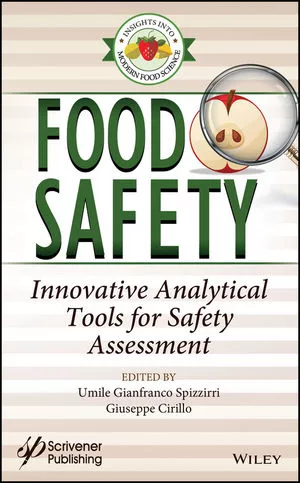
    Food Safety: Innovative Analytical Tools for Safety Assessment

See More Products

Related Directories

  • Food Safety News

    Food Safety News advances public health by delivering timely, accurate, and comprehensive coverage of foodborne illness outbreaks, recalls, and regulatory developments that impact the safety of our global food supply.
  • Institute for Food Safety and Health (IFSH) - Illinois Tech

    IFSH is a one-of-a-kind applied food science research consortium comprised of the Illinois Tech, the U.S. FDA, and the food industry. In collaboration with the FDA, we provide stakeholders with the opportunity to develop and exchange knowledge, experience, and expertise in the areas of food safety, food defense, and nutrition.
  • Active Food Safety

    Active Food Safety consists of an experienced team of food safety professionals who are thought-leaders in the food industry, and have each led enterprise level food safety management programs in several of the most well-known and respected brands in the food industry. We continuously help our clients ensure food safety based on proven business best practices designed specifically to the brand - to maximize risk reduction to prevent foodborne disease illnesses and outbreaks, to meet all government regulatory requirements, and to improve sales and brand reputation.
×

Never miss the latest news and trends driving the food safety industry

Newsletters | Website | FSM Features Collection

JOIN TODAY!
  • RESOURCES
    • Advertise
    • Contact Us
    • Directories
    • Store
    • Want More
  • SIGN UP TODAY
    • Create Account
    • eMagazine
    • Newsletters
    • Customer Service
    • Manage Preferences
  • SERVICES
    • Marketing Services
    • Reprints
    • Market Research
    • List Rental
    • Survey/Respondent Access
  • STAY CONNECTED
    • LinkedIn
    • Facebook
    • Instagram
    • X (Twitter)
  • PRIVACY
    • PRIVACY POLICY
    • TERMS & CONDITIONS
    • DO NOT SELL MY PERSONAL INFORMATION
    • PRIVACY REQUEST
    • ACCESSIBILITY

Copyright ©2026. All Rights Reserved BNP Media, Inc. and BNP Media II, LLC.

Design, CMS, Hosting & Web Development :: ePublishing