Food Safety
search
Ask Food Safety AI
cart
facebook twitter linkedin
  • Sign In
  • Create Account
  • Sign Out
  • My Account
Food Safety
  • NEWS
    • Latest News
    • White Papers
  • PRODUCTS
  • TOPICS
    • Contamination Control
    • Food Types
    • Management
    • Process Control
    • Regulatory
    • Sanitation
    • Supply Chain
    • Testing and Analysis
  • PODCAST
  • EXCLUSIVES
    • Food Safety Five Newsreel
    • eBooks
    • FSM Distinguished Service Award
    • Interactive Product Spotlights
    • Videos
  • BUYER'S GUIDE
  • MORE
    • ENEWSLETTER >
      • Archive Issues
      • Subscribe to eNews
    • Store
    • Sponsor Insights
    • ASK FSM AI
  • WEBINARS
  • FOOD SAFETY SUMMIT
  • EMAG
    • eMagazine
    • Archive Issues
    • Editorial Advisory Board
    • Contact
    • Advertise
  • SIGN UP!

FDA releases report on inspection and environmental sampling of ice cream production facilities for harmful bacteria

FDA logo
April 25, 2019

The U.S. Food and Drug Administration released a report on its inspection and environmental sampling of ice cream production facilities for Listeria monocytogenes and Salmonella in 2016 and 2017. The results underscore the need for commercial ice cream makers to ensure that they are implementing effective strategies to keep harmful bacteria out of their facilities.

Inspecting food facilities and collecting and testing samples from the environment where foods are produced are two of the many ways the FDA works to better understand microbial hazards and to help prevent contaminated products from reaching consumers.

The agency began the assignment on August 1, 2016, following 16 recalls of ice cream products due to the presence of pathogens in the prior three years, and an outbreak of listeriosis linked to an ice cream maker in 2015.

The FDA conducted inspections and environmental sampling of 89 ice cream production facilities in 32 states from September 12, 2016, to August 30, 2017. In selecting facilities for inclusion in the assignment, the agency sought to ensure representation from throughout the country and focused primarily on larger establishments whose product would be expected to reach greater numbers of consumers.

The FDA collected two environmental samples at each location. The samples tested for Listeria monocytogenes consisted of at least 50 subsamples each, and the samples tested for Salmonella consisted of at least 100 subsamples each. The assignment did not include the testing of finished product.


Key findings of this assignment include:

  • The FDA detected Listeria monocytogenes in 19 of the 89 establishments (an establishment-based prevalence of 21.3%), and in 65 of the 5,295 subsamples (a subsample-based prevalence of 1.25%). The detected Listeria monocytogenes was found on non-food contact surfaces in 18 of the 19 establishments, and on food contact surfaces in the one other establishment where the pathogen was found.
  • The FDA detected Salmonella in one of the 89 ice cream production facilities (an establishment-based prevalence of 1.1%), and in one of the 7,004 subsamples (a subsample-based prevalence of 0.01%). The detected Salmonella was not detected on a food contact surface.
  • With respect to the assignment inspectional outcomes, the FDA classified 44 of the 89 inspections (49.4%) as “No Action Indicated (NAI),” meaning no objectionable conditions or practices were observed during the inspection; 39 inspections (43.8%) as “Voluntary Action Indicated (VAI),” meaning objectionable conditions or practices were observed and documented, but the operation should be able to address them without official action by the FDA; and six inspections (6.7%) as “Official Action Indicated (OAI),” meaning objectionable conditions or practices warranting official action by the FDA were observed and documented.

As a result of the assignment findings and with support from federal and state health officials, the FDA suspended Working Cow Homemade Inc.’s food facility registration. The firm subsequently ceased operations. The FDA lifted the suspension four months later after the firm changed its business model to exclude production and focus on storage and distribution of ice cream made by other manufacturers. The agency also worked with two firms to conduct voluntary recalls (one being the firm that had its registration suspended), held seven regulatory meetings, and notified management at 39 facilities of the need to take corrective actions. In addition, follow-up inspections are being conducted by the FDA at all the facilities that received an OAI classification.

Although this assignment was not conducted to ensure compliance with the Preventive Controls for Human Food rule established by the FDA Food Safety Modernization Act (FSMA), the findings affirm that Listeria monocytogenes and Salmonella may be present in ice cream production facilities. The FDA began the assignment about one month before larger food facilities were required to comply with the rule, and one to two years before small and very small businesses were required to comply. The findings underscore the need for commercial ice cream makers to ensure that they are controlling hazards in accordance with the rule.

For additional information on the FDA’s sampling work and to read the report on its inspection and environmental sampling of ice cream production facilities, visit the agency’s Environmental Sampling page.

Looking for quick answers on food safety topics?
Try Ask FSM, our new smart AI search tool.
Ask FSM →


KEYWORDS: ice cream

Share This Story

Recommended Content

JOIN TODAY
to unlock your recommendations.

Already have an account? Sign In

  • people holding baby chicks

    Serovar Differences Matter: Utility of Deep Serotyping in Broiler Production and Processing

    This article discusses the significance of Salmonella in...
    Methods
    By: Nikki Shariat Ph.D.
  • woman washing hands

    Building a Culture of Hygiene in the Food Processing Plant

    Everyone entering a food processing facility needs to...
    Sanitation
    By: Richard F. Stier, M.S.
  • graphical representation of earth over dirt

    Climate Change and Emerging Risks to Food Safety: Building Climate Resilience

    This article examines the multifaceted threats to food...
    International
    By: Maria Cristina Tirado Ph.D., D.V.M. and Shamini Albert Raj M.A.
Manage My Account
  • eMagazine Subscription
  • Subscribe to eNewsletter
  • Manage My Preferences
  • Website Registration
  • Subscription Customer Service

More Videos

Sponsored Content

Sponsored Content is a special paid section where industry companies provide high quality, objective, non-commercial content around topics of interest to the Food Safety Magazine audience. All Sponsored Content is supplied by the advertising company and any opinions expressed in this article are those of the author and not necessarily reflect the views of Food Safety Magazine or its parent company, BNP Media. Interested in participating in our Sponsored Content section? Contact your local rep!

close
  • Salmonella bacteria
    Sponsored byThermoFisher

    Food Microbiology Testing Methods: Salmonella species

  • a diagram explaining indicator organisms
    Sponsored byHygiena

    How Proactive Listeria Testing Helps Prevent Six- and Seven-Figure Recalls

  • woman grocery shopping
    Sponsored byCorbion

    Designing Safety Into Every Bite: Proactive Risk Mitigation for Refrigerated Foods

Popular Stories

NRTE breaded stuffed chicken

USDA Indefinitely Delays Enforcement of Salmonella as Adulterant in Raw Breaded, Stuffed Chicken

digital map of europe

EU Publishes Food Fraud Tool Mapping Thousands of Cases Since 2016

non-conforming product

How to Handle Non-Conforming Product

Events

December 11, 2025

How to Develop and Implement an Effective Food Defense Strategy

Live: December 11, 2025 at 2:00 pm EDT: From this webinar, attendees will learn common areas where companies encounter challenges in their food defense strategies and how to address them.

May 11, 2026

The Food Safety Summit

Stay informed on the latest food safety trends, innovations, emerging challenges, and expert analysis. Leave the Summit with actionable insights ready to drive measurable improvements in your organization. Do not miss this opportunity to learn from experts about contamination control, food safety culture, regulations, sanitation, supply chain traceability, and so much more.

View All

Products

Global Food Safety Microbial Interventions and Molecular Advancements

Global Food Safety Microbial Interventions and Molecular Advancements

See More Products

Related Articles

  • FDA Tests 89 Ice Cream Production Facilities for Listeria and Salmonella

    See More
  • COPAN Diagnostics Releases New Video Highlighting Environmental Sampling and Expands Local Production of Line

    See More
  • FSS news generic image

    FDA releases results on sampling of dairy-free dark chocolate for milk allergen

    See More

Related Products

See More Products
  • 1118396308.jpg

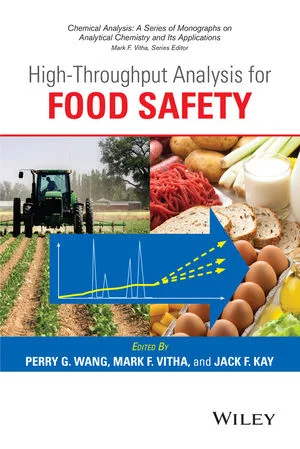
    High Throughput Analysis for Food Safety

  • 1119160553.jpg

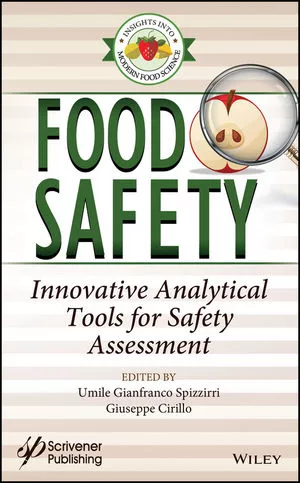
    Food Safety: Innovative Analytical Tools for Safety Assessment

  • 1119053595.jpg

    Food Safety for the 21st Century: Managing HACCP and Food Safety throughout the Global Supply Chain, 2E

See More Products

Events

View AllSubmit An Event
  • May 1, 2025

    Avoiding Sanitation Pitfalls: Challenges and Opportunities for Your Environmental Monitoring Program

    On Demand: During this webinar, attendees will learn environmental sanitation pitfalls to avoid, and how to ensure biological safety inside your plant
  • November 18, 2025

    Dry Sanitation and Cleaning Techniques for Facilities and Equipment

    On Demand: From this webinar, attendees will learn best practices employed by dry/low-moisture food processors for dry sanitation and equipment cleaning.
View AllSubmit An Event

Related Directories

  • Eagle Product Inspection

    Eagle Product Inspection is a leading manufacturer of hygienically designed x-ray equipment & inline fat analysis systems. Eagle specializes in complex x-ray inspection solutions using dual energy photon-counting technology for bone detection and inline fat analysis for a wide variety of industries, including meat, poultry and seafood.
  • Anritsu - Product Inspection & Detection

    Anritsu manufactures product inspection and detection equipment for food and pharma industries. Part of the Product Quality Assurance division of Anritsu Corp., we advance quality control programs with high-performing and reliable solutions. Our X-Ray Systems, Checkweighers, Metal Detectors, Combo Systems, Rejectors, and QuiCCA Software provide a superior ROI and ensure compliance with stringent quality control programs while protecting your brand. Our local branches in the US, Europe, Brazil, and Mexico are equipped with in-house service & parts dept., we deliver, install, and maintain in record time. With over 200,000 installations, we are the brand that is trusted to protect the safety and security of your customers.
×

Never miss the latest news and trends driving the food safety industry

eNewsletter | Website | eMagazine

JOIN TODAY!
  • RESOURCES
    • Advertise
    • Contact Us
    • Directories
    • Store
    • Want More
  • SIGN UP TODAY
    • Create Account
    • eMagazine
    • eNewsletter
    • Customer Service
    • Manage Preferences
  • SERVICES
    • Marketing Services
    • Reprints
    • Market Research
    • List Rental
    • Survey/Respondent Access
  • STAY CONNECTED
    • LinkedIn
    • Facebook
    • Instagram
    • X (Twitter)
  • PRIVACY
    • PRIVACY POLICY
    • TERMS & CONDITIONS
    • DO NOT SELL MY PERSONAL INFORMATION
    • PRIVACY REQUEST
    • ACCESSIBILITY

Copyright ©2025. All Rights Reserved BNP Media.

Design, CMS, Hosting & Web Development :: ePublishing