Have Your Natural Ingredients Been Adulterated?
With the boom of the natural foods industry, businesses must be attuned to the specific food safety challenges that natural ingredients bring to the table. One is cost—problems of fluctuating supply and sometimes arduous processing mean that natural ingredients can have a significant price tag. Another is food fraud—intentional adulteration. With the value of the natural foods market estimated at $97.5 billion in 2017 and consumer interest in the “natural” label on the rise, having the analytical tools available to detect common adulterants is crucial for the industry.[1,2]
This article focuses on the adulteration of natural foods, what implications this holds for supply chain integrity and food safety, and how methods such as carbon-14 testing can be used to detect mislabeling or adulteration with petrochemical-derived synthetics.
Adulteration of Natural Food Products
Adulteration of any kind throws the integrity of the supply chain into question, which in turn is cause for concern over food safety. If an undeclared substance is introduced into a product or ingredient, then there may be a risk that it causes physical harm.
The challenge in identifying fraudulent ingredients is that the methods of adulteration vary widely. The addition of peanut protein to cumin powder or the dilution of natural curcumin with synthetic curcuminoids are just two examples of a wide variety of adulteration methods recently observed in the industry.[3,4]
The economically motivated adulteration of natural products is a well-established problem, as many natural ingredients suffer from high production costs and variable supply. Using ingredients that are cheaper and more abundant is appealing and when done surreptitiously can introduce unknown food safety issues. Although many adulteration methods do not pose a clear food safety issue, without the usual safety checks in place for approved ingredients, any adulterant has the potential to cause physical harm. Some examples of the variety and potential of adulteration seen for natural products are highlighted below.
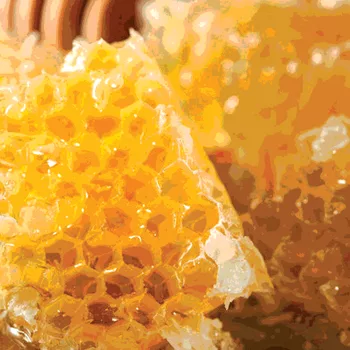
A report by the European Commission’s Joint Research Centre revealed that 14 percent of honey samples were adulterated; the simplest method involves the addition of sugar syrup.[5] A similar case of bulking using a cheaper ingredient was seen for oregano, where products had been adulterated with olive and sumac leaves.[6]
The popular flavor vanilla is a clear example of a case where the synthetic version is the more financially attractive option. The key flavor component of natural vanilla extract is vanillin, and this can also be produced through various synthetic means. It is estimated that synthetic vanillin makes up over 95 percent of vanilla flavoring used today.[7] The natural vanilla flavoring from the vanilla orchid is in short supply and production is labor intensive, resulting in the majority of vanilla flavoring coming from synthetic sources. These synthetic routes can use a host of source materials, including lignin, a byproduct from the paper industry, or the petroleum-derived guaiacol.
A similar situation is seen for curcumin.[8] As demands increase, the associated difficulties of variable crop output and limited supplying regions make the cheaper petroleum-sourced synthetic route attractive to some.
Supply Chain Implications
The intent of adulteration is rarely to cause harm, since this would defeat the purpose of slipping a cheaper ingredient under the radar.[9] As a result, the incidence of food fraud is predicted to be higher than is actually reported, with advanced techniques or insufficient quality assurance allowing some to get by undetected. The disparity in awareness is even greater for the public, as it is often only when there are larger public health consequences or lawsuits that adulteration gets significant attention.
The bottom line is that if there is an unknown adulterant being introduced somewhere along the supply chain, even if unlikely to cause a public health risk, the final quality of the product is already compromised.
Repercussions of Mislabeling
Adulteration, even with a chemically identical synthetic substitute, can have serious consequences when making “all natural” claims. The ambiguity is complicated by the U.S. Food and Drug Administration not having set out clear guidelines on what the “natural” label means.[10]
With many consumers deliberately seeking out natural foods, companies seen as misusing the “all natural” label are not viewed kindly. This is highlighted by the growing number of lawsuits against companies using “natural” or “all natural” labels.[10]
In this context, what can the quality assurance manager do to ensure the integrity of his supply chain and screen the products procured? A good relationship with suppliers is important, but it is often not enough. A number of analytical methods are available to identify adulterants—techniques like nuclear magnetic resonance and gas chromatography-mass spectrometry are able to show differences in chemical composition when compared with a reference standard for the material being tested.[11] One method of particular interest for products labeled as natural is carbon-14 testing, which is able to differentiate between natural (bio-based) material and petroleum-derived synthetic material.
What Can Carbon-14 Testing Do for Natural Products?
Carbon-14 testing offers a useful analytical technique to assist in the detection of adulteration and any resulting supply chain integrity problems.
The basis for carbon-14 testing relies on the differing carbon-14 content between bio-based materials and petroleum-derived substances. Carbon-14 is a weakly radioactive isotope of carbon that decays over time in line with radioactive decay. It is produced in the upper atmosphere and enters the global carbon cycle; hence, it is present in known amounts in living or recently living plants and animals. Once no longer alive, the plant or animal will cease exchanging carbon and the carbon-14 level will decrease at a known rate. Petroleum and its derivatives are old enough that no carbon-14 remains in them. By measuring the carbon-14 content of a material, it is therefore possible to give its percentage of bio-based carbon content compared with its petrochemical-derived carbon content.
As discussed, the complex nature of adulteration in the food industry means that there is no single analytical technique guaranteed to detect adulteration. For natural ingredients, carbon-14 testing is a reliable way to specifically check for the presence of petroleum-derived chemicals.
The Road Ahead for Natural Product Adulteration
The necessity of strict quality assurance and testing has become abundantly clear as the natural product market has grown and various food safety scandals and legal cases have hit the headlines. As with many foods, the opportunity and means of adulteration are plenty. Although the regulatory definition of the “natural” label is not always clear, an important preliminary step for checking the purity of a product sold as plant-derived is to screen for cheaper petroleum-derived synthetics with carbon-14 testing.
Anna Lykkeberg is a research associate at Beta Analytic.
Jasmine Garside is the global operations manager at Beta Analytic; https://www.betalabservices.com/.
References
1. blog.euromonitor.com/2016/11/intangible-appeal-natural-growing-consumer-interest-unregulated-product-label.html.
2. www.prnewswire.com/news-releases/all-natural-food--drink-market-report-2017-2027-300498648.html.
3. www.fda.gov/Food/RecallsOutbreaksEmergencies/SafetyAlertsAdvisories/ucm434274.htm.
4. www.sabinsa.com/index.php/press-release-2017/190-sabinsa-takes-action-against-biotikon-for-synthetic-curcumin-adulteration.
5. www.foodqualitynews.com/Article/2017/04/12/Prevalence-of-adulterated-and-mislabelled-honey-revealed.
6. www.smh.com.au/business/consumer-affairs/food-fraud-popular-oregano-brands-selling-adulterated-products-20160404-gnygjo.html.
7. uk.businessinsider.com/how-is-artificial-vanilla-made-2016-5?r=US&IR=T.
8. www.gminsights.com/industry-analysis/curcumin-market.
9. fas.org/sgp/crs/misc/R43358.pdf.
10. www.washingtonpost.com/news/wonk/wp/2017/08/30/the-raging-legal-battle-over-what-makes-a-food-natural/?utm_term=.fd215672141a.
11. media.allured.com/documents/PF_29_01_032_10.pdf.
Looking for quick answers on food safety topics?
Try Ask FSM, our new smart AI search tool.
Ask FSM →