Food Safety
search
Ask Food Safety AI
cart
facebook twitter linkedin
  • Sign In
  • Create Account
  • Sign Out
  • My Account
Food Safety
  • NEWS
    • Latest News
    • White Papers
  • PRODUCTS
  • TOPICS
    • Contamination Control
    • Food Types
    • Management
    • Process Control
    • Regulatory
    • Sanitation
    • Supply Chain
    • Testing and Analysis
  • PODCAST
  • EXCLUSIVES
    • Food Safety Five Newsreel
    • eBooks
    • FSM Distinguished Service Award
    • Interactive Product Spotlights
    • Videos
  • BUYER'S GUIDE
  • MORE
    • ENEWSLETTER >
      • Archive Issues
      • Subscribe to eNews
    • Store
    • Sponsor Insights
    • ASK FSM AI
  • WEBINARS
  • FOOD SAFETY SUMMIT
  • EMAG
    • eMagazine
    • Archive Issues
    • Editorial Advisory Board
    • Contact
    • Advertise
  • SIGN UP!

What to Expect Now that the First Big FSMA Compliance Dates Are Here

October 14, 2016

Source: FDA

The first major compliance dates have arrived for the preventive controls rules for human and animal food under the U.S. Food and Drug Administration's (FDA's) Food Safety Modernization Act (FSMA). Some members of the food industry have expressed concern and uncertainty about enforcement measures that may accompany September 19, 2016. That’s the date when larger businesses must comply with certain new standards. Human food facilities must meet preventive controls and Current Good Manufacturing Practice requirements (CGMPs); animal food facilities must meet CGMPs. (The larger animal food businesses have an additional year to meet the preventive controls standards.)

Joann Givens, co-chair of the FSMA Operations Team Steering Committee and director of FDA’s Food and Feed Program in the Office of Regulatory Affairs, addresses questions that have been raised about what the next few months will look like for human food facilities required to comply with the CGMP and preventive controls requirements and animal food facilities required to comply with the CGMP requirements.

What happens next in terms of FDA enforcement of these new standards?
We know that this is new territory for food companies; it’s new territory for us too. For years we’ve been talking about the FSMA rulemakings and our implementation plans. Now, an important compliance date is here for some companies. As we enter this new chapter, the FDA’s primary focus will continue to be on education, training and technical assistance to help companies comply with the new requirements.

A top priority for FDA is providing the framework for industry's implementation of preventive controls and CGMP requirements. We recently issued draft guidance documents that provide more detail on how to comply with the new standards, and there are more guidances to come, about two dozen planned over the next few years. We intend to continue this dialogue and collaboration with regulated industry to ensure that everyone understands and engages in their respective roles in food safety.

This first year of compliance will affect the larger businesses, generally those with 500 or more employees. Many businesses of that size already have a HACCP (Hazard Analysis and Critical Control Points) program; we don’t expect them to need to make many changes to come into compliance. Aspects of the CGMP and preventive controls rules are similar to HACCP, a food safety system that started with industry. (The human and animal food rules have staggered compliance dates; smaller businesses have a year or more additional time to comply.)

Does the focus on education mean that companies won’t really be held to these standards yet?
No. The FDA’s mandate is to protect public health and, when necessary, the agency will act swiftly. But keep in mind that our primary goal, not just in the first months but going forward, is to work with the food industry to create a culture of food safety, a culture of compliance with procedures, processes, and practices that we know will minimize the risk of serious illness or death.

What is the best thing covered food facilities can be doing now?
The best thing that people in the food industry can do is take the measures required by the new rules – not just the letter of the law but what it represents in terms of transforming the food safety system. They should look at the big picture, at areas in which they could be vulnerable and proactively take action. Promptly responding to problems, even if they aren’t yet violations, can prevent them from getting to the point at which there is a concern about the safety of the food.

Looking for quick answers on food safety topics? Try Ask FSM, our new smart AI search tool. Ask FSM →

In addition, facilities should set up a thorough system for documenting what they do. The better the records, the more a company can demonstrate that it is meeting the legal standard. Put processes and procedures in place to prevent problems in the first place, and consider having some redundancy in the system so that if one measure fails, another can take its place.

If there is a problem, state or federal investigators will ask questions like: When problems came to your attention, what did you do? Were you proactive in looking for the problems in the first place? If you could not find a solution, did you get the right expertise? Did you educate your employees?

Where can companies go wrong?
A company’s approach should not be: “The government was here and did our inspection. We’re safe for X amount of time.” Rather we want facilities to be confident that if FDA or the state walks in tomorrow, they’ll be able to demonstrate what they're doing to meet the new food safety requirements.

And it really is up to the management of a company to create that culture by attending to the facility and its production processes and making sure that everyone in the production chain understands what is expected and has the training and education they need to get the job done.

What is the ultimate goal?
The purpose of these rules is to create a preventive, food safety system that is self-sustaining. Everybody in a food facility should be systematically operating in a way that complies with the law.

The preventive controls requirements fulfill the paradigm shift toward prevention that was envisioned in FSMA and, in combination with CGMPs, will help protect consumers into the future.

We want to see people doing the best they can. It’s a marathon, not a sprint. They’re learning; we’re learning. We are very committed to educating while we regulate to align understanding and expectations.




Author(s): FDA

Share This Story

Recommended Content

JOIN TODAY
to unlock your recommendations.

Already have an account? Sign In

  • people holding baby chicks

    Serovar Differences Matter: Utility of Deep Serotyping in Broiler Production and Processing

    This article discusses the significance of Salmonella in...
    Testing & Analysis
    By: Nikki Shariat Ph.D.
  • woman washing hands

    Building a Culture of Hygiene in the Food Processing Plant

    Everyone entering a food processing facility needs to...
    Sanitation
    By: Richard F. Stier, M.S.
  • graphical representation of earth over dirt

    Climate Change and Emerging Risks to Food Safety: Building Climate Resilience

    This article examines the multifaceted threats to food...
    Best Practices
    By: Maria Cristina Tirado Ph.D., D.V.M. and Shamini Albert Raj M.A.
Manage My Account
  • eMagazine Subscription
  • Subscribe to eNewsletter
  • Manage My Preferences
  • Website Registration
  • Subscription Customer Service

More Videos

Sponsored Content

Sponsored Content is a special paid section where industry companies provide high quality, objective, non-commercial content around topics of interest to the Food Safety Magazine audience. All Sponsored Content is supplied by the advertising company and any opinions expressed in this article are those of the author and not necessarily reflect the views of Food Safety Magazine or its parent company, BNP Media. Interested in participating in our Sponsored Content section? Contact your local rep!

close
  • Salmonella bacteria
    Sponsored byThermoFisher

    Food Microbiology Testing Methods: Salmonella species

  • a diagram explaining indicator organisms
    Sponsored byHygiena

    How Proactive Listeria Testing Helps Prevent Six- and Seven-Figure Recalls

  • woman grocery shopping
    Sponsored byCorbion

    Designing Safety Into Every Bite: Proactive Risk Mitigation for Refrigerated Foods

Popular Stories

scott&jons scampi

Two More Deaths Reported in Listeria Outbreak Linked to Prepared Pasta Meals

german flag and sausage

Hundreds Sick, at Least Two Dead in German E. coli Outbreak

mindy brashears USDA headshot

USDA-FSIS Under Secretary for Food Safety Nominee Reveals Priorities in Senate Hearing

Events

November 11, 2025

Feeding the Future: How Lessons From 2025 Will Shape 2026

Live: November 11, 2025 at 10:00 am EST: This webinar will bring together LRQA experts and industry leaders to explore how lessons from 2025 will shape 2026, focusing on building resilient, digitally enabled, and consumer-trusted food systems.

November 18, 2025

Dry Sanitation and Cleaning Techniques for Facilities and Equipment

Live: November 18, 2025 at 12:00 pm EDT: From this webinar, attendees will learn best practices employed by dry/low-moisture food processors for dry sanitation and equipment cleaning.

November 20, 2025

New U.S. Additive Bans: How to Prepare and Protect Your Brand

Live: November 20, 2025 at 11:00 am EST: From this webinar, attendees will learn the impact of ingredient restrictions on product development, sourcing, labeling, and market access.

View All

Products

Global Food Safety Microbial Interventions and Molecular Advancements

Global Food Safety Microbial Interventions and Molecular Advancements

See More Products

Related Articles

  • The Final FSMA Rules are Here: It’s Time to Comply

    See More
  • The FSMA Intentional Adulteration Rule Is Here: Are Processors Ready?

    See More
  • 3AToday.jpg

    Here’s what to know now about hygienic equipment design fundamentals

    See More

Related Products

See More Products
  • 1119258073.jpg

    FSMA and Food Safety Systems: Understanding and Implementing the Rules

  • 9781138198463.jpg

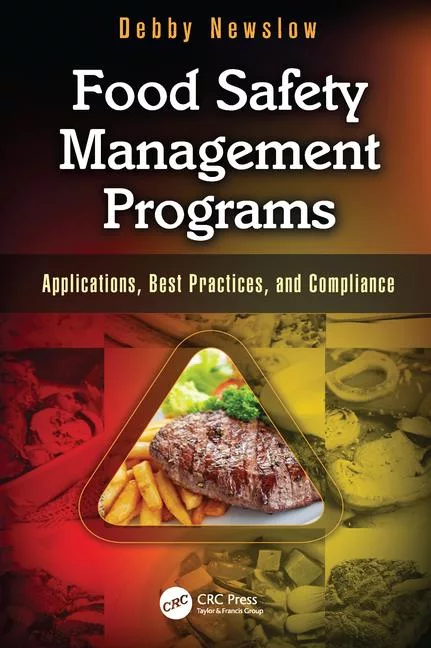
    Food Safety Management Programs: Applications, Best Practices, and Compliance

  • 1119053595.jpg

    Food Safety for the 21st Century: Managing HACCP and Food Safety throughout the Global Supply Chain, 2E

See More Products

Related Directories

  • ComplianceMate

    A patented combination of wireless temperature sensors and automated checklists that track and improve operational efficiencies and food safety compliance. Provides total control over workflows and data in all types of foodservice establishments. See rapid ROI from significant labor and food waste savings, as well as improved audit scores.
  • BioSafe Systems

    BioSafe Systems provides food safety solutions with peroxyacetic acid (PAA) and Smart Technology. Our advance chemistry and OxyFusion, on-site, on-demand PAA generator, automates food safety compliance, reduce cost, and increase productivity. Our Smart Technology automates monitoring, dosing, and generates customizable data reports that are blockchain compatible. We continue to innovate solutions for food safety.
×

Never miss the latest news and trends driving the food safety industry

eNewsletter | Website | eMagazine

JOIN TODAY!
  • RESOURCES
    • Advertise
    • Contact Us
    • Directories
    • Store
    • Want More
  • SIGN UP TODAY
    • Create Account
    • eMagazine
    • eNewsletter
    • Customer Service
    • Manage Preferences
  • SERVICES
    • Marketing Services
    • Reprints
    • Market Research
    • List Rental
    • Survey/Respondent Access
  • STAY CONNECTED
    • LinkedIn
    • Facebook
    • Instagram
    • X (Twitter)
  • PRIVACY
    • PRIVACY POLICY
    • TERMS & CONDITIONS
    • DO NOT SELL MY PERSONAL INFORMATION
    • PRIVACY REQUEST
    • ACCESSIBILITY

Copyright ©2025. All Rights Reserved BNP Media.

Design, CMS, Hosting & Web Development :: ePublishing