Food Safety
search
Ask Food Safety AI
cart
facebook twitter linkedin
  • Sign In
  • Create Account
  • Sign Out
  • My Account
Food Safety
  • NEWS
    • Latest News
    • White Papers
  • PRODUCTS
  • TOPICS
    • Contamination Control
    • Food Types
    • Management
    • Process Control
    • Regulatory
    • Sanitation
    • Supply Chain
    • Testing and Analysis
  • PODCAST
  • EXCLUSIVES
    • Food Safety Five Newsreel
    • eBooks
    • FSM Distinguished Service Award
    • Interactive Product Spotlights
    • Videos
  • BUYER'S GUIDE
  • MORE
    • ENEWSLETTER >
      • Archive Issues
      • Subscribe to eNews
    • Store
    • Sponsor Insights
    • ASK FSM AI
  • WEBINARS
  • FOOD SAFETY SUMMIT
  • EMAG
    • eMagazine
    • Archive Issues
    • Editorial Advisory Board
    • Contact
    • Advertise
  • SIGN UP!
RegulatoryFDAFSMAHACCP

Leveraging FDA’s cGMPs and HACCP Regulations to Protect Your Company

July 15, 2014

As Benjamin Franklin noted, and as countless authors have affirmed since then, an ounce of prevention is worth a pound of cure. That is the animating principle of two related sets of U.S. Food and Drug Administration (FDA) regulations affecting the food and beverage industry: current Good Manufacturing Practices (cGMPs) and Hazard Analysis and Critical Control Points (HACCP). Proactive compliance with those standards may minimize your exposure to contamination outbreaks, severe recalls, government investigations, and lawsuits. It is probably also good business in its own right.

Overview of FDA’s cGMP Regulations and Related Programs
Like many acronyms that emanate from Washington, the cGMP and HACCP programs impose a variety of complex obligations and “suggestions” on FDA-regulated industries like the food and beverage sector. But the gist is straightforward. These programs generally require companies to establish—and ensure compliance with—best practices in the manufacturing and distribution of food products.

The theory is that by baking many quality control measures into the production, distribution, and retail service chain, it will be easier to prevent food safety issues before they reach the consuming public. And, in the event they do reach the public, it will be easier to identify the problem, identify the affected items, and conduct a recall or enforcement action.

Some regulations are fairly specific, but much of what constitutes a sound process is left to industry norms and the circumstances of a particular operation. That degree of flexibility, however, does not mean the requirements are insubstantial. FDA takes a broad view of what constitutes good manufacturing processes, ranging from facility design and cleanliness, to testing, to production, packaging and distribution.

Compliance Matters
The consequences for lack of compliance can be severe. FDA’s rules are intended to ensure the safety of the food supply, which is obviously a first-tier priority for FDA and industry alike. Products that do not comply are deemed adulterated under the Food, Drug and Cosmetic Act, which prohibits their sale in interstate commerce, among other things. Those are obviously adverse designations with important consequences in terms of recalls, brand reputation, investigations and litigation.

FDA is aggressive about lack of compliance. Two recent settlements involving pharmaceutical manufacturers, who operate under a similar regime, netted the agency over 1 billion dollars. And senior Department of Justice officials have publicly stated that they expect enforcement to be a major priority in the future.

Proactive compliance can minimize exposure to severe issues and collateral consequences. In principle, vigorous quality controls should reduce the risk of issues on the front end, or at least minimize them before they become widespread.

Compliance also has risks, though. The job of an investigator or plaintiffs’ attorney is considerably easier if a company fails to meet its own written standards. Put another way, drafting the world’s best compliance plan will do nothing to help if it is not followed, and if it is unrealistic then failure to comply with it will look bad to anyone evaluating the company’s conduct.  There are recent examples of companies that allegedly fell short of complying with their own plans, with costly results, which means that compliance programs should be thoughtfully designed, carefully implemented and critically evaluated for revision as circumstances warrant.

Suggested Next Steps
If your company is among the 25 percent of the U.S. economy regulated by the FDA, chances are you have a cGMP, HACCP and/or related plan in place. A good first step is to ensure that your plan meets the current FDA (and any state) requirements and makes sense in the context of how your company actually does business. You also may want to consider ensuring the appropriateness of your preventive controls, which often can be considered to include (i) training, (ii) audits, (iii) documentation and (iv) validation/evaluation.

This can be an opportunity to add value by engaging with your technical colleagues about where potential issues are likely to arise, as well as what can and should be done to identify them in advance or as soon as possible. And think through the plan in event an issue arises, starting with how your organization will identify the root cause and affected goods. Product quality issues happen; advance planning and cGMP/HACCP compliance can make them rare and manageable.

Josh Becker is a partner, and Aaron Block is a senior associate, with Alston & Bird LLP.  They both practice in the firm’s Atlanta office, and focus their practices on the defense of companies in the food/beverage/supplement and drug/device industries.


>
Author(s): Josh Becker and Aaron Block

Looking for quick answers on food safety topics?
Try Ask FSM, our new smart AI search tool.
Ask FSM →


Share This Story

Recommended Content

JOIN TODAY
to unlock your recommendations.

Already have an account? Sign In

  • people holding baby chicks

    Serovar Differences Matter: Utility of Deep Serotyping in Broiler Production and Processing

    This article discusses the significance of Salmonella in...
    Testing & Analysis
    By: Nikki Shariat Ph.D.
  • woman washing hands

    Building a Culture of Hygiene in the Food Processing Plant

    Everyone entering a food processing facility needs to...
    Training
    By: Richard F. Stier, M.S.
  • graphical representation of earth over dirt

    Climate Change and Emerging Risks to Food Safety: Building Climate Resilience

    This article examines the multifaceted threats to food...
    Contamination Control
    By: Maria Cristina Tirado Ph.D., D.V.M. and Shamini Albert Raj M.A.
Manage My Account
  • eMagazine Subscription
  • Subscribe to eNewsletter
  • Manage My Preferences
  • Website Registration
  • Subscription Customer Service

More Videos

Sponsored Content

Sponsored Content is a special paid section where industry companies provide high quality, objective, non-commercial content around topics of interest to the Food Safety Magazine audience. All Sponsored Content is supplied by the advertising company and any opinions expressed in this article are those of the author and not necessarily reflect the views of Food Safety Magazine or its parent company, BNP Media. Interested in participating in our Sponsored Content section? Contact your local rep!

close
  • Salmonella bacteria
    Sponsored byThermoFisher

    Food Microbiology Testing Methods: Salmonella species

  • a diagram explaining indicator organisms
    Sponsored byHygiena

    How Proactive Listeria Testing Helps Prevent Six- and Seven-Figure Recalls

  • woman grocery shopping
    Sponsored byCorbion

    Designing Safety Into Every Bite: Proactive Risk Mitigation for Refrigerated Foods

Popular Stories

NRTE breaded stuffed chicken

USDA Indefinitely Delays Enforcement of Salmonella as Adulterant in Raw Breaded, Stuffed Chicken

digital map of europe

EU Publishes Food Fraud Tool Mapping Thousands of Cases Since 2016

non-conforming product

How to Handle Non-Conforming Product

Events

December 11, 2025

How to Develop and Implement an Effective Food Defense Strategy

Live: December 11, 2025 at 2:00 pm EDT: From this webinar, attendees will learn common areas where companies encounter challenges in their food defense strategies and how to address them.

May 11, 2026

The Food Safety Summit

Stay informed on the latest food safety trends, innovations, emerging challenges, and expert analysis. Leave the Summit with actionable insights ready to drive measurable improvements in your organization. Do not miss this opportunity to learn from experts about contamination control, food safety culture, regulations, sanitation, supply chain traceability, and so much more.

View All

Products

Global Food Safety Microbial Interventions and Molecular Advancements

Global Food Safety Microbial Interventions and Molecular Advancements

See More Products

Related Articles

  • How Your Pest Management Technician Can Protect Your Company Against Bioterrorism

    See More
  • It’s Time to Take Stock of Your Food Company’s FDA Registration

    See More
  • Recent FDA Juice HACCP Regulations

    See More

Related Products

See More Products
  • 1119053595.jpg

    Food Safety for the 21st Century: Managing HACCP and Food Safety throughout the Global Supply Chain, 2E

  • 1119258073.jpg

    FSMA and Food Safety Systems: Understanding and Implementing the Rules

  • 9781032369990 (1).webp

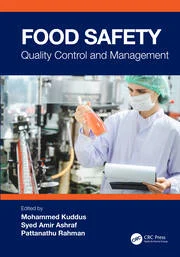
    Food Safety Quality Control and Management

See More Products

Events

View AllSubmit An Event
  • November 20, 2025

    New U.S. Additive Bans: How to Prepare and Protect Your Brand

    On Demand: From this webinar, attendees will learn the impact of ingredient restrictions on product development, sourcing, labeling, and market access.
View AllSubmit An Event

Related Directories

  • Eagle Protect PBC

    Eagle Protect, the world's first B Corp certified disposable glove and clothing specialist, supplies high-quality, ethically sourced products, via a transparent and traceable supply chain, unique to the PPE industry. Eagle Protect’s proprietary Delta Zero glove quality testing program ensures a range of Eagle gloves adhere to the highest level of consistent glove safety and performance. Eagle's premium quality gloves enable customers to reduce overall glove cost while increasing overall efficiency and sustainability.
×

Never miss the latest news and trends driving the food safety industry

eNewsletter | Website | eMagazine

JOIN TODAY!
  • RESOURCES
    • Advertise
    • Contact Us
    • Directories
    • Store
    • Want More
  • SIGN UP TODAY
    • Create Account
    • eMagazine
    • eNewsletter
    • Customer Service
    • Manage Preferences
  • SERVICES
    • Marketing Services
    • Reprints
    • Market Research
    • List Rental
    • Survey/Respondent Access
  • STAY CONNECTED
    • LinkedIn
    • Facebook
    • Instagram
    • X (Twitter)
  • PRIVACY
    • PRIVACY POLICY
    • TERMS & CONDITIONS
    • DO NOT SELL MY PERSONAL INFORMATION
    • PRIVACY REQUEST
    • ACCESSIBILITY

Copyright ©2025. All Rights Reserved BNP Media.

Design, CMS, Hosting & Web Development :: ePublishing