Salmonella in Spices Leads India's Farmers to Change Practices
Source: New York Times
Idukki, India — Spices grown in the mist-shrouded Western Ghats here have fueled wars, fortunes and even the discovery of continents, and for thousands of years farmers harvested them in the same traditional ways. Until now.
Science has revealed what ancient kings and sultans never knew: instead of improving health, spices sometimes make people very sick, so Indian government officials are quietly pushing some of the most far-reaching changes ever in the way farmers here pick, dry and thresh their rich bounty.
The United States Food and Drug Administration (FDA) will soon release a comprehensive analysis that pinpoints imported spices, found in just about every kitchen in the Western world, as a surprisingly potent source of salmonella poisoning.
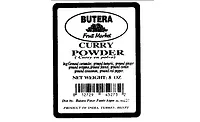
In a study of more than 20,000 food shipments, the food agency found that nearly 7 percent of spice lots were contaminated with salmonella, twice the average of all other imported foods. Some 15 percent of coriander and 12 percent of oregano and basil shipments were contaminated, with high contamination levels also found in sesame seeds, curry powder and cumin. Four percent of black pepper shipments were contaminated.
Each year, 1.2 million people in the United States become sick from salmonella, one of the most common causes of food-borne illness. More than 23,000 are hospitalized and 450 die. Symptoms include diarrhea, fever and abdominal cramps that begin 12 to 36 hours after infection and can last three to five days. Death can result when infection spreads from the intestines to the bloodstream and affects vital organs. Infants and older people are most at risk.
Mexico and India had the highest share of contaminated spices. About 14 percent of the samples from Mexico contained salmonella, the study found, a result Mexican officials disputed.
Looking for quick answers on food safety topics?
Try Ask FSM, our new smart AI search tool.
Ask FSM →
India’s exports were the second-most contaminated, at approximately 9 percent, but India ships nearly four times the amount of spices to the United States that Mexico does, so its contamination problems are particularly worrisome, officials said. Nearly one-quarter of the spices, oils and food colorings used in the United States comes from India.
The findings, the result of a three-year study that F.D.A. officials have on occasion discussed publicly and recently published in the journal Food Microbiology, form an important part of the spice analysis that will be made public “soon,” agency officials said.
“Salmonella is a widespread problem with respect to imported spices,” Michael Taylor, deputy F.D.A. commissioner for food, said in an interview. “We have decided that spices are one of the significant issues we need to be addressing right now.”
Westerners are particularly vulnerable to contaminated spices because pepper and other spices are added at the table, so bacterial hitchhikers are consumed live and unharmed. Bacteria do not survive high temperatures, so contaminated spices present fewer problems when added during cooking, as is typical in the cuisine of India and most other Asian countries.
Mexico’s chief of food safety inspections insisted that Mexican spices are checked daily and are safe, although a separate study found high levels of salmonella contamination in some Mexican vegetables.
“We have a constant, daily scheme of verification” of food products, said Álvaro Pérez Vega, sanitary operations commissioner at Mexico’s Federal Commission for the Protection Against Sanitary Risk. “We don’t have reports of spices or condiments being out of norm,” he added.
In India, the world’s largest producer, consumer and exporter of spices, government officials are taking Washington’s concerns seriously.
“The world wants safe spices, and we are committed to making that happen,” said Dr. A. Jayathilak, chairman of the Spices Board of India, a government agency that regulates and promotes spices.
F.D.A. tests found that contaminated spices tend to have many more salmonella types than is typically found on contaminated meat. The agency, which visually inspects less than 1 percent of all imported foods and performs lab tests on a tiny fraction, rejects imports with any signs of salmonella contamination because as few as 10 cells have been shown to cause serious illness.
Illnesses caused by spices are hard to trace. When asked what might have made them sick, people rarely think to mention adding pepper to a salad. Spices sit on kitchen shelves indefinitely, so linking illnesses that can occur years apart is often impossible.
But sophisticated DNA sequencing of salmonella types is finally allowing food officials to pinpoint spices as a cause of repeated outbreaks, including one in 2010 involving black and red pepper that sickened more than 250 people in 44 states. After a 2009 outbreak linked to white pepper, an inspection found that salmonella had colonized much of the Union City, Calif., spice processing facility at the heart of the outbreak.
The United States is one of the world’s largest spice importers, bringing in 326 metric tons in 2012 valued at $1.1 billion, according to the Department of Agriculture. Of those imports, which account for more than 80 percent of the total United States spice supply, 19 percent were from India and 5 percent from Mexico.
The F.D.A. now has offices in New Delhi and Mumbai, and its commissioner, Dr. Margaret A. Hamburg, intends to visit soon.
New agency rules governing imported foods have given the agency the power to restrict imports based solely on suspicion that foods may be unsafe, a powerful cudgel to demand changes.
On a tour through a tropical landscape teeming with pepper and cardamom farms, rubber plantations, tea estates and wild elephants, Indian spice officials showed some voluntary changes they are pushing.
The first stop was Noble Joseph’s 10-acre pepper farm, about a four-hour drive from the southwestern port city of Kochi, in the state of Kerala, up several thousand feet of twisting mountain roads.
Mr. Joseph’s hilly farm is dominated by slim silver oaks and erythrina trees planted every eight feet; each tree is encircled by four or five pepper vines.
During harvest season, starting in February, 15 workers cram into a small farmhouse for nearly two months and use long, single-rail bamboo ladders to pluck the pepper seeds from the vines as high as 40 feet.
Not so long ago, pepper farmers almost universally dried the seeds on bamboo mats or dirt floors and then gathered them for manual threshing. Dirt, dung and salmonella were simply part of the harvest, so much so that in 1987, the F.D.A. blocked shipments of black pepper from India. The ban was lifted two years later, after the Indian government began a testing program.
Now, the Josephs boil their harvest in water to clean the kernels, speed drying and encourage a uniform color. They are then placed on tarps spread over a concrete slab with nets above to catch bird droppings. Ovens would be even more sanitary, but ovens and electricity are expensive “and sunlight is free,” Mr. Joseph said.
The spices board underwrites a third of the cost of concrete slabs, tarps and mechanical threshers, and since most farms are smaller than an acre, it has organized growers’ cooperatives to pool facilities. Board officials recently attended F.D.A. training seminars in Maryland.
Salmonella can survive indefinitely on dried spices, and killing the bacterium on the craggy surface of dried peppercorns without ruining their taste is especially challenging.
Government officials in India emphasized in interviews that spices slated for export are often treated to kill any bacteria. Such treatments include steam-heating, irradiation or ethylene oxide gas. But F.D.A. inspectors have found high levels of salmonella contamination in shipments said to have received such treatments, documents show. Much of the contaminated pepper in the 2010 outbreak had been treated with steam and ethylene oxide and had been certified as tested and safe, officials said.
At another spice farm, in the village of Chemmanar, Bipin Sebastian is in the midst of a four-year transition to organic farming in hope of earning a premium price for his pepper, cloves, cardamom, turmeric and coffee. Mr. Sebastian says he has used government subsidies to buy tarps, netting and a machine thresher.
“We used to put our pepper directly on the ground,” Mr. Sebastian said. “Now, we put down tarps and netting over it to protect it from the birds. And I’ve been getting a higher price. It’s been great.”