Food Safety
search
Ask Food Safety AI
cart
facebook twitter linkedin
  • Sign In
  • Create Account
  • Sign Out
  • My Account
Food Safety
  • NEWS
    • Latest News
    • White Papers
  • PRODUCTS
  • TOPICS
    • Contamination Control
    • Food Types
    • Management
    • Process Control
    • Regulatory
    • Sanitation
    • Supply Chain
    • Testing and Analysis
  • PODCAST
  • EXCLUSIVES
    • Food Safety Five Newsreel
    • eBooks
    • FSM Distinguished Service Award
    • Interactive Product Spotlights
    • Videos
  • BUYER'S GUIDE
  • MORE
    • ENEWSLETTER >
      • Archive Issues
      • Subscribe to eNews
    • Store
    • Sponsor Insights
    • ASK FSM AI
  • WEBINARS
  • FOOD SAFETY SUMMIT
  • EMAG
    • eMagazine
    • Archive Issues
    • Editorial Advisory Board
    • Contact
    • Advertise
  • SIGN UP!
News

FDA Proposes “Action Level” for Arsenic in Apple Juice

July 13, 2013


Agency testing and analysis confirm overall safety of apple juice

The U.S. Food and Drug Administration today proposed an “action level” of 10 parts per billion (ppb) for inorganic arsenic in apple juice. This is the same level set by the U.S. Environmental Protection Agency (EPA) for arsenic in drinking water.

“The FDA is committed to ensuring the safety of the American food supply and to doing what is necessary to protect public health,” said FDA Commissioner Margaret A. Hamburg, M.D. “We have been studying this issue comprehensively, and based on the agency’s data and analytical work, the FDA is confident in the overall safety of apple juice for children and adults.”

“While the levels of arsenic in apple juice are very low, the FDA is proposing an action level to help prevent public exposure to the occasional lots of apple juice with arsenic levels above those permitted in drinking water,” said Michael R. Taylor, the FDA’s deputy commissioner for foods and veterinary medicine.

The FDA is establishing this threshold to provide guidance to industry. The agency takes the action level into account when considering an enforcement action, if it finds a food product exceeds the threshold.

The FDA has been monitoring the presence of arsenic in apple juice for the past 20 years and has consistently found that samples contain levels of arsenic that are low, with few exceptions. New tools, however, have allowed the agency to better understand the breakdown between organic and inorganic arsenic levels. Last year the FDA released findings from its latest data collection and analysis of 94 samples of arsenic in apple juice. The analysis showed that 95 percent of the apple juice samples tested were below 10 ppb total arsenic; 100 percent of the samples were below 10 ppb for inorganic arsenic, the carcinogenic form of arsenic.

The proposed level of 10 ppb takes into account this sampling data plus a recently completed, peer-reviewed risk assessment of inorganic arsenic in apple juice conducted by FDA scientists. The assessment is based on lifetime exposure.

Inorganic arsenic may be found in foods because it is present in the environment, both as a naturally occurring mineral and because of activity such as past use of arsenic-containing pesticides. A known carcinogen, inorganic arsenic also has been associated with skin lesions, developmental effects, cardiovascular disease, neurotoxicity, and diabetes.

In conducting its new assessment on apple juice, the FDA was able to use data from two studies published in 2010, as well as a 2011 evaluation by the Joint Expert Committee on Food Additives and Contaminants of the Food and Agriculture Organization, part of the United Nations and the World Health Organization.

The agency will accept public comments on the proposed action level and the risk assessment for 60 days.

For more information:

  • Arsenic in Apple Juice

  • Draft Quantitative Assessment of Inorganic Arsenic in Apple Juice

  • Risk Assessment Arsenic in Apple Juice: Peer Review Report

  • Draft Guidance for Industry, Arsenic in Apple Juice: Action Level

  • FDA Voice Blog


Author(s): Staff

Share This Story

Recommended Content

JOIN TODAY
to unlock your recommendations.

Already have an account? Sign In

  • people holding baby chicks

    Serovar Differences Matter: Utility of Deep Serotyping in Broiler Production and Processing

    This article discusses the significance of Salmonella in...
    Food Type
    By: Nikki Shariat Ph.D.
  • woman washing hands

    Building a Culture of Hygiene in the Food Processing Plant

    Everyone entering a food processing facility needs to...
    Management
    By: Richard F. Stier, M.S.
  • graphical representation of earth over dirt

    Climate Change and Emerging Risks to Food Safety: Building Climate Resilience

    This article examines the multifaceted threats to food...
    Risk Assessment
    By: Maria Cristina Tirado Ph.D., D.V.M. and Shamini Albert Raj M.A.
Manage My Account
  • eMagazine Subscription
  • Subscribe to eNewsletter
  • Manage My Preferences
  • Website Registration
  • Subscription Customer Service

More Videos

Sponsored Content

Sponsored Content is a special paid section where industry companies provide high quality, objective, non-commercial content around topics of interest to the Food Safety Magazine audience. All Sponsored Content is supplied by the advertising company and any opinions expressed in this article are those of the author and not necessarily reflect the views of Food Safety Magazine or its parent company, BNP Media. Interested in participating in our Sponsored Content section? Contact your local rep!

close
  • Salmonella bacteria
    Sponsored byThermoFisher

    Food Microbiology Testing Methods: Salmonella species

  • a diagram explaining indicator organisms
    Sponsored byHygiena

    How Proactive Listeria Testing Helps Prevent Six- and Seven-Figure Recalls

  • woman grocery shopping
    Sponsored byCorbion

    Designing Safety Into Every Bite: Proactive Risk Mitigation for Refrigerated Foods

Popular Stories

NRTE breaded stuffed chicken

USDA Indefinitely Delays Enforcement of Salmonella as Adulterant in Raw Breaded, Stuffed Chicken

digital map of europe

EU Publishes Food Fraud Tool Mapping Thousands of Cases Since 2016

non-conforming product

How to Handle Non-Conforming Product

Events

December 11, 2025

How to Develop and Implement an Effective Food Defense Strategy

Live: December 11, 2025 at 2:00 pm EDT: From this webinar, attendees will learn common areas where companies encounter challenges in their food defense strategies and how to address them.

May 11, 2026

The Food Safety Summit

Stay informed on the latest food safety trends, innovations, emerging challenges, and expert analysis. Leave the Summit with actionable insights ready to drive measurable improvements in your organization. Do not miss this opportunity to learn from experts about contamination control, food safety culture, regulations, sanitation, supply chain traceability, and so much more.

View All

Products

Global Food Safety Microbial Interventions and Molecular Advancements

Global Food Safety Microbial Interventions and Molecular Advancements

See More Products

Related Articles

  • FDA Extends Comment Period for Proposed “Action Level” for Arsenic in Apple Juice

    See More
  • apple juice in cup

    FDA Finalizes Action Level of 10 ppb for Inorganic Arsenic in Apple Juice

    See More
  • glass of orange juice next to orange halves

    FDA Proposes Amended SOI for Pasteurized Orange Juice to Address Modern Grower Challenges

    See More

Related Products

See More Products
  • 1119160553.jpg

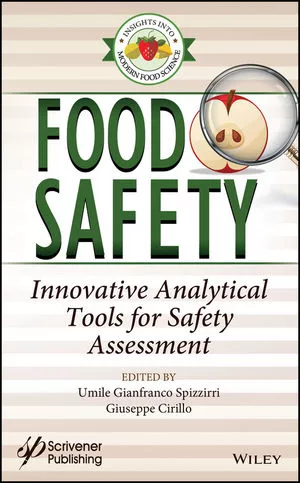
    Food Safety: Innovative Analytical Tools for Safety Assessment

  • 1118396308.jpg

    High Throughput Analysis for Food Safety

  • 1119053595.jpg

    Food Safety for the 21st Century: Managing HACCP and Food Safety throughout the Global Supply Chain, 2E

See More Products

Related Directories

  • WTI Inc.

    Protect people. Protect products. Incorporate WTI’s ingredients to ensure that your food remains safe, reliable, and of the highest quality from production to consumption. WTI produces naturally-derived vinegar antimicrobials, lemon-based phosphate alternatives, and conventional solutions that improve food quality, enhance yield, produce cleaner labels, keep food safe, and extend shelf-life.
×

Never miss the latest news and trends driving the food safety industry

eNewsletter | Website | eMagazine

JOIN TODAY!
  • RESOURCES
    • Advertise
    • Contact Us
    • Directories
    • Store
    • Want More
  • SIGN UP TODAY
    • Create Account
    • eMagazine
    • eNewsletter
    • Customer Service
    • Manage Preferences
  • SERVICES
    • Marketing Services
    • Reprints
    • Market Research
    • List Rental
    • Survey/Respondent Access
  • STAY CONNECTED
    • LinkedIn
    • Facebook
    • Instagram
    • X (Twitter)
  • PRIVACY
    • PRIVACY POLICY
    • TERMS & CONDITIONS
    • DO NOT SELL MY PERSONAL INFORMATION
    • PRIVACY REQUEST
    • ACCESSIBILITY

Copyright ©2025. All Rights Reserved BNP Media.

Design, CMS, Hosting & Web Development :: ePublishing