Food Safety
search
Ask Food Safety AI
cart
facebook twitter linkedin
  • Sign In
  • Create Account
  • Sign Out
  • My Account
Food Safety
  • NEWS
    • Latest News
    • White Papers
  • PRODUCTS
  • TOPICS
    • Contamination Control
    • Food Types
    • Management
    • Process Control
    • Regulatory
    • Sanitation
    • Supply Chain
    • Testing and Analysis
  • PODCAST
  • EXCLUSIVES
    • Food Safety Five Newsreel
    • eBooks
    • FSM Distinguished Service Award
    • Interactive Product Spotlights
    • Videos
  • BUYER'S GUIDE
  • MORE
    • ENEWSLETTER >
      • Archive Issues
      • Subscribe to eNews
    • Store
    • Sponsor Insights
    • ASK FSM AI
  • WEBINARS
  • FOOD SAFETY SUMMIT
  • EMAG
    • eMagazine
    • Archive Issues
    • Editorial Advisory Board
    • Contact
    • Advertise
  • SIGN UP!

Develop the best plan for food safety and hygiene training

Training for equipment operations and maintenance is important to FSMA

By Timothy Rugh
3AToday.jpg
March 14, 2018

Personnel training is one of the cornerstones of the Food Safety Modernization Act (FSMA). Under the Preventive Controls rules, employee training is now mandatory for both human food and animal food manufacturers. The rules require that these manufacturers conduct food safety and hygiene training for all of their employees.


A proper food safety plan

First and foremost, processors must have a Preventive Controls Qualified Individual who has received training under a standardized curriculum and must develop a Food Safety Plan (FSP). So how and where does hygienic design factor into the FSP?

The FSP must include a hazard analysis of all reasonably foreseeable food safety hazards. Such hazards requiring a preventive control must be controlled to prevent or minimize the likelihood of foodborne illness or injury, and this control must be documented. The preventive controls may expand beyond critical control points by identifying and implementing non-process related controls.

Hygienic design begins with the entire plant design. Be sure the actual structure has been designed with effective cleaning in mind.

Can the materials be cleaned with common cleaning chemicals? Looking at the layout, is there adequate space around the equipment to allow for inspection and cleaning? Are the floors sloped toward the drains, and equipment not placed in improper locations (e.g., too near to the drains)? Consider the need to replace older equipment to eliminate harborage points for bacteria. Keep a master sanitation schedule for the facility.


Preventive maintenance

The root cause of many foodborne outbreaks is often failure to maintain equipment under sanitary conditions. A master list of all equipment requiring maintenance must be maintained, including the maintenance schedule, responsibility and procedures. 

The maintenance schedule will differ for most pieces of equipment. Many processors rely on a “risk assessment” for each piece of equipment to help determine the type and the frequency of periodic maintenance.

Looking for quick answers on food safety topics?
Try Ask FSM, our new smart AI search tool.
Ask FSM →

The schedule may call for replacing gaskets or other components every month. Be sure the operator or mechanic is properly trained so a small mistake does not lead to a big problem. And be sure to use replacement parts that were designed/manufactured to meet the intended use and method of cleaning. Suppliers of authorized 3-A equipment will provide instructions with the equipment and the type of cleaning for the equipment.


Training employees

Employee training is a large concern of food processors when it comes to inspections of FSMA compliance. Employee “visual inspections” represent the front line in determining sanitation effectiveness, though sanitation programs must rely on far more sophisticated measures for detecting pathogens and biofilms. Prevention of allergen cross-contact also ranks very high on the list for monitoring and validation. Hygienically designed and constructed equipment is a critical tool in developing and implementing preventive controls. Specifically:

  • Materials of construction, whether metals or non-metals, must be inert, non-toxic, non-corrosive, non-contaminating and impervious to moisture.
  • Surface finishes must be durable, free of cracks and crevices, and smooth to a maximum measure of 32 microinch Ra (roughness average) for a product contact surface.
  • Joints of various types must be cleanable, crevice-free and bacteria-tight.
  • Drainability — all surfaces must be free draining or drainable and properly pitched or sloped to prevent any liquid pooling.
  • All construction elements must be bacteria-tight and accessible for cleaning, sanitizing and inspection.

Every component of the FSP should include proper documentation, including the preventive maintenance (PM) program. PM procedures (e.g., maintenance, lubrication, tool reconciliation, temporary/emergency repairs, spare parts inventory, training, audits of work quality) should become elements of an effective training program. The job does not end when such a large monitoring system is set up; many would say that getting all employees to follow those procedures accurately is the biggest challenge.


This article was originally posted on www.dairyfoods.com.
KEYWORDS: dairy processing food safety

Share This Story

Timothy R. Rugh is the executive director of 3-A Sanitary Standards Inc., www.3-a.org.

Recommended Content

JOIN TODAY
to unlock your recommendations.

Already have an account? Sign In

  • people holding baby chicks

    Serovar Differences Matter: Utility of Deep Serotyping in Broiler Production and Processing

    This article discusses the significance of Salmonella in...
    Food Type
    By: Nikki Shariat Ph.D.
  • woman washing hands

    Building a Culture of Hygiene in the Food Processing Plant

    Everyone entering a food processing facility needs to...
    Food Prep/Handling
    By: Richard F. Stier, M.S.
  • graphical representation of earth over dirt

    Climate Change and Emerging Risks to Food Safety: Building Climate Resilience

    This article examines the multifaceted threats to food...
    Management
    By: Maria Cristina Tirado Ph.D., D.V.M. and Shamini Albert Raj M.A.
Manage My Account
  • eMagazine Subscription
  • Subscribe to eNewsletter
  • Manage My Preferences
  • Website Registration
  • Subscription Customer Service

More Videos

Sponsored Content

Sponsored Content is a special paid section where industry companies provide high quality, objective, non-commercial content around topics of interest to the Food Safety Magazine audience. All Sponsored Content is supplied by the advertising company and any opinions expressed in this article are those of the author and not necessarily reflect the views of Food Safety Magazine or its parent company, BNP Media. Interested in participating in our Sponsored Content section? Contact your local rep!

close
  • Salmonella bacteria
    Sponsored byThermoFisher

    Food Microbiology Testing Methods: Salmonella species

  • a diagram explaining indicator organisms
    Sponsored byHygiena

    How Proactive Listeria Testing Helps Prevent Six- and Seven-Figure Recalls

  • woman grocery shopping
    Sponsored byCorbion

    Designing Safety Into Every Bite: Proactive Risk Mitigation for Refrigerated Foods

Popular Stories

NRTE breaded stuffed chicken

USDA Indefinitely Delays Enforcement of Salmonella as Adulterant in Raw Breaded, Stuffed Chicken

digital map of europe

EU Publishes Food Fraud Tool Mapping Thousands of Cases Since 2016

non-conforming product

How to Handle Non-Conforming Product

Events

December 11, 2025

How to Develop and Implement an Effective Food Defense Strategy

Live: December 11, 2025 at 2:00 pm EDT: From this webinar, attendees will learn common areas where companies encounter challenges in their food defense strategies and how to address them.

May 11, 2026

The Food Safety Summit

Stay informed on the latest food safety trends, innovations, emerging challenges, and expert analysis. Leave the Summit with actionable insights ready to drive measurable improvements in your organization. Do not miss this opportunity to learn from experts about contamination control, food safety culture, regulations, sanitation, supply chain traceability, and so much more.

View All

Products

Global Food Safety Microbial Interventions and Molecular Advancements

Global Food Safety Microbial Interventions and Molecular Advancements

See More Products

Related Articles

  • Meat & Poultry Workers Look at Tablet

    Employee hygiene training: Rinse and repeat for best results

    See More
  • 3AToday.jpg

    Best practices for maintaining hygienic design

    See More
  • farmers market

    PSU Researchers Develop Food Safety Training for Farmers Market Vendors

    See More

Related Products

See More Products
  • 1119053595.jpg

    Food Safety for the 21st Century: Managing HACCP and Food Safety throughout the Global Supply Chain, 2E

  • 9781138198463.jpg

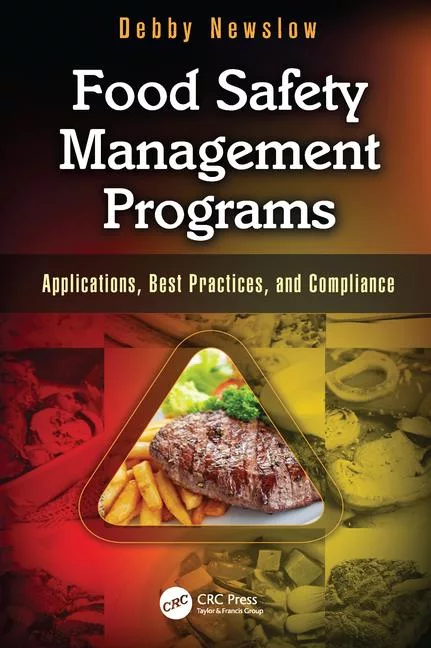
    Food Safety Management Programs: Applications, Best Practices, and Compliance

  • 1119160553.jpg

    Food Safety: Innovative Analytical Tools for Safety Assessment

See More Products

Events

View AllSubmit An Event
  • September 9, 2025

    Strengthening the Food Safety Workforce Through Education and Training

    On Demand: From this webinar, attendees will learn how the global workforce shortage in food safety is affecting the food supply chain and creating gaps in food safety oversight.
View AllSubmit An Event

Related Directories

  • Plum Safety

    Plum Safety Training and Hospitality Consultants provide Environmental Health, Safety, and Food Safety solutions. Certified Food Protection Manager Certification, TiPS Responsible Alcohol Certification, Allergen & Gluten-Free Certification, CPR/AED & First Aid Certification. 3rd Party Inspections and Audits. Authorized OSHA Instructor. Lead HACCP Instructor. HACCP plan development & training.
  • Best Sanitizers Inc.

    Since 1995, Best Sanitizers, Inc. has supplied the Food Processing and Healthcare industries with high-quality products and support. Our stringent practices and policies ensure reliable performance, giving you confidence in every use. We offer hand soaps, hand sanitizers, surface sanitizers, and industrial cleaners. As the first company to achieve both an E3 rating for an alcohol-based hand sanitizer and a D2 rating for an alcohol/quat-based surface sanitizer, we continue to innovate and provide effective hygiene and sanitation solutions.
×

Never miss the latest news and trends driving the food safety industry

eNewsletter | Website | eMagazine

JOIN TODAY!
  • RESOURCES
    • Advertise
    • Contact Us
    • Directories
    • Store
    • Want More
  • SIGN UP TODAY
    • Create Account
    • eMagazine
    • eNewsletter
    • Customer Service
    • Manage Preferences
  • SERVICES
    • Marketing Services
    • Reprints
    • Market Research
    • List Rental
    • Survey/Respondent Access
  • STAY CONNECTED
    • LinkedIn
    • Facebook
    • Instagram
    • X (Twitter)
  • PRIVACY
    • PRIVACY POLICY
    • TERMS & CONDITIONS
    • DO NOT SELL MY PERSONAL INFORMATION
    • PRIVACY REQUEST
    • ACCESSIBILITY

Copyright ©2025. All Rights Reserved BNP Media.

Design, CMS, Hosting & Web Development :: ePublishing