Study Identifies High-Pressure Processing Parameters for Effective Pathogen Reduction in Raw Chicken
Need to Know
- A systematic review and meta-analysis of 18 studies found that high-pressure processing (HPP) produced an overall mean microbial reduction of 2.23 log in raw chicken
- Microbial reductions increased with pressure, averaging 1.39 log below 400 MPa, 3.64 log at 400–600 MPa, and 7.07 log at 600 MPa or higher
- Longer holding times were associated with greater microbial reductions, while processing temperatures between 4 °C and 40 °C did not significantly affect inactivation
- The researchers identified 400 MPa or higher as a practical threshold for achieving meaningful pathogen reductions, but noted potential tradeoffs involving product quality and processing efficiency
- Important evidence gaps remain; only one of the 18 studies used an industrial-scale HPP system, and only four reported post-treatment pathogen recovery
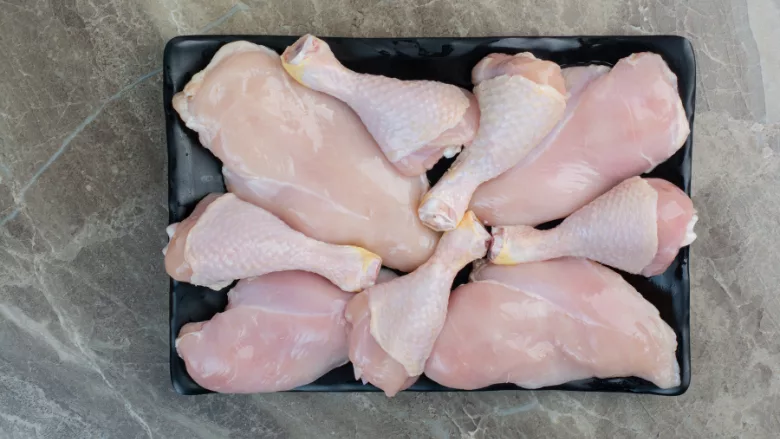
A new systematic review and meta-analysis has quantified the effectiveness of high-pressure processing (HPP) for microbial inactivation in raw chicken, finding that greater pressure and longer treatment times were associated with increased pathogen reductions.
Published in Meat and Muscle Biology, the study was authored by researchers from the University of Nebraska–Lincoln and Iowa State University. According to the authors, the work represented the first systematic review and meta-analysis to quantitatively evaluate HPP efficacy for microbial inactivation in raw chicken.
The researchers reviewed 18 studies evaluating HPP pressures ranging from 100–600 megapascals (MPa), holding times from 0.02–25 minutes, and temperatures from 4–40 °C. The analysis encompassed 121 data points and 357 samples.
Across the included studies, HPP achieved a mean microbial reduction of 2.23 log.
Higher Pressure, Longer Holding Times Improved Microbial Inactivation
Pressure emerged as an important determinant of HPP efficacy. Across microorganisms, mean reductions were 1.39 log at pressures below 400 MPa, 3.64 log at 400–600 MPa, and 7.07 log at 600 MPa or higher.
The researchers cautioned that evidence at 600 MPa or higher was limited to a single included study because pathogen concentrations frequently fell below detection limits following higher-pressure treatments, preventing quantification of reductions.
Holding time also influenced microbial inactivation. Mean reductions increased from 1.83 log for treatments of 5 minutes or less, to 2.34 log for treatments lasting 5–15 minutes, and 2.46 log for treatments of 15 minutes or longer.
Looking for quick answers on food safety topics?
Try Ask FSM, our new smart AI search tool.
Ask FSM →
An analysis of pressure and holding time together indicated that pressure had a stronger influence than time, although the greatest microbial reductions occurred when higher pressures were combined with longer treatments. For example, at holding times of 5 minutes or less, mean microbial reduction increased from 0.76 log below 400 MPa to 2.62 log at 400–600 MPa and 7.07 log at 600 MPa or higher.
In contrast, treatment temperature did not have a statistically significant effect within the 4–40 °C range represented by the included studies.
Effects Varied by Pathogen
Most of the available research focused on Salmonella and Escherichia coli. The meta-analysis found overall mean reductions of 2.24 log for Salmonella and 2.31 log for E. coli.
At pressures between 400 and 600 MPa, reductions were similar for the two pathogens. Below 400 MPa, however, Salmonella showed significantly greater reductions than E. coli.
The pooled reduction for Listeria monocytogenes was 3.25 log, while the estimated reduction for Campylobacter jejuni was 0.56 log. The researchers cautioned that the C. jejuni estimate was based on substantially fewer studies than the estimates for Salmonella and E. coli.
Commercial Application Requires Balancing Safety and Quality
The authors concluded that HPP could serve as an effective hurdle technology for improving the microbial safety of raw poultry and identified treatments at 400 MPa or higher as a practical threshold for meaningful pathogen reductions.
However, increasing pressure can create product-quality challenges. The reviewed evidence indicated that treatments at higher pressures can affect raw chicken color and texture and increase lipid oxidation. Longer holding times can also reduce commercial throughput because HPP is a batch process.
Consequently, the researchers said processors should optimize pressure and holding time to meet food safety objectives while maintaining product quality and processing efficiency.
The authors also highlighted limitations in the existing evidence base. Only one included study used an industrial-scale HPP system, and only four reported post-treatment pathogen recovery. Differences in microbial recovery procedures, detection methods, and detection limits may also have contributed to variation among studies.
Future research should prioritize industrial-scale validation, standardized reporting of HPP parameters, post-treatment pathogen recovery, and simultaneous assessment of microbial safety, product quality, throughput, and processing costs, the researchers concluded.