Food Safety
search
Ask Food Safety AI
cart
facebook twitter linkedin instagram youtube
  • Sign In
  • Create Account
  • Sign Out
  • My Account
Food Safety
  • NEWS
    • Latest News
    • Sponsored Insights
    • Sponsored White Papers
  • PRODUCTS
  • TOPICS
    • Contamination Control
    • Food Types
    • Management
    • Process Control
    • Regulatory
    • Sanitation
    • Supply Chain
    • Testing and Analysis
  • PODCAST
  • EXCLUSIVES
    • Food Safety Five Newsreel
    • eBooks
    • FSM Distinguished Service Award
    • Interactive Product Spotlights
    • Videos
  • BUYER'S GUIDE
  • MORE
    • NEWSLETTERS >
      • Archive Issues
      • Subscribe to eNews
    • Store
    • ASK FSM AI
  • WEBINARS
  • FOOD SAFETY SUMMIT
  • EMAG
    • eMagazine
    • Archive Issues
    • Editorial Advisory Board
    • Contact
    • Advertise
  • SIGN UP!
NewsContamination ControlFood TypeAllergen ControlAlternative Proteins

Study Shows Food Allergens Can Carry Over From Insect Feed to Edible Insects
By Food Safety Magazine Editorial Team
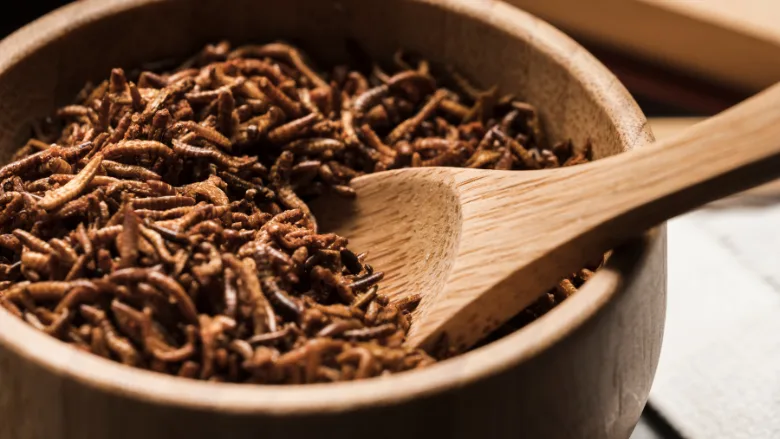
processed edible insects larvae in bowl with spoon
Image credit: Magnific
September 3, 2026

Edible insects reared on substrates containing food allergens may retain allergen residues even after a 48-hour pre-harvest fasting period, according to a recent study published in Foods. The findings highlighted the importance of considering rearing substrate composition when assessing the allergen safety and labeling of insect-based foods.

Researchers from the Experimental Zooprophylactic Institute of Piedmont, Liguria, and the Aosta Valley (IZSPLV) and the National Reference Center for the Detection of Food Allergens and Substances Causing Food Intolerance (CReNaRiA) in Italy investigated whether plant-derived allergens could carry over from insect feed into Hermetia illucens (black soldier fly) larvae.

The larvae were reared for 15 days on rice- and maize-based substrates containing 10 percent peanut, almond, soy, celery, or gluten. The 10 percent concentration was selected to represent a high-exposure, worst-case scenario. Researchers collected larvae at the end of feeding, after 24 hours of fasting, and after 48 hours of fasting. Samples were dried and ground to simulate standard industrial processing, then analyzed using real-time PCR and ELISA methods.

Soy showed the clearest evidence of allergen carryover. Soy DNA was detected in all nine treatment samples across the three sampling times, compared with none of the controls. ELISA testing also detected soy protein above the 2.5-parts-per-million (ppm) limit of detection in every treatment sample, including after 48 hours of fasting.

Celery DNA was detected in seven of nine treatment samples and remained detectable after 48 hours of fasting. Detection was significantly more frequent among treated larvae than controls. Almond DNA was detected sporadically at the end of feeding and after 24 hours of fasting, but the difference from controls was not statistically significant. Peanut DNA was not detected in any larval samples.

Gluten concentrations were below the ELISA method's 5-ppm limit of detection in all samples. The researchers cautioned that this result did not necessarily indicate that gluten was completely absent.

Importantly, the researchers found no statistically significant differences in allergen detection among the three sampling times. Therefore, the study did not demonstrate that fasting for up to 48 hours could consistently reduce allergen carryover. The researchers suggested that persistence may depend on the specific allergen and could be influenced by substrate composition, processing conditions, and whether residues remain in the intestinal tract or become associated with larval tissues.

Looking for quick answers on food safety topics?
Try Ask FSM, our new smart AI search tool.
Ask FSM →

The authors said the findings have implications for food business operators involved in insect rearing, pointing to allergen-free substrates and appropriate precautionary allergen labeling as potential strategies for protecting consumers. They also stressed that the safety of insect products with respect to feed-derived allergens should be evaluated on a case-by-case basis.

The researchers acknowledged the pilot study's small sample size, with three replicates per sampling point, and called for further research to determine whether detected allergens originate from insects' intestinal contents or tissues.


KEYWORDS: edible insects novel foods

Share This Story

Fsm purple logo 200x200

The Food Safety Magazine editorial team comprises Bailee Henderson, Director of Content Strategy and news editor ✉, and Adrienne Blume, M.A., Director of Editorial and Industry Engagement.

Recommended Content

JOIN TODAY
to unlock your recommendations.

Already have an account? Sign In

  • people holding baby chicks

    Serovar Differences Matter: Utility of Deep Serotyping in Broiler Production and Processing

    This article discusses the significance of Salmonella in...
    Microbiological Control
    By: Nikki Shariat Ph.D.
  • woman washing hands

    Building a Culture of Hygiene in the Food Processing Plant

    Everyone entering a food processing facility needs to...
    Facilities
    By: Richard F. Stier, M.S.
  • graphical representation of earth over dirt

    Climate Change and Emerging Risks to Food Safety: Building Climate Resilience

    This article examines the multifaceted threats to food...
    Risk Assessment
    By: Maria Cristina Tirado Ph.D., D.V.M. and Shamini Albert Raj M.A.
Manage My Account
  • eMagazine Subscription
  • Subscribe to Newsletters
  • Manage My Preferences
  • Website Registration
  • Subscription Customer Service

More Videos

Sponsored Content

Sponsored Content is a special paid section where industry companies provide high quality, objective, non-commercial content around topics of interest to the Food Safety Magazine audience. All Sponsored Content is supplied by the advertising company and any opinions expressed in this article are those of the author and not necessarily reflect the views of Food Safety Magazine or its parent company, BNP Media. Interested in participating in our Sponsored Content section? Contact your local rep!

close
  • Man In Warehouse
    Sponsored byRentokil

    Mitigating Hidden Rodent Risks in Food Facilities

  • an industrial manufacturing or processing facility
    Sponsored bybioMérieux

    Get Ahead of Spoilage in Food Manufacturing with Metagenomics for Preventive Monitoring

  • an automated industrial production line used in a modern food factory
    Sponsored byIFC

    A Formula for Food Processing Pest Management

Popular Stories

scoop of powdered infant formula in front of bottle against blue backdrop

Nara Organics Infant Formula Botulism Outbreak Ends; WGS, Supply Chain Evidence Show Link to ByHeart

chopped iceberg lettuce

FDA Explains Recall Classifications to Get Ahead of Cyclospora Outbreak Panic

Beltsville Agricultural Research Center grounds

News That USDA Cyclospora Research Was Defunded in 2026 Emerges as Nation’s Largest-Ever Cyclosporiasis Outbreak Continues

allergens ebook

Events

September 10, 2026

Stop Rodents in Their Tracks!

Live: September 10, 2026 at 2:00 pm EDT: Attend this webinar to understand rodent behavior and innovative strategies for rodent management.

September 22, 2026

From EFSA to Enforcement: Managing the Growing Complexity of EU MRLs

Live: September 22, 2026 at 11:00 am EDT: Attend this webinar to evaluate best practices for monitoring regulatory changes and protecting market access.

September 24, 2026

Benchmarking Foreign Material Contamination in 2026: What the Data Shows

Live: September 24, 2026 at 2:00 pm EDT:  From this webinar, attendees will learn what is driving investment decisions, and the factors FSQA and ops leaders weigh when making the case for new prevention technology.

View All

Products

Global Food Safety Microbial Interventions and Molecular Advancements

Global Food Safety Microbial Interventions and Molecular Advancements

See More Products

Related Articles

  • roasted crickets on a plate

    Foods With Unapproved Edible Insects Must be Removed From British Market as Transitional Measures End

    See More
  • smoked salmon in oil

    Study Shows Food Type Significantly Affects Listeria’s Ability to Survive Digestion, Cause Sickness

    See More
  • pile of mealworms

    Food Safety Aspects of Edible Insects

    See More

Related Products

See More Products
  • food-safety-making.jpg

    Food Safety: Making Foods Safe and Free From Pathogens

  • 9781498721776.jpg

    Handbook of Food Processing: Food Safety, Quality, and Manufacturing Processes

  • 1119053595.jpg

    Food Safety for the 21st Century: Managing HACCP and Food Safety throughout the Global Supply Chain, 2E

See More Products

Events

View AllSubmit An Event
  • May 12, 2026

    Navigating Food Allergens: Insights and Strategies for Effective Management

    On Demand: This workshop will cover essential aspects of food allergens, including allergen labeling requirements, the complexities of allergen management in manufacturing, and best practices for validating and verifying allergen cleaning processes.
  • September 2, 2026

    From Crisis to Control: A Listeria Elimination Journey in Food Manufacturing

    On Demand: This webinar shares a real-world case study of a food processing facility that solved a persistent Listeria challenge after standard protocols fell short.
View AllSubmit An Event

Related Directories

  • Insects Limited Inc.

    Insects Limited provides products and services for monitoring stored product insects in food, grain, and commercial environments. Offerings include pheromone traps, lures, and pest management solutions, supported by technical expertise, training, and research to improve pest identification, prevention, and management.
  • Zoecon / Central Life Sciences

    Zoëcon Professional Products has been providing unique solutions for insect control for more than 50 years. In that time, it has built a rich history and developed a complete product line to serve PMPs in a wide range of protocols, all from the creation of the original insect growth regulator.
×

Never miss the latest news and trends driving the food safety industry

Newsletters | Website | eMagazine

JOIN TODAY!
  • RESOURCES
    • Advertise
    • Contact Us
    • Directories
    • Store
    • Want More
  • SIGN UP TODAY
    • Create Account
    • eMagazine
    • Newsletters
    • Customer Service
    • Manage Preferences
  • SERVICES
    • Marketing Services
    • Reprints
    • Market Research
    • List Rental
    • Survey/Respondent Access
  • STAY CONNECTED
    • LinkedIn
    • Facebook
    • Instagram
    • X (Twitter)
  • PRIVACY
    • PRIVACY POLICY
    • TERMS & CONDITIONS
    • DO NOT SELL MY PERSONAL INFORMATION
    • PRIVACY REQUEST
    • ACCESSIBILITY

Copyright ©2026. All Rights Reserved BNP Media, Inc. and BNP Media II, LLC.

Design, CMS, Hosting & Web Development :: ePublishing