Study Shows Food Type Significantly Affects Listeria’s Ability to Survive Digestion, Cause Sickness
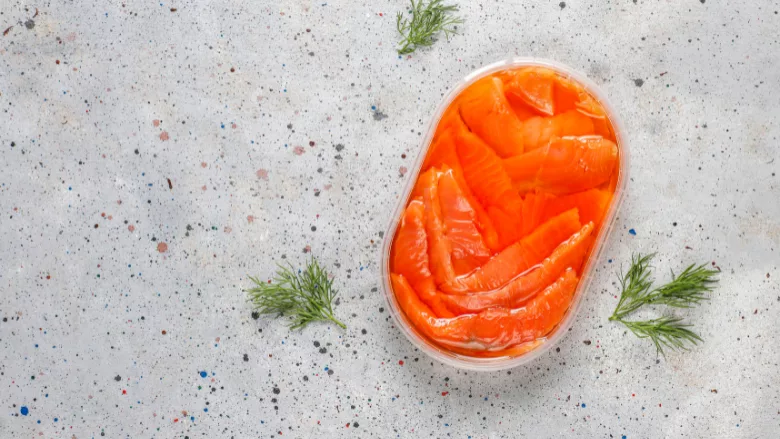
Image credit: azerbaijan_stockers via Freepik
A study published in npj Science of Food and led by researchers from the University of Vienna suggests that food type can significantly influence how Listeria monocytogenes adapts, survives digestion, and infects people. Smoked fish and soft cheese were shown to be especially conducive to L. monocytogenes survival and virulence.
The researchers examined three ready-to-eat (RTE) food matrices known to be frequently contaminated by L. monocytogenes: knackwurst sausage, smoked salmon, and brie cheese. Food samples were inoculated with three different strains of the pathogen before incubation at 10 °C for seven days, mimicking refrigerator storage. Although food matrix was not observed to have a significant effect on L. monocytogenes growth, there was a difference in growth between strains. However, transcriptomic analysis revealed that each food induced different expression of metabolic and transport genes in L. monocytogenes; for example, sugar metabolism genes in cheese, amino acid synthesis pathways in sausage, and protein translation/ribosomal pathways in fish.
To determine the survivability and infection potential of L. monocytogenes in different food matrices after ingestion, the researchers next subjected the samples to an in vitro digestive model and virulence assay.
The digestive model showed that, within the gastrointestinal (GI) system, L. monocytogenes survival was significantly higher in cheese and fish than in sausage, with the pathogen even recovering in cheese and fish during the intestinal phase. This is likely due to pH differences between food matrices, with sausage having the lowest buffering capacity when exposed to gastric juices. The significantly lower buffer capacities in sausage compared to fish and cheese may be attributed to the fat and protein content.
Additionally, following passage through the GI tract, specific virulence genes were more active in L. monocytogenes from fish.
The researchers also observed that L. monocytogenes from fish samples were the most efficient at invading intestinal epithelial cells—possibly linked to the fatty acid composition and presence of sodium lactate in smoked salmon—followed by cheese. Bacteria isolates from sausage samples were least invasive. Differences in invasion efficiency were also seen between L. monocytogenes strains.
Overall, the study’s findings show that food matrix has a direct impact on the behavior and pathogenic potential of L. monocytogenes. To improve food safety, the researchers suggest that modulating the fat and protein content in high-risk food could be one potential way to decrease the survivability of L. monocytogenes. They call for future research to investigate the mechanism of the pathogen’s ability to survive GI conditions in different food matrices.
Looking for quick answers on food safety topics?
Try Ask FSM, our new smart AI search tool.
Ask FSM →