Food Safety
search
Ask Food Safety AI
cart
facebook twitter linkedin instagram youtube
  • Sign In
  • Create Account
  • Sign Out
  • My Account
Food Safety
  • NEWS
    • Latest News
    • Sponsor Insights
    • Sponsored White Papers
  • PRODUCTS
  • TOPICS
    • Contamination Control
    • Food Types
    • Management
    • Process Control
    • Regulatory
    • Sanitation
    • Supply Chain
    • Testing and Analysis
  • PODCAST
  • EXCLUSIVES
    • Food Safety Five Newsreel
    • eBooks
    • FSM Distinguished Service Award
    • Interactive Product Spotlights
    • Videos
  • BUYER'S GUIDE
  • MORE
    • NEWSLETTERS >
      • Archive Issues
      • Subscribe to eNews
    • Store
    • ASK FSM AI
  • WEBINARS
  • FOOD SAFETY SUMMIT
  • EMAG
    • eMagazine
    • Archive Issues
    • Editorial Advisory Board
    • Contact
    • Advertise
  • SIGN UP!
NewsContamination ControlTesting & AnalysisMicrobiological ControlMethodsMicrobiological Testing & Analysis

ByHeart Develops Novel C. Botulinum Test for Infant Formula as Science Shows Industry Standard is Insufficient

By Bailee Henderson
father feeding baby
Image credit: Freepik via Magnific
June 24, 2026

On June 14, 2026, a ByHeart-commissioned study was published in Frontiers in Microbiology, suggesting that sulfite-reducing clostridia (SRC) enumeration, which is recommended as a general indicator of spore contamination by the International Commission on Microbiological Specifications for Foods (ICMSF), may not be enough to ensure powdered infant formula is free of Clostridium botulinum.

This study was conducted as a part of ByHeart’s investigation into the 2025 infant botulism outbreak linked to its product, which closed in February 2026 with 48 infants falling ill in 17 states. C. botulinum was detected in an organic powdered milk ingredient (produced by Organic West Milk and processed by Dairy Farmers of America) used in ByHeart's formula.

ByHeart engaged a third-party laboratory, IEH Laboratories and Consulting Group, to screen, detect, and characterize C. botulinum from finished products, using a tiered analytical approach combining anaerobic enrichment, molecular screening, culture confirmation, and genomic analysis.

The researchers concluded that “indicator-based screening (such as SRC enumeration), even if it had been in place before the [ByHeart] outbreak, would not have prevented its occurrence.”

‘Gold-Standard’ Test Failed to Stop Infant Botulism Outbreak

SRC enumeration is used by several competitors to ByHeart—that is, smaller, independently owned organic formula brands that market their products as "wholesome" and "clean"—including Nara Organics, which is now embroiled in its own, ongoing infant botulism outbreak (and which shared a powdered milk supplier with ByHeart). In fact, Nara tested to ten times the international best practice recommended by ICMSF, which set a maximum level of less than 100 colony forming units per gram (CFU/g). Nara had set its specification at less than 10 CFU/g, and went as far as to test each batch of formula for SRC at three stages: raw ingredients, formula powder during production, and finished product. Still, SRC enumeration was unable to prevent the Nara Organics outbreak.

As of June 15, three babies who were fed Nara Organics formula contracted botulism, and the company recalled its product out of an abundance of caution based on early epidemiologic evidence. Product testing for C. botulism in Nara products is still ongoing.

The use of SRC enumeration is promoted by several infant formula manufacturers who use it as a voluntary effort to strengthen the safety of their products.

Looking for quick answers on food safety topics?
Try Ask FSM, our new smart AI search tool.
Ask FSM →

Novel Test Method is 1,000 Times More Sensitive

ByHeart’s new testing protocol layers two testing methods at three stages of production. It is built on the foundation of an ISO Standardized Method combined with a novel, fit-for-purpose test method that was developed by IEH Laboratories specifically to aid ByHeart’s outbreak investigation. Both test methods are polymerase chain reaction (PCR)-based.

The new testing protocol detects C. botulinum to 0.01 CFU/g, which is 1,000 times more sensitive than the limits of SRC enumeration, according to ByHeart.

The company says the new protocol has been essential in verifying the contamination and helping trace the root cause of the outbreak. The test protocol is part of the company's recently introduced action plan to enhance formula safety, which also involves expanded supplier audits and increased ingredient testing frequency, QR-enabled batch traceability, and the formation of an independent Food Safety Advisory Council.

“Science evolves, and so must we. While we utilized the industry-standard direct-plating SRC methodology, based on the best information available at the time, this outbreak shows that protecting babies means continuously reassessing our methods and strengthening them when needed. This new evidence shows that a long-used test, like SRC, is not a reliable indicator for Clostridium botulinum; we have a responsibility to acknowledge that openly and act on it,” said Devon Kuehn, M.D., ByHeart’s Chief Medical Officer and Chief Scientific Officer.

KEYWORDS: infant formula outbreak investigations

Share This Story

Baileehendersonmay23

Bailee Henderson is the Director of Content Strategy for Food Safety Magazine. In the day-to-day, she covers industry-relevant current events, regulatory affairs, and scientific developments. She also produces the Food Safety Five Newsreel and edits the twice-weekly Food Safety Digest newsletter. Notably, Bailee's coverage for Food Safety Magazine has been featured in national televised news segments including CBS Sunday Morning and MSNBC's Rachel Maddow Show. She can be reached at hendersonb@bnpmedia.com.

Recommended Content

JOIN TODAY
to unlock your recommendations.

Already have an account? Sign In

  • people holding baby chicks

    Serovar Differences Matter: Utility of Deep Serotyping in Broiler Production and Processing

    This article discusses the significance of Salmonella in...
    Testing & Analysis
    By: Nikki Shariat Ph.D.
  • woman washing hands

    Building a Culture of Hygiene in the Food Processing Plant

    Everyone entering a food processing facility needs to...
    Training
    By: Richard F. Stier, M.S.
  • graphical representation of earth over dirt

    Climate Change and Emerging Risks to Food Safety: Building Climate Resilience

    This article examines the multifaceted threats to food...
    Risk Assessment
    By: Maria Cristina Tirado Ph.D., D.V.M. and Shamini Albert Raj M.A.
Manage My Account
  • eMagazine Subscription
  • Subscribe to Newsletters
  • Manage My Preferences
  • Website Registration
  • Subscription Customer Service

More Videos

Sponsored Content

Sponsored Content is a special paid section where industry companies provide high quality, objective, non-commercial content around topics of interest to the Food Safety Magazine audience. All Sponsored Content is supplied by the advertising company and any opinions expressed in this article are those of the author and not necessarily reflect the views of Food Safety Magazine or its parent company, BNP Media. Interested in participating in our Sponsored Content section? Contact your local rep!

close
  • Darkling Beetle
    Sponsored byElanco Animal Health

    Integrated Pest Management: Protecting Poultry Operations as Seasons Change

  • NEVIFIT 3 Compartment BPA-FREE
    Sponsored byCorbion

    The Risks of Ready-to-Eat: Five Ways to Protect Today's Prepared Meals

  • a group of workers in a food production facility
    Sponsored bySkillUp by Registrar Corp

    How to Build a Better Training Program: Data and Insights from the Global Food Safety Training Survey

Popular Stories

half full baby bottle next to rubber duckie on white surface

Organic Infant Formulas Caused Back-to-Back Botulism Outbreaks—What Gives?

nara organics whole milk infant formula

Another Infant Botulism Outbreak Sickens Three, Nara Organics Formula Suspected Cause

June26 eBook Cover

eBook | Building a Skilled and Capable Workforce in the Food Industry

building a skilled workforce ebook

Events

June 25, 2026

Rethinking Food Safety: Eliminating Biofilm and Building a Smarter Food Safety System

Live: June 25, 2026 at 2:00 pm EDT: Join this webinar to explore a modern approach to decontamination that goes beyond surface-level cleaning to combat biofilm and persistent pathogens.

June 30, 2026

FSMA 204 in Practice: Building a Traceability-Ready Operation

Live: June 30, 2026 at 11:00 am EDT: Attend this webinar to learn how food businesses can move from fragmented records toward a more reliable approach for recall response, FDA requests, and supply chain visibility.

July 21, 2026

Using AI Responsibly in Food Safety Management Systems

Live: July 21, 2026 at 2:00 pm EDT: This webinar will provide participants with guidance on how to effectively use generative artificial intelligence (AI) tools to develop key components of a food safety management system (FSMS).

View All

Products

Global Food Safety Microbial Interventions and Molecular Advancements

Global Food Safety Microbial Interventions and Molecular Advancements

See More Products

Related Articles

  • ByHeart formula

    ByHeart Finds Widespread Contamination in Infant Formula as Botulism Outbreak Grows; FDA Publishes Inspection Reports

    See More
  • infant formula and bottle

    FDA to Begin Testing Infant Formula Products, Ingredients for C. botulinum

    See More
  • baby bottle full of milk

    FDA Issues Guidance for Infant Formula Industry on Notification Requirements When Production is Interrupted

    See More

Related Products

See More Products
  • 1119237963.jpg

    Food Safety in China: Science, Technology, Management and Regulation

  • 1118396308.jpg

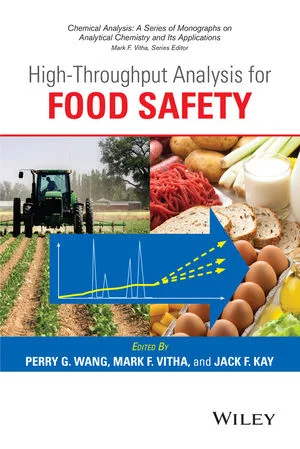
    High Throughput Analysis for Food Safety

  • 1119053595.jpg

    Food Safety for the 21st Century: Managing HACCP and Food Safety throughout the Global Supply Chain, 2E

See More Products

Related Directories

  • Gold Standard Diagnostics

    Gold Standard Diagnostics develops and markets rapid test kits and analyzers for a wide range of food contaminants including: allergens, pathogens, patulin and mycotoxins, glyphosate and pesticides, VDRs, GMOs and more. Get accurate results in minutes on-site with Gold Standard Diagnostics test kits.
×

Never miss the latest news and trends driving the food safety industry

Newsletters | Website | eMagazine

JOIN TODAY!
  • RESOURCES
    • Advertise
    • Contact Us
    • Directories
    • Store
    • Want More
  • SIGN UP TODAY
    • Create Account
    • eMagazine
    • Newsletters
    • Customer Service
    • Manage Preferences
  • SERVICES
    • Marketing Services
    • Reprints
    • Market Research
    • List Rental
    • Survey/Respondent Access
  • STAY CONNECTED
    • LinkedIn
    • Facebook
    • Instagram
    • X (Twitter)
  • PRIVACY
    • PRIVACY POLICY
    • TERMS & CONDITIONS
    • DO NOT SELL MY PERSONAL INFORMATION
    • PRIVACY REQUEST
    • ACCESSIBILITY

Copyright ©2026. All Rights Reserved BNP Media, Inc. and BNP Media II, LLC.

Design, CMS, Hosting & Web Development :: ePublishing