This episode of Food Safety Five covers a novel detection method for Clostridium botulinum and a potential new processing approach to mitigate contamination, as well as growing discussion around how C. botulinum should be handled in infant formula manufacturing, spurred by recent botulism outbreaks.
The Canadian Food Inspection Agency (CFIA) recently published the findings from several food sampling and testing assignments for microbiological and chemical contaminants across a range of food categories. In general, the results were satisfactory.
In processing operations for dairy and low-moisture foods, specialized sanitation and environmental monitoring programs are paramount to securing food safety and hygienic operation of facilities.
This episode of Food Safety Five discusses two scientific developments that could help address the risk posed by Cronobacter in powdered infant formula: an AI-powered analysis of genetic data for C. sakazakii, providing new insight into why it persists in low-moisture foods, and the development of a promising new assay.
Researchers in China have developed a new onsite rapid test, based in fluorescence RNA-targeted isothermal amplification assay (SAT) technology, that can quickly detect and identify Cronobacter species in powdered infant formula. It offers significantly greater sensitivity and much more rapid results than polymerase chain reaction (PCR), without producing false positives.
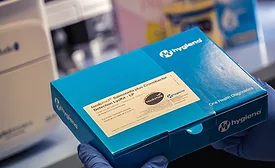
Traditionally, food safety laboratories have performed separate tests for each pathogen, which boosts costs and delays results. Hygiena’s Salmonella plus Cronobacter Detection LyoKit eliminates this inefficiency by detecting both pathogens in a single test.
The U.S. Food and Drug Administration (FDA) has published a Long-Term National Strategy to Increase the Resiliency of the U.S. Infant Formula Market, building upon actions taken by the agency and implementing learnings from research conducted since the 2022 infant formula supply crisis.
The National Advisory Committee on Microbiological Criteria for Foods (NACMCF) will hold a virtual public meeting on June 24 to provide updates on its charges from USDA and FDA regarding genomics and Cronobacter in powdered infant formula, respectively.
The European Food Safety Authority (EFSA) recently published a scientific opinion that identified the most relevant persistent microorganisms in food and feed production environments to be Salmonella, Listeria monocytogenes, and Cronobacter sakazakii, as well as risk factors and interventions associated with these pathogens.
In this episode of Food Safety Matters, we review the top food safety stories of 2023 and their implications, covering regulatory changes in the U.S. and abroad; growing concerns about chemical additives and contaminants, allergens, traceability requirements, infant formula, and retail foodservice safety; and the Poisoned documentary that premiered on Netflix in summer 2023.