Based on the findings, researchers recommended targeted food safety messaging for older adults that raises awareness of age-related susceptibility to foodborne illness and the potential severity of infection, and acknowledges the effects of health, financial, and environmental realities on food safety practices.
The Partnership for Food Safety Education is offering resources to help families, educators, and community leaders prevent foodborne illness during America 250 celebrations through simple, science‑based steps.
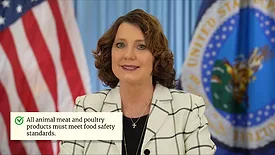
USDA Under Secretary for Food Safety Dr. Mindy Brashears, in collaboration with the Partnership for Food Safety Education, is calling on food safety educators nationwide to help dispel misinformation about the safety of the food supply amid the current New World Screwworm infestation.
Commissioned by the International Food Information Council (IFIC) and published at a time when FDA is considering a federally standardized FOP nutrition labeling scheme, the survey provides insight into what Americans are seeking from FOP nutrition labels.
To date, food safety training has emphasized compliance rather than prioritizing the end consumer. This approach has served its purpose, but it is time to (figuratively) bring the consumer into the training room and redesign food safety education and training with a sharper focus and impact.
However, ultra-processed foods were consistently more affordable and dominated total U.S. grocery sales. The report, commissioned by IFIC, suggests that dietary recommendations and discussions about UPFs must be grounded in real-world consumer behavior, rather than treating these products as easily avoidable, and consider nutritional value.
An EFSA survey found that only one in ten respondents reported awareness about the health risks of seafood, and one-third of seafood consumers ate species high in mercury three or more times a week.
The way people shop, cook, and seek information is evolving rapidly, and with it, the expectations placed on food safety educators, regulators, and industry partners.
The Institute of Food Technologists’ (IFT’s) Science and Policy Initiatives team has revealed the top five food trends of 2026 that are predicted to impact the food and policy landscape related to innovation, safety, sustainability, and consumer trust.
In this bonus episode of Food Safety Matters, we speak to Kris Sollid, RD of the International Food Information Council (IFIC) about IFIC’s recent consumer surveys measuring Americans' confidence in, and understanding of, the safety of the U.S. food supply, as well as how “MAHA” may be influencing consumer perceptions.