The World Health Organization (WHO) is updating its estimate of the global burden of foodborne illness for 2025, and researchers are calling for the inclusion of Chagas disease, which has not been considered in past estimates.
The European Food Safety Authority (EFSA) has launched a public consultation for a draft guidance on the requirements for applications for novel food authorizations in the EU, and will hold a public webinar for stakeholders in March about the draft guidance.
In a new study, the Environmental Working Group (EWG) has detected the pesticide chlormequat in four out of five people tested. After allowing the chemical on imported foods, the U.S. Environmental Protection Agency (EPA) proposed a rule in 2023 that would allow chlormequat to be applied to barley, oat, triticale, and wheat crops.
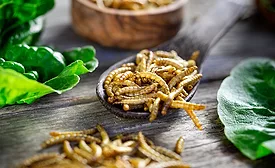
A recent study has mapped the edible insect supply chain to identify the main points for potential food safety hazards and food fraud, and concluded that, in general, substantial food safety and authenticity gaps need to be addressed before edible insects can be considered safe and sustainable protein sources for Western markets.
A recent study has analyzed methods of environmental monitoring for Listeria monocytogenes in food production facilities, comparing two alternative methods against a traditional culture-based method.
The World Health Organization (WHO) recently published a guidance for national authorities about how to design, implement, and communicate a risk-based food inspection system.
Researchers from the New Jersey Institute of Technology (NJIT) have developed a method of detecting toxic per- and poly-fluoroalkyl substances (PFAS) in food packaging, water, and soil samples in three minutes or less.
Maryland House Bill 97, also known as “Rudy’s Law,” would require baby food manufacturers to test products for toxic heavy metals and make the results available to consumers
 RSS
RSS