The Alabama House of Representatives recently passed Senate Bill 23 banning the production or sale of cell-based meat products in the state. The bill has been returned to the Senate for concurrence.
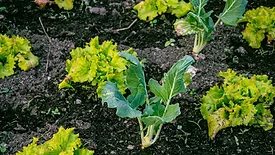
To help predict and mitigate the presence of Escherichia coli and other foodborne pathogens on lettuce, a new weather-based model has been developed by USDA-ARS researchers and collaborators.
FDA recently revealed results of a survey that found HPAI H5N1 genetic material in one in five retail milk samples; additional testing is required to understand the possible
presence and risk of intact, infectious virus. Supported by other studies showing the efficacy of pasteurization against HPAI, FDA maintains its position that the U.S. milk supply is safe.
A total of 313 food product recall announcements were issued in 2023 by FDA and USDA, which the U.S. Public Interest Research Groups (PIRG) Education Fund analyzed in its Food for Thought 2024 report to identify recall trends.
USDA-FSIS has finalized its determination to declare Salmonella an adulterant in raw, breaded and stuffed chicken products at levels exceeding 1 colony forming unit per gram (CFU/g).
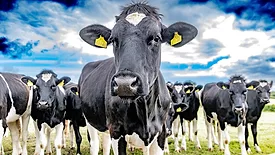
To address the spread of Highly Pathogenic Avian Influenza (HPAI) H5N1, the U.S. Department of Agriculture (USDA) has issued a federal order that requires testing of dairy cows for the virus, as well as mandatory reporting.
According to a recent report by the U.S. Government Accountability Office, the two largest federal purchasers of food in the U.S. attempt to source locally grown food when possible, but do not collect sufficient data to trace the origins of food purchases.
Trace Register and ReposiTrak have announced a partnership to enable fast, simple compliance with the U.S. Food and Drug Administration’s (FDA’s) Food Safety Modernization Act, Section 204 (FSMA 204), also known as the Food Traceability Final Rule, through data interoperability.
Following a 2022–2023 hepatitis A outbreak linked to contaminated frozen berries, New Zealand has issued new import rules for frozen berries to better ensure food safety.
 RSS
RSS