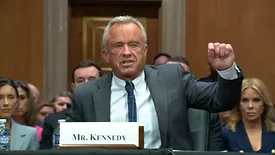
The final Make America Healthy Again (MAHA) Report was unveiled in a September 9 press conference led by HHS Secretary Robert F. Kennedy Jr. Food safety, consumer, and environmental stakeholder groups criticize the report’s deregulatory approach and lack of enforceable actions.
FDA officially revealed its intent to issue a proposed rule that would make significant changes to the Generally Recognized as Safe (GRAS) process, which, at present, enables the introduction of ingredients to the U.S. food supply without formal safety review.
In this episode of Food Safety Matters, we speak with Dr. Mick Dutcher, the Deputy Associate Commissioner for Food Products at FDA’s Office of Inspections and Investigations (OII), about the work of the Food Products Inspectorate and its activities to ensure food safety.
A GS1 US consumer survey has revealed that 93 percent of Americans are concerned about how frequently food recalls occur. GS1 US says increased recall frequency means traceability efforts are working.
Following years of line speed waiver extensions and worker safety trials under modernized swine/poultry slaughter inspection pilot programs, the American Protein Processing Act would lift line speed limits in pork and poultry processing facilities that meet food safety criteria set by USDA.
In response to a petition submitted by Cargill, FDA has amended existing regulations to provide for the use of hydrogen peroxide in food production, including meat and poultry, as an antimicrobial agent, oxidizing and reducing agent, and bleaching agent, and to remove sulfur dioxide.
In two letters, thousands of public health professionals from dozens of stakeholder groups and federal agencies have called for the resignation of HHS Secretary Robert F. Kennedy Jr. (RFK Jr.), saying he is making Americans “less safe in a multitude of ways,” including food safety.
A French analysis of anaphylaxis cases revealed eight foods causing a notable number of allergic reactions, which are not included on the EU list of major food allergens requiring mandatory labeling. The researchers recommend four of these hidden allergens for inclusion on the list.
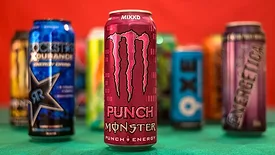
The UK Government has proposed rules that would prohibit the sale of high-caffeine energy drinks to children under the age of 16, intended to “prevent obesity in up to 40,000 children and deliver health benefits worth tens of millions of pounds.”
 RSS
RSS