The American Association of Meat Processors (AAMP) recently announced an upcoming video series to help meat processors adjust to proposed revisions to the U.S. Department of Agriculture’s Food Safety and Inspection Service’s Appendices A and B.
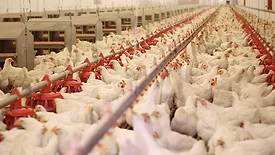
Kansas State University and Cargill have joined forces to identify an effective pre-harvest, pre-grind sampling strategy for predicting Salmonella contamination in turkey flocks that are raised for ground meat.
Reducing food waste is imperative for fighting world hunger, and technologies to reduce food waste can also help improve food safety, quality, and shelf life.
The COVID-19 pandemic has significantly shifted consumer demand away from restaurants and foodservice to home meals and ready-to-eat (RTE) meat and poultry products. As a complement for more convenience-type items, consumers began focusing on product expiration dates to limit trips to retail markets. Combined with consumers' nutritional focus on sugar, sodium, fat content, and additives, meeting these expectations and requirements is a serious challenge for meat and poultry processors. The most common challenges for reformulation are reduction of sodium and replacing additives such as nitrite and preservatives.
The U.S. Department of Agriculture’s Food Safety and Inspection Service (USDA FSIS) has released a new HACCP Model for certain meat and poultry products that receive a full lethality heat process step.
Regardless of whether or not cooks wash their poultry or not before cooking it, bacterial contamination is rampant in the kitchen, a recent study finds.
The U.S. Department of Agriculture (USDA) Food Safety and Inspection Service (FSIS) launched a new webpage with resources and information to combat Salmonella in poultry.
 RSS
RSS