Food Safety
search
Ask Food Safety AI
cart
facebook twitter linkedin
  • Sign In
  • Create Account
  • Sign Out
  • My Account
Food Safety
  • NEWS
    • Latest News
    • White Papers
  • PRODUCTS
  • TOPICS
    • Contamination Control
    • Food Types
    • Management
    • Process Control
    • Regulatory
    • Sanitation
    • Supply Chain
    • Testing and Analysis
  • PODCAST
  • EXCLUSIVES
    • Food Safety Five Newsreel
    • eBooks
    • FSM Distinguished Service Award
    • Interactive Product Spotlights
    • Videos
  • BUYER'S GUIDE
  • MORE
    • ENEWSLETTER >
      • Archive Issues
      • Subscribe to eNews
    • Store
    • Sponsor Insights
    • ASK FSM AI
  • WEBINARS
  • FOOD SAFETY SUMMIT
  • EMAG
    • eMagazine
    • Archive Issues
    • Editorial Advisory Board
    • Contact
    • Advertise
  • SIGN UP!
Food TypeManagementFood DefenseMeat/Poultry

Evolving Threats to the U.S. Poultry Industry
By Robert A. Norton Ph.D.
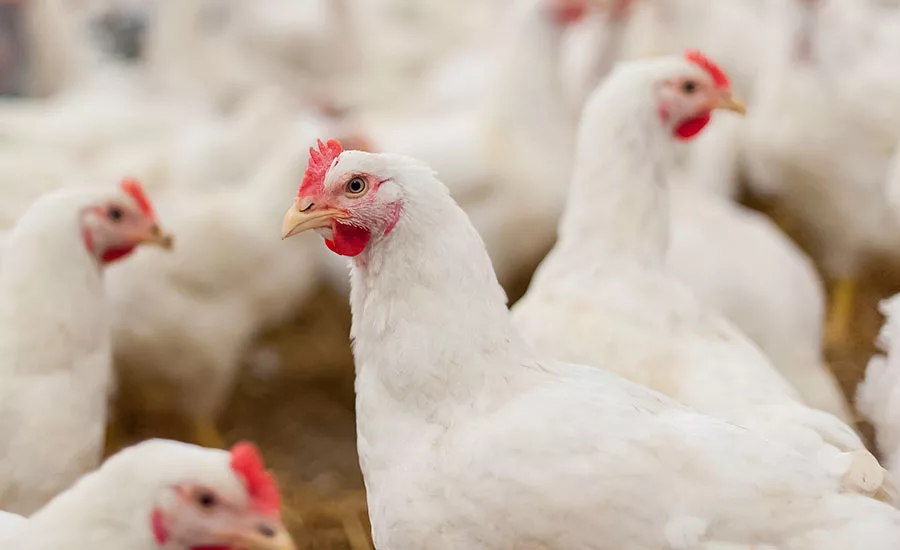
white hens conversing
February 16, 2021

The food you produce is consumed by not only Americans but by customers around the world. Some of our adversaries don’t like that, since a nation with food is a nation that wields control over other nations. You should be aware of threats to the food industry so you can develop robust defense strategies for your facilities and products. A strong food defense plan better protects your employees, your brand, and your bottom line.

The Poultry Industry: An Important Component of the Nation’s Critical Infrastructure

Food and agriculture, as well as inputs to that industry—facilities, water and wastewater, chemicals, communications, the power grid, finances, information technology, and transportation—are all designated by the federal government as “critical infrastructures,” or elements of society that are essential to our well-being. The sector is protected at the federal level, as defined by two presidential policy directives that describe evolving threats. These directives assign the responsibility for protecting themselves to companies, but also provide for leveraging federal capabilities and resources if the poultry industry were successfully attacked.  

If tensions rise, terrorist groups would be gunning for the larger U.S. food supply, of which the poultry industry is an important component. A coordinated attack on the U.S. poultry industry, however, would entail a huge effort, beyond the range of most terrorist organizations. Nation states, by contrast, are more capable and, therefore, more dangerous. The U.S. poultry industry would be a probable target for North Korea, possibly even for Russia and China. Given the capabilities exhibited by both North Korea and Russia, it would not be unreasonable to expect a sophisticated and coordinated attack on agriculture if, at some point in the future, the U.S. and its allies go to war with these nations.

Appropriate Corporate Responses

How should the poultry industry respond to a potential threat? Rigorous biosecurity and food defense programs go a long way toward making facilities, products, and processes secure from adversaries. Consider first protecting against the intentional introduction of “weapons of mass destruction,” which in this scenario would include chemical, biological, or radiological materials. Rigid personnel security and physical security programs serve as the first line of defense against these types of threats.

Rule number one in a personnel security program is to know who works for you and where they are at all times while on duty. This protects not only the business but also the employees themselves. If an emergency occurs, you will know where to find your personnel. You should also always know when and where “guests”—including maintenance workers—are on your premises.

Looking for quick answers on food safety topics?
Try Ask FSM, our new smart AI search tool.
Ask FSM →

Rule number two is to monitor premises and processes by using access control, process monitoring, and security camera systems. Generally, people not working at a poultry facility should not be allowed to enter poultry houses. Why? To prevent disease, of course. Exclusion through access control systems also prevents people from having access, which in turn prevents them from introducing dangerous agents. Non-company personnel who need to be on poultry farms for repair work, equipment maintenance, and pest control, for example, should be allowed access only under conditions described in the biosecurity protocol, and they should be escorted at all times.

Rule number three is to develop a security plan and apply it at all times. Shortcuts should never be allowed because they compromise the security system and increase corporate liability. Intentionally breaking security protocols might also be a violation of state and federal laws.

Rule number four is to report suspicious people or activities as soon as observed. The corporate environment for reporting has everything to do with achieving success. Employees have to be empowered and trained to report, as well as rewarded when they do report suspicious people and activities.

In a recent security audit of a poultry products corporation, I intentionally acted suspiciously by not first identifying myself, then going to a perimeter fence at the processing plant and taking photographs. Taking pictures of a facility should be viewed as highly suspicious. An employee of an affiliated trucking company saw me and reported it to the facility manager, who then had four management-level plant personnel approach me. They politely but firmly questioned me while maintaining a safe distance. The whole incident lasted about 3 minutes, which is truly remarkable and evidence of a successful security program.

Poultry facility security programs will have to evolve as new threats are identified and should be viewed as a corporate investment. They must be comprehensive, always considering the vulnerabilities of every facility process and outlining ways to harden defenses. An overlooked vulnerability or an unenforced security protocol is dangerous for both the corporate brand and the bottom line. Stay vigilant and stay safe.

Robert A. Norton, Ph.D., is chair of the Auburn University Food System Institute’s Food and Water Defense Working Group. He is a long-time consultant to the U.S. military and federal and state law enforcement agencies. He can be reached at nortora@auburn.edu or by phone at 334-844-7562.

DISCLAIMER: Support for Robert A. Norton, Ph.D., and the production of this article was provided by the Alabama Agricultural Experiment Station and the Hatch program of the National Institute of Food and Agriculture, U.S. Department of Agriculture. The article represents the personal opinion of Robert A. Norton, Ph.D., and does not reflect official policy or statutory-related opinion of the federal government, National Institute of Food and Agriculture, and/or the U.S. Department of Agriculture.


KEYWORDS: biosecurity

Share This Story

Robert norton
Robert Norton, Ph.D. is a Professor and National Security Liaison in the Office of the Vice President of Research and Economic Development at Auburn University. He specializes in national security matters and open-source intelligence, and coordinates research efforts related to food, agriculture, and veterinary defense.

Recommended Content

JOIN TODAY
to unlock your recommendations.

Already have an account? Sign In

  • people holding baby chicks

    Serovar Differences Matter: Utility of Deep Serotyping in Broiler Production and Processing

    This article discusses the significance of Salmonella in...
    Methods
    By: Nikki Shariat Ph.D.
  • woman washing hands

    Building a Culture of Hygiene in the Food Processing Plant

    Everyone entering a food processing facility needs to...
    Facilities
    By: Richard F. Stier, M.S.
  • graphical representation of earth over dirt

    Climate Change and Emerging Risks to Food Safety: Building Climate Resilience

    This article examines the multifaceted threats to food...
    Contamination Control
    By: Maria Cristina Tirado Ph.D., D.V.M. and Shamini Albert Raj M.A.
Manage My Account
  • eMagazine Subscription
  • Subscribe to eNewsletter
  • Manage My Preferences
  • Website Registration
  • Subscription Customer Service

More Videos

Sponsored Content

Sponsored Content is a special paid section where industry companies provide high quality, objective, non-commercial content around topics of interest to the Food Safety Magazine audience. All Sponsored Content is supplied by the advertising company and any opinions expressed in this article are those of the author and not necessarily reflect the views of Food Safety Magazine or its parent company, BNP Media. Interested in participating in our Sponsored Content section? Contact your local rep!

close
  • Salmonella bacteria
    Sponsored byThermoFisher

    Food Microbiology Testing Methods: Salmonella species

  • a diagram explaining indicator organisms
    Sponsored byHygiena

    How Proactive Listeria Testing Helps Prevent Six- and Seven-Figure Recalls

  • woman grocery shopping
    Sponsored byCorbion

    Designing Safety Into Every Bite: Proactive Risk Mitigation for Refrigerated Foods

Popular Stories

baby eating bottle

Infant Botulism Spike Exceeds 100 Cases, Extent of ByHeart's Involvement Unclear

NRTE breaded stuffed chicken

USDA Indefinitely Delays Enforcement of Salmonella as Adulterant in Raw Breaded, Stuffed Chicken

digital map of europe

EU Publishes Food Fraud Tool Mapping Thousands of Cases Since 2016

Events

December 11, 2025

How to Develop and Implement an Effective Food Defense Strategy

Live: December 11, 2025 at 2:00 pm EDT: From this webinar, attendees will learn common areas where companies encounter challenges in their food defense strategies and how to address them.

May 11, 2026

The Food Safety Summit

Stay informed on the latest food safety trends, innovations, emerging challenges, and expert analysis. Leave the Summit with actionable insights ready to drive measurable improvements in your organization. Do not miss this opportunity to learn from experts about contamination control, food safety culture, regulations, sanitation, supply chain traceability, and so much more.

View All

Products

Global Food Safety Microbial Interventions and Molecular Advancements

Global Food Safety Microbial Interventions and Molecular Advancements

See More Products

Related Articles

  • cyber threats

    Cyber Threats Impacting the Food and Agriculture Sector

    See More
  • alert graphic

    Malevolent AI: Navigating the Shadows of Technology Advancement in the Food Industry

    See More
  • a product card for a DJI drone. DJI is a Chinese technology company that manufactures commercial unmanned aerial vehicles (UAVs

    A Biosurveillance Ecosystem for Food Safety and National Resilience

    See More

Related Products

See More Products
  • 1119053595.jpg

    Food Safety for the 21st Century: Managing HACCP and Food Safety throughout the Global Supply Chain, 2E

  • 1119258073.jpg

    FSMA and Food Safety Systems: Understanding and Implementing the Rules

  • 1118474600.jpg

    Practical Food Safety: Contemporary Issues and Future Directions

See More Products

Related Directories

  • PATLITE (U.S.A.) Corp.

    Since 1947, PATLITE has offered state-of-the-art equipment for the process and industrial automation industries. Innovative and durable design, backed by years of industry experience and a strong commitment to safety and security, has made PATLITE the world's best known manufacturer of visual and audible signaling devices.
×

Never miss the latest news and trends driving the food safety industry

eNewsletter | Website | eMagazine

JOIN TODAY!
  • RESOURCES
    • Advertise
    • Contact Us
    • Directories
    • Store
    • Want More
  • SIGN UP TODAY
    • Create Account
    • eMagazine
    • eNewsletter
    • Customer Service
    • Manage Preferences
  • SERVICES
    • Marketing Services
    • Reprints
    • Market Research
    • List Rental
    • Survey/Respondent Access
  • STAY CONNECTED
    • LinkedIn
    • Facebook
    • Instagram
    • X (Twitter)
  • PRIVACY
    • PRIVACY POLICY
    • TERMS & CONDITIONS
    • DO NOT SELL MY PERSONAL INFORMATION
    • PRIVACY REQUEST
    • ACCESSIBILITY

Copyright ©2025. All Rights Reserved BNP Media.

Design, CMS, Hosting & Web Development :: ePublishing

