A new scientific review examines blue light-mediated photosensitization for antimicrobial intervention across various food sectors. The review notes the technology's promise as a nonthermal antimicrobial intervention for food safety and emphasizes the need for further studies to support scale-up across industry.
The fast-casual Mexican-style restaurant chain has pulled the jalapeños from its restaurants and replaced them with product from different growers, out of "an abundance of caution."
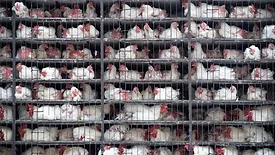
Transport cages are recognized as a potential source of cross-contamination in poultry slaughterhouses. The optimal washing water temperature and detergent concentration completely eliminated detectable Salmonella while greatly reducing indicator organisms. The identified parameters may improve food safety and operational efficiency.
Spoilage microorganisms present an important and complex challenge for food manufacturers, affecting production processes, product quality, retailer relationships, consumer satisfaction, food loss and waste, and ultimately, the bottom line.
UKHSA said the relatively stable number of STEC notifications in 2025 marked a departure from the steady annual increases observed since 2021, when larger outbreaks contributed substantially to case counts.
A new hypothesis suggests Listeria monocytogenes persists by colonizing nutrient-rich voids left behind when Gram-negative bacterial biofilms disperse. If the theory is validated, the authors suggest shifting food safety strategies toward managing biofilm ecology and ecological succession, rather than focusing solely on pathogen detection.
At least 1,947 people infected with Cyclospora who had exposure to Taco Bell have been reported in nine states. Michigan and Ohio are together reporting more than 10,000 cyclosporiasis cases. FDA is investigating three other outbreak clusters.
The growing collection includes scientific publications and guidances on detection and viability methods, agricultural water monitoring and treatment, mitigation strategies, and the biology and epidemiology of the parasite.
The findings from a pre-competitive, industry–academia research collaboration provide a scientific foundation for discussions on quality standards and risk management in the plant-based dairy-alternative beverage sector.
Several senators have written letters to U.S. Health Secretary Kennedy urging Cyclospora surveillance to be restored to the FoodNet program. Experts say that FoodNet cuts, although problematic, did not cause the current outbreak.
 RSS
RSS