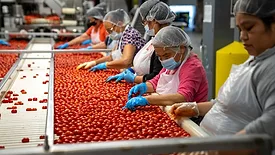
According to a survey by CDC researchers, nine percent of consumers reported eating prepackaged frozen vegetables raw and 40 percent reported not following cooking instructions, underlining the importance of preventive controls and processing steps to reduce pathogen contamination during production.
This episode of Food Safety Five discusses two recent scientific studies that are advancing the food industry’s understanding of and ability to address Listeria monocytogenes, including new findings about the pathogen’s behavior in biofilms and a developing rapid detection method.
The Innovation Center for U.S. Dairy is offering four in-person food safety training opportunities throughout 2025, designed to help the dairy industry strengthen contamination control practices to protect consumers from foodborne illness.
A Boston University study has shown that Escherichia coli exposed to microplastics form strong biofilms and develop increased levels of antimicrobial resistance (AMR) and multi-drug resistance.
A new study by USDA researchers has shown that long-read whole genome sequencing (WGS) could detect Salmonella attachment to food-contact surfaces earlier than traditional culture-based methods, allowing for sanitation interventions to be applied before the maturation of robust and difficult-to-remove biofilms.
According to a pre-publication version of a study conducted by Cornell University and backed by FDA, aging raw milk cheese may not be effective at eliminating the Highly Pathogenic Avian Influenza H5N1 virus. However, adequate heat treating or pH 5.0 conditions could be effective.
Warming temperatures associated with climate change are increasing the risk of human exposure to fungi-produced mycotoxins from food, warned the European Environment Agency in a new briefing. Mycotoxins pose significant health risks to humans and are present in foods like grains and cereals.
Scientists have discovered antibodies that can neutralize a wide range of norovirus strains, laying the groundwork for a broadly effective vaccine. Historically, development of a norovirus vaccine has been hindered by the virus’ many genetic variants and frequent mutation.
CDC released a summary of Foodborne Disease Outbreak Surveillance System data, analyzing the causes of foodborne illness outbreaks that occurred between 2014 and 2022.
Precision Downtime, a new software solution from Ancera, helps poultry integrators reduce downtime during flock transitions by leveraging real-time, farm-specific data based on microbial risk assessments.