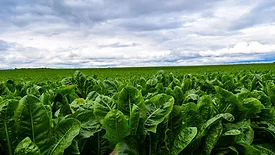
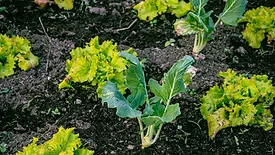
Forward processing of leafy greens crops does not significantly increase the food safety risk posed by Escherichia coli, suggests a recent study led by a USDA Agricultural Research Service (USDA-ARS) scientist and funded by the Center for Produce Safety.
The U.S. Department of Agriculture (USDA) has awarded $611,000 to University at Albany researchers to develop a rapid, portable, colorimetric Salmonella detection kit for food products.
To investigate the potential impact of more widespread adoption of food irradiation, CDC analyzed a decade (2009–2020) of U.S. foodborne illness outbreak data for four significant foodborne pathogens, and found 155 outbreaks linked to irradiation-eligible foods that had not been irradiated.
A recent study found high levels of antimicrobial resistance (AMR) among Escherichia coli on raw chicken meat sold at retail in the UK, as well as in chicken-based raw dog food samples—with almost half of samples resistant to critically important antibiotics.
As the platinum sponsor of the 2024 Food Safety Summit, NOMADX Holdings LLC has unveiled at the event an early access program for its portable NOMADX platform for onsite foodborne pathogen detection.
Researchers at NC State University compared poultry broiler farms of various sizes and found higher rates of Salmonella at large commercial operations than at small backyard farms; however, multidrug-resistant Salmonella were found in samples from both types of farm.
While stressing that the U.S. meat supply is safe, USDA has revealed that it is testing ground beef at retail for the presence of Highly Pathogenic Avian Influenza (HPAI) H5N1—also known as “bird flu”—in light of the ongoing outbreak among cattle.
In this bonus episode of Food Safety Matters, we speak with Dr. Alissa Welsher, Associate Senior Consultant at Elanco Poultry Food Safety, about the importance of pest management to poultry safety; specifically, for the control of darkling beetles, which can be an important source of Salmonella in poultry production operations.
To help predict and mitigate the presence of Escherichia coli and other foodborne pathogens on lettuce, a new weather-based model has been developed by USDA-ARS researchers and collaborators.
FDA recently revealed results of a survey that found HPAI H5N1 genetic material in one in five retail milk samples; additional testing is required to understand the possible
presence and risk of intact, infectious virus. Supported by other studies showing the efficacy of pasteurization against HPAI, FDA maintains its position that the U.S. milk supply is safe.
 RSS