The U.S. Food and Drug Administration (FDA) has provided updates on the agency’s Cyclospora Prevention, Response, and Research Action Plan to reflect the current status of the agency’s work to prevent and reduce incidences of foodborne cyclosporiasis in the U.S.
On June 29, 2023, the Council of State and Territorial Epidemiologists voted to make Cronobacter sakazakii a nationally notifiable disease, requiring health departments in the U.S. to track and report cases of C. sakazakii to the U.S. Centers for Disease Control and Prevention.
A new report on preliminary 2022 data from the U.S. Foodborne Diseases Active Surveillance Network (FoodNet) finds that enteric infections in the U.S. caused by eight major foodborne pathogens have generally returned to or exceeded levels observed in 2016–2018, before the COVID-19 pandemic.
Following a One Health approach, Canadian federal, provincial, and territorial governments have made a 5-year commitment for concerted action to tackle antimicrobial resistance (AMR) through ten shared priority actions across five pillars. The action plan provides a 5-year (2023–2027) blueprint for strengthening Canada's collective AMR preparedness and response across the One Health spectrum.
According to new tests by Consumer Reports, although the amounts of lead, arsenic, and cadmium in baby foods appear to be getting lower, the overall risk hasn’t changed much in the last five years.
As part of an effort to reduce cases of salmonellosis attributable to poultry products, the U.S. Department of Agriculture’s Food Safety and Inspection Service (USDA’s FSIS) conducted a study with the Food Emergency Response Network (FERN) laboratories to gather data on not-ready-to-eat (NRTE) breaded stuffed chicken products purchased at retail stores.
Since early 2022, CDC and FDA have investigated an ongoing Salmonella outbreak linked to Italian-style meats. The outbreak has affected at least 36 people across 17 states.
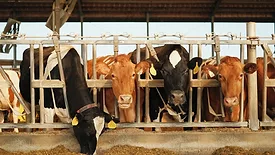
A recent review of control methods for pathogens in beef has identified three key interventions—high herd health status, good management, and biosecurity.
 RSS
RSS