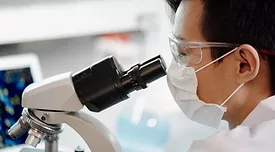
A team of researchers from Osaka Metropolitan University in Japan have developed a foodborne bacteria detection and quantification tool that can produce results in as little as one hour. The researchers hope to see their technology used to confirm the microbial safety of food products before they leave the production facility.
Many people are unaware of the threat that foodborne illnesses pose in their own homes, with gaps seen between best practice and actual behavior. However, we can reduce risks in our home kitchens by providing people with solid science, education, and communication about home food safety.
Spoilage bacteria Pseudomonas are able to survive thermal processing methods commonly used in meat production and can grow in refrigerated, vacuum-sealed packaging with little to no oxygen, according to a recent study.
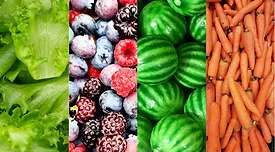
The Food and Agriculture Organization (FAO) and the World Health Organization (WHO) recently published a Joint FAO/WHO Expert Meetings on Microbial Risk Assessment (JEMRA) report on commodity specific prevention and control measures for microbial hazards in fresh fruits and vegetables.
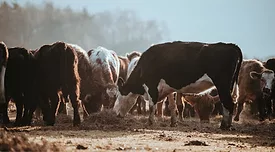
The Expanded Food Safety Investigation Act (EFSIA) was recently reintroduced to U.S. Congress. If passed, the bill would allow U.S. Food and Drug Administration (FDA) and U.S. Centers for Disease Control and Prevention (CDC) investigators to enter concentrated animal feeding operations (CAFOs) and conduct microbial sampling to trace foodborne illness outbreaks.
California Assembly Bill 418, also called the California Food Safety Act, which aims to prohibit four food additives from being used or sold in the state due to associated health risks, recently passed the state Senate and is waiting to be signed into law by Governor Gavin Newsom.
To inform the European Commission’s decision on whether to establish maximum levels for mineral oil hydrocarbons (MOH) in certain foods, the European Food Safety Authority (EFSA) recently published an update of its risk assessment on dietary exposure to the chemicals.
A recent study aiming to investigate the usefulness of publicly available whole genome sequencing (WGS) data for Salmonella surveillance has provided an overview of antimicrobial resistance (AMR) among different serovars and defined the most common antibiotic resistance genes.
In this episode of Food Safety Matters, we are joined by Darin Detwiler, LP.D., M.A.Ed., who is a food safety academic, advisor, advocate, and author with a 30-year history of working to control foodborne illness. Dr. Detwiler discusses the U.S. food safety system as portrayed in the 2023 Netflix documentary Poisoned, in which he is prominently featured. Additionally, Bob Ferguson discusses his latest Food Safety Insights column on food processors’ post-pandemic priorities and challenges.
A recent study carried out environmental monitoring programs (EMPs) for Listeria monocytogenes at three food production facilities in Japan with the aim of developing EMPs that are relevant to Japanese food businesses and to encourage more widespread adoption of EMPs.
 RSS
RSS