Food Safety
search
Ask Food Safety AI
cart
facebook twitter linkedin instagram youtube
  • Sign In
  • Create Account
  • Sign Out
  • My Account
Food Safety
  • NEWS
    • Latest News
    • White Papers
  • PRODUCTS
  • TOPICS
    • Contamination Control
    • Food Types
    • Management
    • Process Control
    • Regulatory
    • Sanitation
    • Supply Chain
    • Testing and Analysis
  • PODCAST
  • EXCLUSIVES
    • Food Safety Five Newsreel
    • eBooks
    • FSM Distinguished Service Award
    • Interactive Product Spotlights
    • Videos
  • BUYER'S GUIDE
  • MORE
    • NEWSLETTERS >
      • Archive Issues
      • Subscribe to eNews
    • Store
    • Sponsor Insights
    • ASK FSM AI
  • WEBINARS
  • FOOD SAFETY SUMMIT
  • EMAG
    • eMagazine
    • Archive Issues
    • Editorial Advisory Board
    • Contact
    • Advertise
  • SIGN UP!
NewsContamination ControlRegulatoryChemical ControlInternational Standards/Harmonization

EFSA Explains Food Safety Risk of Nitrosamines, Opinion Open to Consultation

cured meat

Credit: Adonyi Gábor (adonyi-foto) via Pexels

October 12, 2022

The European Food Safety Authority (EFSA) recently opened its draft opinion on nitrosamines to public consultation. Nitrosamines, some of which are genotoxic and carcinogenic, are chemical compounds that are found in food as the result of preparation and processing.

Nitrosamines can be found in a number of commodities including cured meat products, processed fish, cocoa, beer and other alcoholic beverages, cooked meat, processed vegetables, cereals, milk and dairy products, fermented foods, pickled foods, and spiced foods. Additionally, a 2017 EFSA evaluation of the safety of nitrites and nitrates suggests that nitrites may be linked to the formation of nitrosamines; however, the study did not have sufficient information to link high nitrosamine levels observed in meat to nitrites intentionally added to food.

According to Dr. Bettina Grasl-Kraupp, who chairs the working group that drafted the opinion, an EFSA assessment concluded that it is highly likely that the EU population’s exposure to nitrosamines exceeds levels that could pose health risks. This determination was made based on a margin of exposure (MOE) calculation. The MOE is a ratio of the dose at which measurable adverse effects are observed, and the level of exposure to a substance for a given population. A ratio above 10,000 indicates a low concern for consumers.

When assessing the public health risk of nitrosamines to the EU population, the EFSA working group considered the incidence of liver tumors in rodents as the key harmful effect. The group then applied the carcinogenic potency of the strongest nitrosamine to other nitrosamines found in food to generate a worst-case scenario.

From the public consultation on EFSA’s opinion on nitrosamines, EFSA hopes to reduce uncertainty in its calculation of exposure to the chemical compound through diet. The draft scientific opinion is open for public consultation until November 22, 2022.

Looking for quick answers on food safety topics?
Try Ask FSM, our new smart AI search tool.
Ask FSM →


KEYWORDS: EFSA exposure science nitrites nitrosamines

Share This Story

Recommended Content

JOIN TODAY
to unlock your recommendations.

Already have an account? Sign In

  • people holding baby chicks

    Serovar Differences Matter: Utility of Deep Serotyping in Broiler Production and Processing

    This article discusses the significance of Salmonella in...
    Microbiological Control
    By: Nikki Shariat Ph.D.
  • woman washing hands

    Building a Culture of Hygiene in the Food Processing Plant

    Everyone entering a food processing facility needs to...
    Food Prep/Handling
    By: Richard F. Stier, M.S.
  • graphical representation of earth over dirt

    Climate Change and Emerging Risks to Food Safety: Building Climate Resilience

    This article examines the multifaceted threats to food...
    Management
    By: Maria Cristina Tirado Ph.D., D.V.M. and Shamini Albert Raj M.A.
Manage My Account
  • eMagazine Subscription
  • Subscribe to Newsletters
  • Manage My Preferences
  • Website Registration
  • Subscription Customer Service

More Videos

Sponsored Content

Sponsored Content is a special paid section where industry companies provide high quality, objective, non-commercial content around topics of interest to the Food Safety Magazine audience. All Sponsored Content is supplied by the advertising company and any opinions expressed in this article are those of the author and not necessarily reflect the views of Food Safety Magazine or its parent company, BNP Media. Interested in participating in our Sponsored Content section? Contact your local rep!

close
  • The image displays a person selecting packaged fresh chicken meat from a supermarket display cooler.
    Sponsored byCorbion

    Developing a Future-Proof Food Safety Strategy for Meat and Poultry Products

  • The image shows a variety of fresh produce packaged in plastic trays and wrap.
    Sponsored byWaters Corporation

    PFAS-Free Food Packaging by August 2026

  • This image displays a multi-stage water filtration system designed to remove contaminants from drinking water.
    Sponsored byWaterdrop Filter

    The 4.0 ppt Era: Future-Proofing Your Food Supply Chain Against 'Forever Chemicals'

Popular Stories

half shredded block of cheddar cheese and pile of cheese shreds on wooden cutting board

Patient Count in Raw Farm E. coli Outbreak Grows, Majority are Young Children

smiling employee in bottling factory looking at camera with arms crossed in front of production line

GFSI Unveils Updated Food Safety Culture Framework

slices off a block of cheddar cheese on a wooden cutting board

Raw Farm Recalls Unpasteurized Cheese While Denying Link to E. coli Outbreak

foreign material webinar


Events

April 8, 2026

Foreign Material Contamination: Why In-Line Reinspection Isn't Enough

Live: April 8, 2026, at 11:00 am EDT: From this webinar, attendees will learn why reinspecting with in-line equipment is not sufficient when it comes to potential foreign material contamination.

April 16, 2026

Recordkeeping and Document Management for Food Safety Compliance

Live: April 16, 2026, at 2:00 pm EDT: From this webinar, attendees will learn why recordkeeping and document control are essential to food safety and business management.

May 11, 2026

The Food Safety Summit

Stay informed on the latest food safety trends, innovations, emerging challenges, and expert analysis. Leave the Summit with actionable insights ready to drive measurable improvements in your organization. Do not miss this opportunity to learn from experts about contamination control, food safety culture, regulations, sanitation, supply chain traceability, and so much more.

View All

Products

Global Food Safety Microbial Interventions and Molecular Advancements

Global Food Safety Microbial Interventions and Molecular Advancements

See More Products

Related Articles

  • beakers full of clear liquid white background

    EFSA Updating Risk Assessments on Dietary Exposure to Flame Retardants; Consultation on TBBPA Open

    See More
  • 3D rendering of microorganisms and dna

    Public Consultation Open for EFSA Draft Guidance on Characterization and Risk Assessment of Microorganisms in Food

    See More
  • open laptop with efsa logo overlay

    EFSA Updating Guidance on Novel Food Applications; Public Consultation Open, Stakeholder Webinar Upcoming

    See More

Related Products

See More Products
  • food safety.jpg

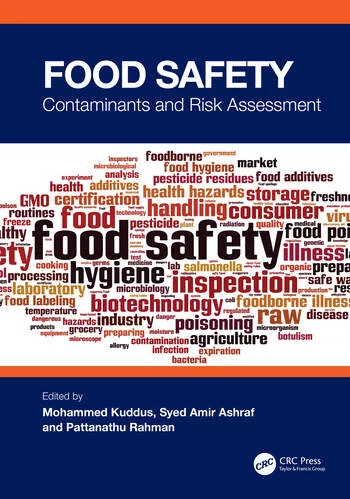
    Food Safety Contaminants and Risk Assessment

  • 1119071127.jpg

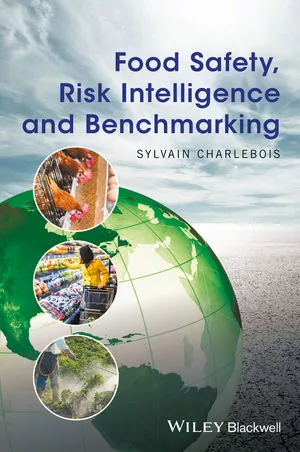
    Food Safety, Risk Intelligence and Benchmarking

  • 9781498721776.jpg

    Handbook of Food Processing: Food Safety, Quality, and Manufacturing Processes

See More Products

Events

View AllSubmit An Event
  • August 7, 2025

    Achieve Active Managerial Control of Major Risk Factors Using a Food Safety Management System

    On Demand: From this webinar, attendees will learn about changes to the FDA Food Code, which now includes a requirement for FSMS. 
View AllSubmit An Event

Related Directories

  • Food Safety and Quality Consultants LLC

    Food Safety and Quality Consultants, LLC (FSQC) is a professional full-service food safety and quality consulting firm offering a complete line of training, consulting, and auditing services to meet your needs. We will help you turn the complicated into compliance by making your food safety systems simple and effective!
  • BD Food Safety Consultants LLC

    We are a Food Safety Training and Consulting firm located in Naperville, IL. Our primary goal is to provide with effective training and consulting solutions for Food Manufacturing and Distributing companies. Our training services include the following: FSPCA PCQI classes, IAVA Courses, IHA Accredited HACCP classes, FSVP Courses and Internal Auditor Training classes. We also offer Learning Management System for food manufacturing industry.
  • Praesidio Consulting LLC

    Expert regulatory consulting based upon 25+ years FSIS experience. We specialize in HACCP and related food safety plans, facility design and sanitation program consultation, non-compliance management and appeals, enforcement action response, retention and recall management, and expert witness consultation for litigation cases.
×

Never miss the latest news and trends driving the food safety industry

Newsletters | Website | eMagazine

JOIN TODAY!
  • RESOURCES
    • Advertise
    • Contact Us
    • Directories
    • Store
    • Want More
  • SIGN UP TODAY
    • Create Account
    • eMagazine
    • Newsletters
    • Customer Service
    • Manage Preferences
  • SERVICES
    • Marketing Services
    • Reprints
    • Market Research
    • List Rental
    • Survey/Respondent Access
  • STAY CONNECTED
    • LinkedIn
    • Facebook
    • Instagram
    • X (Twitter)
  • PRIVACY
    • PRIVACY POLICY
    • TERMS & CONDITIONS
    • DO NOT SELL MY PERSONAL INFORMATION
    • PRIVACY REQUEST
    • ACCESSIBILITY

Copyright ©2026. All Rights Reserved BNP Media, Inc. and BNP Media II, LLC.

Design, CMS, Hosting & Web Development :: ePublishing